


You’ve operated your dental practice for a long time and are now looking to exit? Selling your dental practice is a major decision but with the right prep, you can get the right price for it.
Buyers evaluate production, collections, patient retention, and plenty of other factors.
Whether you own a general dental practice, orthodontic practice, pediatric dental office, oral surgery practice, periodontic practice, endodontic practice, or multi-location dental group, preparation can significantly affect valuation and deal outcome.
Quick Answer
To sell your dental practice successfully, you should organize financial records, understand practice valuation, review production and collections, prepare patient and hygiene data, evaluate equipment and lease terms, protect confidentiality, identify qualified buyers, and plan a smooth patient and staff transition. Dental practices with strong collections, stable hygiene revenue, loyal patients, clean financials, modern systems, and low dependence on the selling dentist usually attract stronger buyer interest.
Looking to Sell Your Business?
Maximize your business sale by consulting USA’s top business brokers. More buyers. Bigger profits.
Key Takeaways
- Dental practices are commonly valued based on collections, EBITDA, seller discretionary earnings, patient base, hygiene revenue, equipment, location, and transferability.
- Buyers evaluate production trends, payer mix, active patients, new patient flow, staff retention, lease terms, technology, and seller transition support.
- A strong hygiene program can improve buyer confidence because it indicates recurring patient demand.
- Practices that depend heavily on the selling dentist may require a longer transition period.
- DSOs, individual dentists, local competitors, private equity-backed groups, and associate dentists may all be potential buyers.
- Preparing early can help improve valuation and reduce deal delays.
Why Dental Practices Attract Buyers
With over 160,000 dental practices in the market, this industry offers many opportunities to buyers.
Dental practices can be attractive acquisition targets because they often combine recurring patient demand, local reputation, clinical infrastructure, and predictable collections.
Buyers may be interested in acquiring a dental practice to:
- Enter a new local market
- Expand an existing dental group
- Acquire an active patient base
- Add hygiene revenue
- Gain experienced staff
- Increase production capacity
- Acquire specialty services
- Build a DSO platform or add-on location
- Transition from associate to ownership
Potential buyers may include:
- Individual dentists
- Associate dentists
- Local dental practice owners
- Dental service organizations
- Private equity-backed dental platforms
- Specialty dental groups
- Regional competitors
- Family members or partners
The best buyer depends on your practice size, specialty, location, profitability, staff, patient base, and transition goals.
What Types of Dental Practices Can Be Sold?
Many types of dental practices can be sold, including:
- General dentistry practices
- Cosmetic dentistry practices
- Pediatric dental practices
- Orthodontic practices
- Oral surgery practices
- Periodontic practices
- Endodontic practices
- Prosthodontic practices
- Multi-location dental groups
- Implant-focused practices
- Fee-for-service practices
- PPO-heavy practices
- Medicaid-focused practices
- Specialty dental clinics
Each practice type has different buyer expectations. For example, a fee-for-service cosmetic practice may be valued differently from a PPO-heavy general practice or a pediatric office with strong recurring patient flow.
How Dental Practices Are Valued
Dental practice valuation usually depends on collections, profitability, patient base, hygiene revenue, location, equipment, and transferability.
Common valuation methods include:
- Percentage of annual collections
- EBITDA multiple
- Seller discretionary earnings multiple
- Asset-based adjustments
- Comparable practice sales
- Discounted cash flow for larger groups
Smaller owner-operated practices may be valued partly as a percentage of collections, while larger or multi-location practices are often valued using EBITDA.
Factors That Can Increase Valuation
Your dental practice may receive stronger offers if it has:
- Stable or growing collections
- Strong hygiene revenue
- High active patient count
- Consistent new patient flow
- Strong treatment acceptance
- Good profit margins
- Clean financial records
- Modern equipment
- Digital systems
- Stable staff
- Low patient concentration risk
- Favorable lease terms
- Strong online reviews
- Low dependence on the owner
- Specialty services or growth opportunities
Buyers pay more when they believe the practice is profitable, transferable, and capable of retaining patients after closing.
Factors That Can Reduce Valuation
Valuation may be reduced if the practice has:
- Declining collections
- Weak hygiene program
- Poor financial documentation
- Outdated equipment
- Heavy owner dependence
- Low active patient count
- Poor online reputation
- High staff turnover
- Unfavorable lease terms
- Overreliance on discounted insurance plans
- Inconsistent new patient flow
- Weak treatment acceptance
- Unresolved legal or compliance issues
Many of these issues can be improved before going to market.
What Buyers Look for in a Dental Practice
Dental buyers usually evaluate both financial performance and clinical transferability. They want to know whether patients, staff, and revenue will remain after ownership changes.
Collections and Production Trends
Buyers typically review:
- Gross production
- Net collections
- Collection percentage
- Production by provider
- Production by procedure type
- Hygiene production
- Doctor production
- Adjustments and write-offs
- Revenue by payer category
- Monthly trends
Stable or growing collections usually increase buyer confidence.
Hygiene Revenue
A strong hygiene department is one of the most important valuation drivers in many dental practice sales.
Buyers often view hygiene revenue as a sign of:
- Recurring patient demand
- Strong recall systems
- Patient loyalty
- Preventive care consistency
- Future treatment opportunities
A practice with a weak hygiene program may still sell, but buyers may see more risk.
Active Patient Base
Buyers want to know how many patients are active, not just how many names are in the database.
Important metrics include:
- Active patients in the last 12 to 24 months
- New patients per month
- Recall participation
- Patient retention
- Treatment acceptance
- Patient demographics
- Procedure mix
An active and loyal patient base can significantly improve buyer interest.
Payer Mix
Payer mix can affect profitability and buyer demand.
Buyers may review revenue from:
- Fee-for-service patients
- PPO plans
- Medicaid
- Medicare Advantage dental plans, if applicable
- Discount plans
- Cash-pay services
- Membership plans
Fee-for-service practices may attract premium interest if collections and retention are strong. PPO-heavy practices can still be attractive, but buyers will look closely at reimbursement rates and margins.
Staff Stability
Dental practices depend heavily on staff continuity.
Buyers often evaluate:
- Hygienists
- Dental assistants
- Office manager
- Front desk staff
- Treatment coordinators
- Associate dentists
- Billing staff
- Tenure and compensation
- Likelihood of staying after closing
A stable team can make the transition smoother and reduce buyer risk. It’s a crucial part of the business sale process.
Equipment and Technology
Buyers may review:
- Dental chairs and operatories
- Digital X-ray systems
- CBCT, if applicable
- CAD/CAM systems
- Sterilization equipment
- Practice management software
- Imaging software
- Lab equipment
- IT systems
- Equipment age and maintenance
Modern equipment can improve buyer confidence, while outdated equipment may lead to price negotiations.
Location and Lease Terms
Location can strongly affect a dental practice sale.
Buyers may evaluate:
- Visibility
- Parking
- Accessibility
- Lease term
- Renewal options
- Rent level
- Assignment rights
- Buildout condition
- Nearby competition
- Demographics
- Expansion capacity
If the practice is location-dependent, a weak lease can create deal risk.
Location affects your sale a lot, if you’re in Nashville, you’d need an expert with a strong base of buyers there. Similarly, if you’re in Florida, you’d need someone who knows that regional market.
Online Reputation
Patients often choose dental providers based on reviews and online presence.
Buyers may evaluate:
- Google reviews
- Average rating
- Review volume
- Website quality
- Local SEO visibility
- Social media presence
- Patient testimonials
- Reputation in the community
A strong online reputation can improve perceived value.
How to Prepare Your Dental Practice for Sale
1. Organize Financial Records
Prepare at least three years of:
- Profit and loss statements
- Tax returns
- Balance sheets
- Payroll records
- Provider production reports
- Collections reports
- Accounts receivable aging
- Adjustments and write-offs
- Owner compensation records
- Add-back documentation
Clean financials make it easier for buyers and lenders to evaluate the practice.
2. Prepare Practice Management Reports
Your practice management software should be able to generate valuable buyer reports.
Prepare:
- Active patient report
- New patient report
- Recall report
- Production by provider
- Production by procedure
- Hygiene production
- Treatment plan acceptance
- Insurance participation
- Accounts receivable aging
- Patient demographics
These reports help buyers understand the quality of the practice beyond basic revenue.
3. Strengthen Hygiene Before Selling
If your hygiene schedule is weak, improve it before going to market.
Focus on:
- Recall reactivation
- Periodontal maintenance
- Hygiene scheduling
- Patient reminders
- Treatment plan follow-up
- Pre-appointing patients
- Reducing cancellations
A stronger hygiene program can improve buyer confidence.
Ready to Sell Your Business?
Take the first step towards a successful business exit
4. Reduce Owner Dependence
If patients only want to see the selling dentist, buyers may worry about patient attrition.
To reduce owner dependence:
- Introduce associates, if appropriate
- Strengthen staff relationships with patients
- Document clinical and administrative systems
- Build a transition plan
- Delegate non-clinical responsibilities
- Make the practice less personality-dependent
A smoother transition can improve buyer interest.
5. Review Lease and Real Estate Issues
If you lease the office, review:
- Remaining lease term
- Renewal options
- Assignment rights
- Rent increases
- Landlord approval requirements
- Expansion rights
- Personal guarantees
If you own the real estate, decide whether to:
- Sell the practice and property together
- Sell the practice and lease the property to the buyer
- Sell the property separately
- Keep the property as rental income
Dental real estate can materially affect deal structure.
Real estate always plays a role when you’re selling a medical business.
6. Update Equipment Records
Prepare a list of equipment and technology included in the sale.
Include:
- Equipment name
- Age
- Condition
- Maintenance history
- Lease or loan status
- Estimated replacement needs
Buyers do not expect everything to be brand new, but they want to understand future capital expenses.
7. Clean Up Accounts Receivable
Accounts receivable can become a negotiation issue.
Review:
- Insurance A/R
- Patient A/R
- Aging categories
- Collection procedures
- Write-off policies
- Uncollectible balances
Old or uncollectible A/R may be discounted by buyers.
How to Maximize the Value of Your Dental Practice
Improve Collections
Strong collections show that the practice converts production into real revenue.
Focus on:
- Insurance follow-up
- Patient payment systems
- Reducing old A/R
- Clear financial policies
- Front desk training
- Payment plans where appropriate
Increase New Patient Flow
Consistent new patient flow makes the practice more attractive.
Ways to improve it include:
- Local SEO
- Google Business Profile optimization
- Patient referral systems
- Website improvements
- Review generation
- Community outreach
- Specialist referral relationships
Strengthen Treatment Acceptance
Treatment acceptance can improve production without increasing patient volume.
Track:
- Treatment presented
- Treatment accepted
- Case value
- Follow-up process
- Financing options
- Patient education systems
Build a Strong Team
A stable, well-trained team can increase buyer confidence.
Buyers want to know that staff members will remain after closing.
Improve Documentation
Document systems for:
- Scheduling
- Recall
- Insurance verification
- Billing
- Treatment presentation
- Sterilization
- Patient communication
- Staff training
- Compliance procedures
Documented systems make the practice easier to transfer.
Strengthen Reviews and Local SEO
Before selling, improve your online presence.
A dental practice with strong reviews and search visibility may appear more attractive because it has a clear patient acquisition engine.
Plan the Transition
A buyer may ask the seller to stay for a transition period.
This can include:
- Patient introductions
- Staff transition
- Clinical handoff
- Referral partner introductions
- Part-time work
- Consulting support
A clear transition plan can reduce buyer concerns.
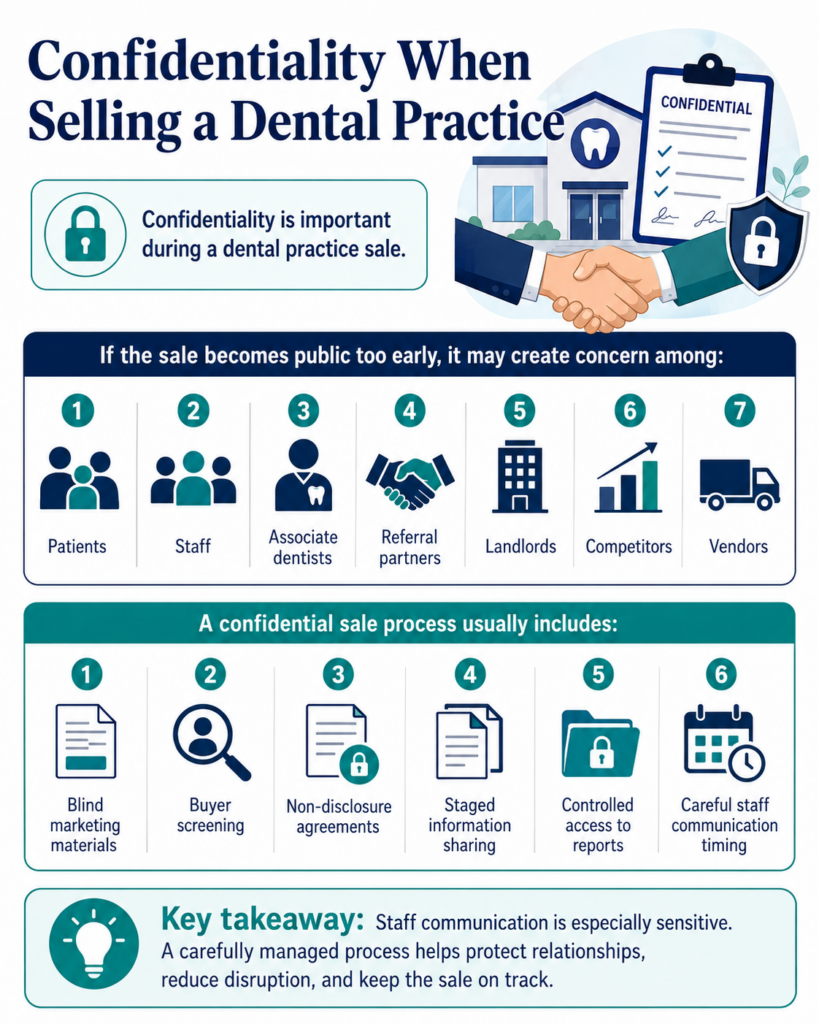
Confidentiality When Selling a Dental Practice
Confidentiality is important during a dental practice sale.
If the sale becomes public too early, it may create concern among:
- Patients
- Staff
- Associate dentists
- Referral partners
- Landlords
- Competitors
- Vendors
A confidential sale process usually includes:
- Blind marketing materials
- Buyer screening
- Non-disclosure agreements
- Staged information sharing
- Controlled access to reports
- Careful staff communication timing
Staff communication is especially sensitive. Buyers often want staff to remain, but sellers may not want to announce the sale until the timing is appropriate.
Who Buys Dental Practices?
Individual Dentists
Many dental practices are sold to individual dentists who want ownership. This is common for solo and small group practices.
Associate Dentists
If you have an associate who wants to buy the practice, this may create a smoother transition. However, financing and valuation still need to be handled professionally.
Dental Service Organizations
DSOs may be interested in practices with strong collections, scalable systems, good locations, and reliable provider teams.
DSO transactions may involve different structures, including employment agreements, rollover equity, or continued seller involvement.
Local Competitors
Nearby dental groups may want to acquire your practice to expand market share or add patients.
Confidentiality should be managed carefully when speaking with competitors.
Specialty Groups
Orthodontic, oral surgery, pediatric, endodontic, and periodontal practices may attract specialty-focused buyers or groups.
Common Deal Structures in Dental Practice Sales
Full Practice Sale
The buyer purchases the practice and the seller exits after a transition period.
This may be common for retiring dentists.
Sale With Seller Transition
The seller remains for several months or years to support patient retention, staff transition, and production continuity.
Associate Buy-In or Buyout
An associate gradually buys into the practice or purchases it fully over time.
DSO Sale
A DSO may acquire the practice and keep the seller involved as a provider or clinical leader.
Some deals may include upfront cash, employment agreements, earnouts, or rollover equity.
Practice and Real Estate Sale
If the seller owns the property, the real estate may be sold with the practice or leased to the buyer.
Should You Use a Dental Practice Broker?
Many dentists use a dental practice broker, dental transition advisor, or healthcare M&A advisor to manage the sale process.
An advisor may help with:
- Practice valuation
- Confidential marketing
- Buyer screening
- DSO outreach
- Individual buyer outreach
- Offer comparison
- Deal structure
- Due diligence coordination
- Transition planning
- Closing support
For smaller practices, a dental practice broker may be appropriate.
Steps to Sell Your Dental Practice
- Clarify your exit goals and timeline.
- Organize financial statements and tax returns.
- Prepare production, collections, hygiene, and patient reports.
- Review lease, real estate, equipment, and staff issues.
- Estimate practice valuation.
- Improve hygiene, collections, reviews, and documentation where possible.
- Prepare confidential marketing materials.
- Identify qualified buyers.
- Use NDAs before sharing sensitive information.
- Compare offers beyond headline price.
- Negotiate deal structure and transition terms.
- Complete financial, clinical, legal, operational, and lease due diligence.
- Finalize purchase documents.
- Communicate transition carefully to staff and patients.
- Close the transaction and support the transition.
Common Mistakes to Avoid
| Mistake: | Explanation: |
| Waiting Until Production Declines | Dental practices usually sell better when collections and patient flow are stable or growing. |
| Ignoring Hygiene Revenue | A weak hygiene program can reduce buyer confidence. |
| Poor Financial Documentation | Messy books can slow due diligence and reduce valuation. |
| Not Reviewing the Lease | Unfavorable lease terms can create deal problems. |
| Overestimating Practice Value | Dental practices can be valuable, but buyers still evaluate risk, profitability, and transferability. |
| Failing to Plan Staff Communication | Staff retention is critical. Poor communication can create unnecessary turnover. |
| Sharing Information Too Early | Do not share sensitive reports or patient-level data with unqualified buyers. |
| Assuming All DSOs Offer the Same Deal | DSO offers can vary significantly in structure, cash at closing, employment terms, rollover equity, and transition expectations. |
Dental Practice Sale FAQs
How long does it take to sell a dental practice?
Many dental practice sales take 6 to 12 months, although the timeline depends on practice size, location, buyer demand, financing, lease issues, and due diligence.
How is a dental practice valued?
Dental practices may be valued using annual collections, EBITDA, seller discretionary earnings, patient base, hygiene revenue, equipment, location, payer mix, profitability, and comparable practice sales.
Who buys dental practices?
Common buyers include individual dentists, associate dentists, DSOs, local dental groups, specialty groups, and sometimes competitors.
What makes a dental practice more valuable?
Strong collections, stable hygiene revenue, active patients, clean financials, modern equipment, good lease terms, strong reviews, staff stability, and low owner dependence can improve value.
Should I sell to a DSO?
Selling to a DSO may be a good fit for some practice owners, especially those with larger or scalable practices. However, owners should compare cash at closing, employment terms, rollover equity, autonomy, and transition expectations before deciding.
Can I sell my dental practice confidentially?
Yes. A confidential process can use blind marketing, NDAs, buyer screening, staged information sharing, and careful staff communication planning.
Do buyers care about hygiene production?
Yes. Hygiene production is often a major valuation factor because it reflects recurring patient demand and future treatment opportunities.
Is dental equipment included in the sale?
Usually, dental equipment is included in the practice sale unless otherwise negotiated. Buyers will review equipment age, condition, loans, leases, and replacement needs.
What if I own the dental office building?
You can sell the practice and property together, sell the practice and lease the building to the buyer, or sell the property separately. The best option depends on your goals and the buyer’s financing ability.
Should I stay after selling my dental practice?
Many buyers prefer the seller to stay for a transition period to support patient retention, staff confidence, and operational continuity. The length of transition depends on the deal structure.
Final Thoughts
Selling your dental practice requires preparation, confidentiality, accurate valuation, and a strong transition plan.
Buyers want confidence that patients will remain, staff will stay, collections are stable, hygiene revenue is strong, and the practice can continue operating after the seller exits.
Dentists who prepare financial records, strengthen hygiene, organize patient reports, review lease terms, reduce owner dependence, and plan the transition carefully are usually in a stronger position to attract qualified buyers and negotiate better terms.