

Blossom and Root is unlike most homeschool curricula I have reviewed.
It does not attempt to recreate a conventional school day at home. There are no recorded teachers, rigid daily schedules, standardized grade reports, or large boxes containing every required book and supply.
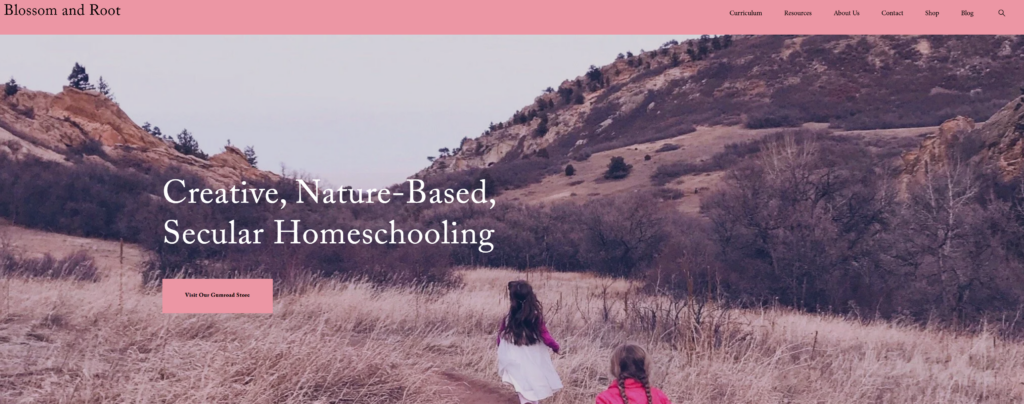
Instead, Blossom and Root builds homeschooling around nature, literature, science, art, creativity, and time spent learning together.
The curriculum is secular, delivered through downloadable PDF files, and inspired by both Charlotte Mason and Waldorf educational philosophies. Its current program extends from preschool through Level 6, with Level 7 materials also appearing on its curriculum menu, alongside U.S. history and shorter Book Seed units.
As a homeschooling dad, I see considerable appeal in this approach.
Children do not necessarily need six hours of worksheets to receive a serious education. They need good books, meaningful conversations, time outside, opportunities to create, and enough structure to build foundational skills.
However, Blossom and Root is not a complete plug-and-play curriculum.
Families generally need to add mathematics from Level 1 onward. Some children will also need a more explicit phonics or spelling program. Parents must source literature, print student pages, collect supplies, lead projects, and maintain their own homeschool records.
My overall conclusion is:
Blossom and Root is an excellent secular curriculum for creative, nature-loving families who want gentle academics and hands-on learning. It offers exceptional flexibility and strong value, but it works best for involved parents who are comfortable supplementing math, phonics, and other academic areas when necessary.
Blossom and Root Review: Quick Verdict
| Category | My assessment |
| Best for | Secular, nature-based and creative homeschooling |
| Current levels | Preschool through elementary and early middle grades |
| Format | Digital PDF downloads |
| Educational approach | Charlotte Mason- and Waldorf-inspired |
| Core strengths | Literature, nature study, science, art and creative writing |
| Religious position | Strictly secular |
| Math included | Gentle integration in kindergarten; separate math needed from Level 1 |
| Parent preparation | Usually around 30–45 minutes weekly |
| Accreditation | Not an accredited school |
| Typical lesson time | About 1–3 hours daily, depending on level |
| Overall rating | 4.4/5 |
Blossom and Root is particularly suitable for:
- Secular homeschool families
- Children who love nature and animals
- Creative and artistic learners
- Parents who want short lessons
- Families using libraries extensively
- Children who resist traditional workbooks
- Parents comfortable adapting lessons
- Families wanting limited screen time
- Students who learn through projects and discussion
It may be less suitable for:
- Parents wanting a complete boxed curriculum
- Families seeking Christian worldview instruction
- Children who need extensive repetition
- Parents wanting recorded or live teachers
- Families requiring independent student work
- Parents who dislike printing
- Students needing highly structured phonics
- Families seeking an accredited online school
What Is Blossom and Root?
Blossom and Root is a secular homeschool curriculum created by homeschool parent and early-childhood educator Kristina Garner.
The publisher describes the program as creative, flexible, hands-on, and focused on nature, literature, STEM, and art. Its lessons draw inspiration from Charlotte Mason and Waldorf philosophies without adhering strictly to either method.
The curriculum currently includes:
- Early Years Volume 1
- Early Years Volume 2
- Level 0, or kindergarten
- Levels 1 through 6
- Developing Level 7 materials
- U.S. history
- Book Seeds and Profiles in Science units
The younger programs emphasize play, nature exploration, art, literature, early science, and gentle academic foundations.
As students grow older, the curriculum adds more formal:
- Reading instruction
- Grammar
- Narration
- Copywork
- Dictation
- Creative writing
- Scientific investigation
- Geography
- Social studies
- Independent projects
Level 5, for example, combines literature focused on migration and identity with oceanography, astronomy, U.S. geography, writing projects, art, and year-round nature study.
Is Blossom and Root a Complete Curriculum?
Not quite.
Blossom and Root provides a rich selection of subjects, but families should not assume that purchasing a grade bundle covers every conventional academic requirement.
Depending on the level, a bundle may include:
- Language arts
- Literature
- Science
- Nature study
- Art
- Geography
- Social studies
- Creative writing
- Early mathematical concepts
However, mathematics is not included as a comprehensive standalone course from Level 1 onward. The company recommends adding a separate program, with examples including Math with Confidence, Wild Math, Beast Academy, and RightStart Math.
Some children may also need additional:
- Phonics
- Spelling
- Handwriting
- Grammar review
- History
- Formal assessment
- Test preparation
The company openly recommends comprehensive phonics programs such as All About Reading, Logic of English, or Pinwheels for children needing more reading support.
I consider this honesty a strength.
Blossom and Root does not pretend that one gentle reading sequence will meet every child’s needs. Parents are encouraged to evaluate progress and supplement appropriately.
My Impression as a Homeschooling Dad
The biggest difference between Blossom and Root and a traditional curriculum is the atmosphere it tries to create.
A conventional program may say:
- Read the chapter.
- Define the vocabulary.
- Complete the worksheet.
- Take the test.
Blossom and Root is more likely to ask a child to:
- Read a beautiful book.
- Retell the story.
- Draw or paint something inspired by it.
- Explore a related scientific idea.
- Observe something outdoors.
- Record discoveries in a notebook.
- Complete a creative writing project.
That approach can make education feel connected with life rather than separated from it.
I particularly appreciate that lessons are designed to remain short. Kindergarten and Level 1 activities are usually around 15–20 minutes each, with roughly one to two hours of focused learning on four or five days per week. Level 5 typically requires two to three hours daily, split between independent and parent-supported work.
The program clearly values childhood.
It leaves room for:
- Free play
- Outdoor exploration
- Family reading
- Personal interests
- Rest
- Unstructured creativity
The danger is assuming that a beautiful learning experience automatically guarantees academic mastery.
A child may enjoy drawing, nature journaling, and listening to literature while still struggling to decode unfamiliar words or recall multiplication facts.
That is why Blossom and Root requires an observant parent.
The flexibility is powerful, but the parent must use it responsibly.
What Makes Blossom and Root Different?
Nature Study Is a Core Subject
Nature study is not an occasional optional activity.
Children are regularly encouraged to:
- Observe local plants and animals
- Study weather and seasonal change
- Keep nature journals
- Track shadows and sunlight
- Observe water, wind, frost, and clouds
- Sketch natural objects
- Complete outdoor scavenger hunts
- Connect scientific concepts with direct observation
Level 5’s nature study, for example, focuses on weather, water, and the celestial sphere. Students may track the sun, locate constellations, study evaporation, observe microclimates, and document local plants and animals.
This approach can be particularly valuable for children who become restless when confined to a desk.
The difficulty is that nature study depends partly on:
- Local weather
- Safe outdoor access
- Parental time
- Available parks or green space
- Family willingness to leave the house
The lessons are adaptable, but families living in dense urban areas may need to be creative.
Literature Drives Language Arts
Blossom and Root language arts is built around quality children’s literature.
Rather than separating reading, comprehension, composition, vocabulary, and creative work into unrelated textbooks, the curriculum connects these skills with the books being read.
Students may complete:
- Oral narration
- Written narration
- Copywork
- Dictation
- Journal entries
- Poetry
- Vocabulary activities
- Story analysis
- Art inspired by literature
- Long-form creative projects
This makes language arts feel meaningful.
A child is not simply writing because a workbook says, “Write five sentences.” The writing emerges from a story, scientific idea, or personal observation.
However, literature-based instruction can be less systematic than a traditional phonics or grammar program.
Children who struggle with decoding, spelling, or sentence mechanics may need more explicit practice.
Science Is Hands-On and Flexible
Science is another major strength.
The curriculum uses books, videos, demonstrations, experiments, student notebooks, and open-ended activities.
The exact topics vary by level.
Level 1’s updated science course includes vocabulary, hands-on investigations, recommended books and videos, and expanded options for older or advanced students.
Level 5 is divided into oceanography and astronomy. Students study topics such as:
- Plate tectonics
- Ocean currents
- Waves and tides
- Coral reefs
- Marine ecosystems
- Planets
- Stars and galaxies
- Solstices
- Black holes
- Space technology
The program also introduces scientists, engineers, inventors, and environmental advocates through optional profiles.
The flexibility is excellent for mixed learning styles.
A family can choose among:
- Books
- Videos
- Experiments
- Notebooking
- Field trips
- Discussion
The weakness is that parents must decide how much work demonstrates mastery.
The open-ended notebooks do not automatically provide the quizzes, vocabulary tests, and structured assessments found in BJU Press or Abeka.
Art Is Treated as a Serious Subject
Many homeschool programs treat art as an elective to be completed only when time permits.
Blossom and Root integrates:
- Artist studies
- Picture study
- Painting
- Drawing
- Sculpture
- Photography
- Collage
- Mixed media
- Art history
- Personal artistic expression
Level 5 introduces students to artists including Mark Rothko, Hung Liu, Yinka Shonibare, Beatrix Potter, Edmonia Lewis, Romare Bearden, and others.
This is one of the curriculum’s most distinctive qualities.
Art is not merely a Friday craft. It is presented as a way of observing, thinking, interpreting, and communicating.
For an artistic child, that can transform the entire homeschool experience.
For a child who dislikes crafts or drawing, parents should feel free to shorten or adapt activities rather than forcing enthusiasm.
It Is Strictly Secular
Blossom and Root describes all its curriculum as strictly secular. Its early-years program is explicitly designed as nonreligious, and each elementary level makes the same position clear.
This means it does not include:
- Bible lessons
- Prayer
- Devotional material
- Creationist science
- Christian worldview analysis
- Religious moral instruction
Religious families can still use the curriculum and add their own Bible or faith studies. Blossom and Root specifically says nonsecular families are welcome to adapt the program in this way.
Christian families comparing it with Master Books or My Father’s World should understand that the difference is not minor.
Blossom and Root provides a secular framework. Parents must add their own religious interpretation where desired.
Blossom and Root by Level
Early Years
Early Years Volume 1 is designed for approximately ages two to four.
It includes weekly prompts involving:
- Nature study
- Art
- Picture study
- Music
- Early science
- Kitchen activities
- Literature
- Kindness
- Community
- Early mathematical concepts
The program is intentionally play-based, low-pressure, and developmentally gentle. Weekly preparation is generally under 30 minutes.
Early Years Volume 2 is aimed more toward pre-kindergarten learners or advanced younger children.
These programs are best understood as guided enrichment rather than formal preschool academics.
Kindergarten
Level 0 is designed for children approximately ages five to seven.
It covers:
- Language arts
- Literature
- Science
- Nature study
- Art
- Personal history
- Gentle early math concepts
The curriculum includes 36 weeks of lesson plans, and most families spend about one to two hours daily, four or five days per week.
The company recommends that children already recognize most letters, know many letter sounds, count orally to ten, and connect basic quantities with numerals before beginning.
This is therefore not a zero-preparation learn-the-alphabet program.
Some children will need Early Years Volume 2 first or an additional phonics resource.
Levels 1–3
The early elementary years continue the literature-, science-, nature-, and art-based approach.
Level 1 is recommended roughly for ages six to nine. Students should already recognize letters and read simple consonant-vowel-consonant words such as “cat” and “map.”
Lessons remain short, but expectations gradually increase through:
- Reading
- Narration
- Writing
- Notebooking
- Scientific vocabulary
- Nature observation
- Creative projects
Level 2’s full digital bundle was listed at $147 in July 2026, while its science and nature-study combination cost $78 and nature study alone cost $27.
Levels 4–6
The upper elementary program becomes more academically substantial while retaining the creative approach.
Students complete more:
- Independent reading
- Grammar
- Vocabulary
- Research
- Extended writing
- Science documentation
- Social studies
- Geography
- Long-term projects
Level 5 is designed for approximately ages 10–13 and requires around two to three hours per day.
The company’s curriculum menu now also lists Level 6 and Level 7, although families should review each level page carefully to determine whether every planned subject or installment is fully released.
Blossom and Root does not currently provide a complete conventional high-school pathway comparable with Abeka, BJU Press, or Sonlight.
Blossom and Root Pricing in 2026
Blossom and Root is sold through digital PDF downloads.
There are no printed or bound curriculum packages. Parents can print files at home, use them digitally, or send them to an independent printing service.
Current examples include:
| Product | July 2026 listed price |
| Early Years Volume 2 | $45 |
| Level 2 full bundle | $147 |
| Level 2 science and nature study | $78 |
| Level 2 nature study only | $27 |
| Level 3 language arts only | $65 |
| Individual Book Seed profile | $6 |
| Level 6 language arts full-course regular price | $72 |
Prices vary by level and subject combination.
Blossom and Root also runs three recurring annual sales:
- March 15 through April 30
- August 1 through September 15
- November 15 through December 31
The company says these sales provide 30% off its store.
Hidden Costs
The listed download price is not the complete annual cost.
Parents may also pay for:
- Printing
- Binding
- Ink and paper
- Literature selections
- A separate math curriculum
- Phonics supplementation
- Art supplies
- Science supplies
- Field trips
- Library books that are unavailable locally
The curriculum is designed around library access and ordinary household or art materials, but the final cost depends heavily on what the family already owns.
A family with a strong library and home printer may keep costs relatively low.
A family purchasing every recommended book and professionally printing hundreds of full-color pages may spend considerably more than the curriculum price suggests.
Blossom and Root Pros and Cons
Pros
- Completely secular
- Strong emphasis on nature
- Excellent science activities
- Rich literature selections
- Meaningful art instruction
- Short lessons
- Flexible scheduling
- Minimal weekly preparation
- Limited required screen time
- Adaptable for different learners
- Creative writing and notebooking
- Affordable compared with many boxed programs
- Full curriculum samples available
- Encourages parent-child connection
Cons
- Math is not included after kindergarten
- Some children need additional phonics
- No printed-book option
- Printing can become expensive
- Required literature is sold separately
- Parent involvement is substantial
- Limited formal testing
- Not accredited
- No institutional recordkeeping
- Less suitable for workbook-oriented students
- Can feel academically light if used without supplementation
- Project supplies require organization
- No complete high-school sequence
Blossom and Root vs. The Good and the Beautiful
| Feature | Blossom and Root | The Good and the Beautiful |
| Religious position | Secular | Broadly Christian |
| Main style | Nature- and project-based | Integrated and workbook-based |
| Math | Must be added after kindergarten | Full math courses available |
| Language arts | Literature and creative projects | More structured integrated lessons |
| Science | Hands-on and flexible | Family-style illustrated units |
| Printed books | No | Yes |
| Parent involvement | High | Moderate |
| Best for | Creative, nature-loving learners | Families wanting more structure |
The Good and the Beautiful is more complete and easier to use as a conventional core curriculum.
Blossom and Root offers greater creative freedom and stronger nature integration.
Blossom and Root vs. Build Your Library
Both are popular secular homeschool options.
Blossom and Root places greater emphasis on:
- Nature
- Art
- Hands-on science
- Gentle lessons
- Creative expression
Build Your Library is generally more focused on:
- History
- Literature
- Geography
- Chronological study
- Extensive reading
A family could potentially use Blossom and Root science or nature study alongside a more history-focused program.
Is Blossom and Root Academically Rigorous?
Blossom and Root can provide a rich education, but it is not rigorous in the same way as Abeka or BJU Press.
It does not measure academic seriousness by:
- Long worksheets
- Frequent tests
- Memorization
- Heavy daily assignments
Its rigor comes through:
- High-quality literature
- Scientific inquiry
- Narration
- Observation
- Writing
- Creative projects
- Vocabulary
- Research
- Connections between subjects
This can produce deep understanding.
However, parents must monitor measurable foundational skills.
Ask whether the child can:
- Decode unfamiliar words
- Read fluently
- Spell common words
- Write complete sentences
- Organize paragraphs
- Recall math facts
- Complete age-appropriate calculations
- Explain scientific ideas
- Work independently when appropriate
When weaknesses appear, supplementation is not a failure.
It is part of responsible homeschooling.
Who Should Use Blossom and Root?
Blossom and Root is an excellent fit for:
- Secular homeschoolers
- Creative children
- Nature-loving families
- Artistic learners
- Parents who enjoy reading aloud
- Hands-on learners
- Families wanting short lessons
- Children recovering from academic burnout
- Parents comfortable with flexibility
- Families with access to a good library
Who Should Choose Another Curriculum?
Another curriculum may be better for:
- Parents wanting one complete package
- Families seeking Christian instruction
- Children needing intensive drill
- Students who prefer workbooks
- Parents wanting full online instruction
- Families needing accreditation
- Children who work best independently
- Parents who dislike gathering supplies
- Families unable to print materials
- Students preparing for highly standardized environments
Final Verdict: Is Blossom and Root Worth It?
Blossom and Root is worth considering because it offers something genuinely different.
It does not simply repackage traditional school worksheets with prettier illustrations.
It asks families to slow down, read good books, study the natural world, create art, investigate scientific questions, and give children enough time to remain children.
As a homeschooling dad, I find that philosophy refreshing.
I do not want education to become an endless exercise in checking boxes. I want my child to develop curiosity, competence, imagination, and the ability to pay attention to the world.
Blossom and Root can support those goals extremely well.
But I would not use it passively.
I would add a strong math program. I would monitor phonics and spelling carefully. I would make sure creative notebooking develops into clear, organized writing. I would compare the scope and sequence with our legal and academic requirements.
My final judgment is:
Blossom and Root is one of the best secular homeschool curricula for families seeking nature study, literature, art, and hands-on science. It is affordable, flexible, and genuinely enjoyable, but parents must be willing to supplement foundational academics and take responsibility for turning its rich ideas into a complete education.
Blossom and Root Rating
| Category | Rating |
| Nature study | 5/5 |
| Science | 4.7/5 |
| Art and creativity | 4.9/5 |
| Literature | 4.6/5 |
| Language arts structure | 4/5 |
| Flexibility | 4.8/5 |
| Ease of planning | 4.5/5 |
| Affordability | 4.4/5 |
| Academic completeness | 3.5/5 |
| Overall rating | 4.4/5 |
Frequently Asked Questions
Is Blossom and Root a Complete Curriculum?
It covers language arts, science, nature study, art, literature, and selected social studies topics. Families generally need to add math from Level 1 onward and may also need phonics, history, or other supplements.
Is Blossom and Root Secular?
Yes. Blossom and Root describes its curriculum as strictly secular. Religious families may add their own Bible or faith studies.
Is Blossom and Root Accredited?
No. It is a curriculum publisher, not a school, charter, or umbrella organization. Parents are responsible for attendance, records, testing, portfolios, and legal compliance.
Does Blossom and Root Include Math?
Kindergarten includes gentle mathematical concepts, but Levels 1 and above require a separate math curriculum.
Is Blossom and Root Online?
It is delivered digitally, but it is not an online school. Families download PDF files and teach the lessons offline. Some optional videos and web resources require internet access.
How Much Does Blossom and Root Cost?
Prices vary by level. Current examples range from $27 for a single nature-study course to $147 for the Level 2 full bundle. The company also runs three annual 30%-off sales.
Does Blossom and Root Offer Refunds?
No. Because the products are digital downloads, purchases are final and cannot be returned, exchanged, or refunded. Families should review the free samples before purchasing.
Is Blossom and Root Good for ADHD?
It may suit children who need movement, short lessons, hands-on work, and time outdoors. However, the open-ended format may require additional structure for children who struggle with organization or task completion.
Is Blossom and Root Enough for Reading?
Some children will succeed with its language arts approach, but the publisher recommends adding a comprehensive phonics program when a child needs more explicit reading support.
What Ages Is Blossom and Root For?
Early Years Volume 1 begins around ages two to four. Level 0 is designed for approximately ages five to seven, Level 1 for ages six to nine, and Level 5 for ages 10–13.