
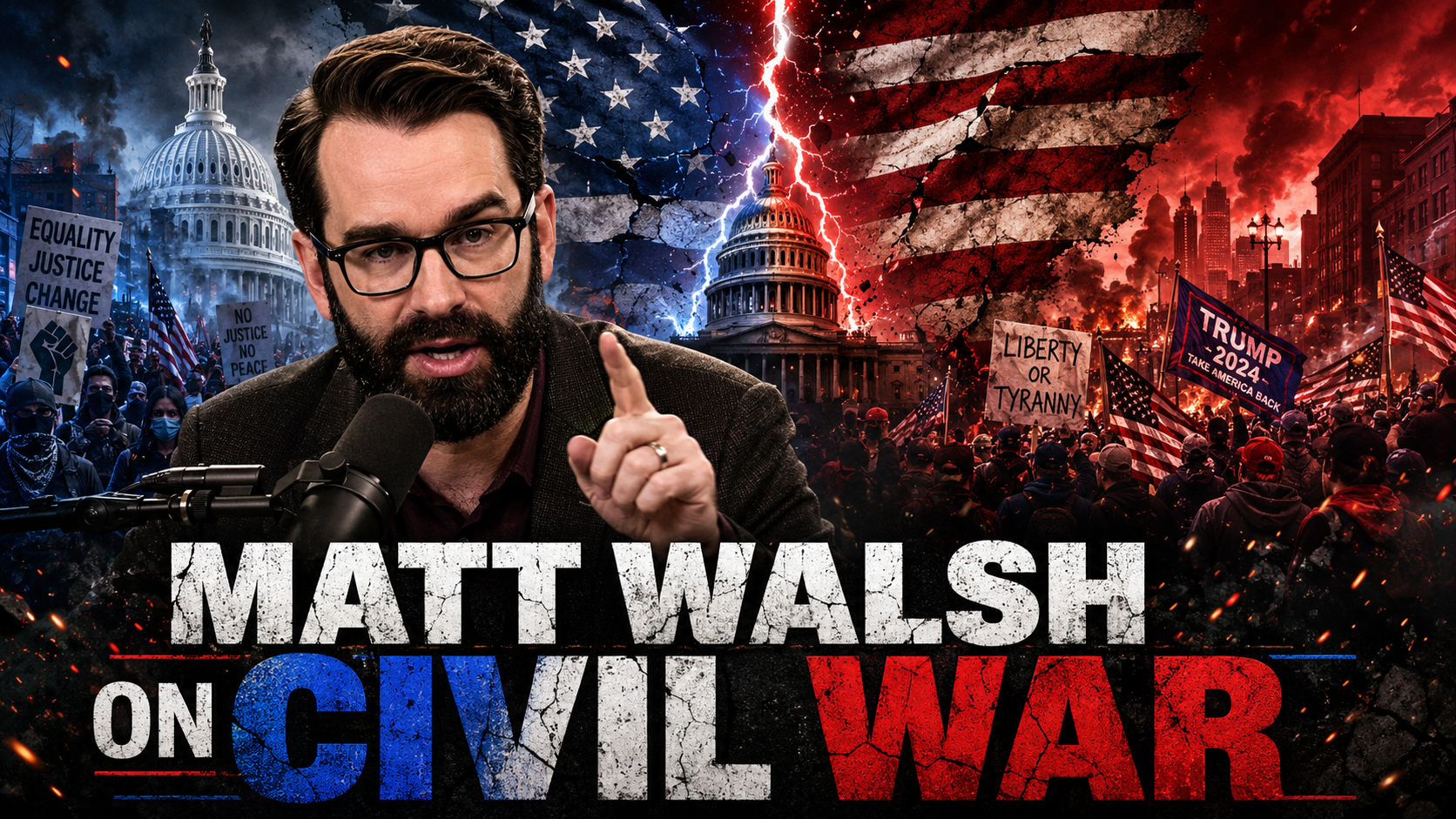
What does Matt Walsh think about the Civil War? Find out here.
Quick Answer: What Is Matt Walsh’s View on the Civil War?
Matt Walsh’s view on the Civil War is that the mainstream story taught in schools is too simplified, too moralized, and too shaped by later political narratives. In his Real History with Matt Walsh Civil War episode, Walsh presents the war as more complex than a simple fight of North versus South over slavery. The Daily Wire’s official description says the episode challenges “enduring myths” about the Civil War and asks what the two sides were “really fighting about.”
His argument appears to center on several themes: the legality of secession, Northern hypocrisy on slavery, Abraham Lincoln’s complicated racial and political views, Robert E. Lee’s legacy, Confederate monuments, and the idea that slavery was not the only factor behind the war. A third-party episode summary of The Matt Walsh Show describes the episode as arguing that the Civil War was not solely about slavery, while also emphasizing states’ rights, tariffs, cultural divides, and the legal ambiguity of secession.
That framing has been controversial because most professional historians argue that slavery was central to the secession crisis and the Civil War. The National Park Service states that the war grew out of many tensions, but “most importantly” the role of slavery in American society.
Who Is Matt Walsh?
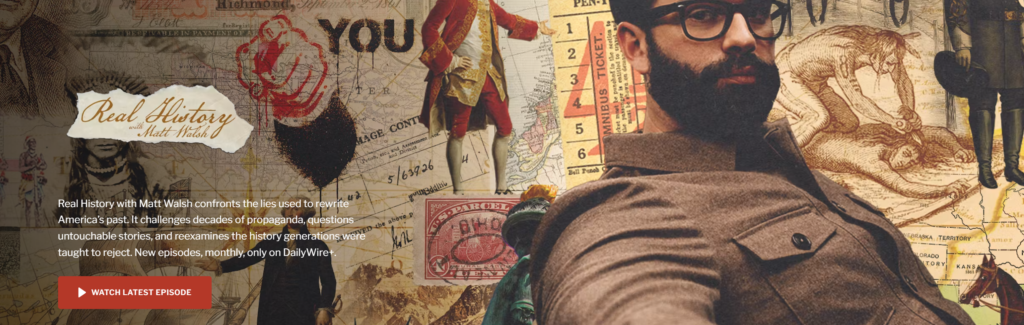
Matt Walsh is a conservative commentator, author, podcaster, and Daily Wire host known for culture-war commentary. In 2026, The Daily Wire launched Real History with Matt Walsh, a history-focused series that says it challenges “decades of propaganda” and reexamines American history.
The Civil War episode became one of the most discussed parts of that project because the Civil War remains one of the most politically sensitive topics in American history. When a modern commentator revisits slavery, Confederate memory, Abraham Lincoln, secession, and Robert E. Lee, the debate quickly becomes about more than history. It becomes about national identity, race, education, and patriotism.
What Is “Real History of the Civil War”?
The Real History of the Civil War is a Matt Walsh documentary-style episode released through DailyWire+. The official page describes the Civil War as a conflict that “fundamentally transformed” the United States and caused around 600,000 American deaths, while asking how much of the conventional story is false or incomplete.
The broader Real History with Matt Walsh series is marketed as a challenge to accepted narratives about America’s past. The Daily Wire’s description says the show questions “untouchable stories” and reexamines history that generations were taught to reject.
That branding is important. Walsh is not presenting the series as a neutral classroom lecture. He is presenting it as a corrective to what he sees as ideological distortion in modern education and media.
Matt Walsh’s Main Civil War Arguments
1. The Civil War Was More Complicated Than “It Was Only About Slavery”
Walsh’s central Civil War claim is that the standard narrative is too simplistic. Based on descriptions of the episode, he argues that the war involved slavery but also states’ rights, constitutional questions, tariffs, economics, regional culture, and Northern political interests.
This is where the controversy begins. It is historically true that the Civil War involved multiple political, constitutional, military, and economic issues. But historians generally argue that those issues were deeply connected to slavery, especially the expansion, protection, and political power of slavery.
The National Park Service puts the mainstream historical view clearly: economic policy, cultural values, federal power, and sectional differences mattered, but the most important issue was slavery’s role in American society.
2. Secession Was Legally and Politically Complicated
Walsh also appears to emphasize the legal ambiguity of secession and the fact that Confederate leaders were not tried and convicted for treason after the war. A third-party summary of the episode says Walsh argues that secession was not clearly treason and that the lack of treason convictions reflected legal uncertainty.
This is a common argument among Civil War revisionists and Lost Cause-adjacent interpretations. The stronger mainstream counterpoint is that regardless of whether postwar treason trials were politically practical, secession was driven by slaveholding states’ fear that slavery would lose federal protection.
The American Battlefield Trust’s collection of secession declarations shows that states such as Mississippi, South Carolina, Georgia, and Texas explicitly discussed slavery, slaveholding rights, and conflict with non-slaveholding states in their explanations for leaving the Union.
3. Northern Hypocrisy Matters
Another part of Walsh’s framing is that the North was not morally pure. The episode summary says he discusses Northern complicity in slavery, including slave trading and discriminatory laws in free states.
This point has historical basis in a limited sense. Northern states had their own histories of slavery, racial discrimination, economic connections to the slave economy, and racist laws. The Library of Congress notes that the North and South differed socially, economically, and politically, but also emphasizes that slavery was the most important difference driving the crisis.
The key distinction is this: Northern hypocrisy does not erase slavery’s central role in Southern secession. A society can be morally inconsistent while still fighting a war caused by a specific institution.
4. Abraham Lincoln Was More Complicated Than the Myth
Walsh also appears to challenge the simplified heroic image of Abraham Lincoln. The episode summary says he discusses Lincoln’s views on race and emphasizes that Lincoln’s early war aim was preserving the Union rather than immediately ending slavery.
That point is not inherently false. The National Park Service similarly notes that the North’s initial goal was preservation of the Union, not emancipation.
However, Lincoln’s position evolved during the war. The National Archives notes that Lincoln issued the Emancipation Proclamation on January 1, 1863, declaring enslaved people in rebellious states to be free.
So the more accurate picture is that Lincoln was politically cautious, racially limited by modern standards, focused first on saving the Union, and eventually central to turning the war into a fight against slavery.
5. Robert E. Lee Should Not Be Reduced to a Cartoon Villain
Walsh’s Civil War commentary also appears to defend a more sympathetic reading of Robert E. Lee. A summary of the episode says Walsh portrays Lee as a military genius, a man of honor, and a figure unfairly vilified by modern monument-removal campaigns.
That framing is controversial because Lee served as the Confederacy’s most famous general, and the Confederacy fought to preserve a slaveholding social order. Historian Kevin M. Levin, who writes on Civil War memory, criticized Walsh’s Civil War project and argued that Walsh’s approach treats primary sources as though they speak for themselves without historical method, context, and interpretation.
Lee’s legacy has always been contested. He was admired by many even during the war, but the postwar “Lost Cause” tradition elevated him into a symbol of noble Southern resistance. That is why modern debates over Lee statues are not only about one general. They are about how America remembers the Confederacy.
How Walsh’s Civil War View Fits His Broader Politics
Walsh’s Civil War commentary fits his broader conservative worldview. He often argues that American institutions, schools, media, and cultural elites distort history to make the United States look uniquely evil. His Real History series is built around rejecting what he sees as progressive historical narratives.
That makes his Civil War episode part of a larger political project. It is not only about 1861–1865. It is about how Americans today should understand their country, whether they should feel shame or pride, and whether modern education is teaching history or ideology.
Why Historians Push Back
Historians and critics push back against Walsh’s framing for one main reason: they believe it risks minimizing slavery’s central role.
The National Park Service says most professional historians agree that slavery and the status of African Americans were at the heart of the crisis that led to the Civil War. The same NPS page also notes that this does not mean every Confederate soldier personally fought to preserve slavery or that every Northerner initially fought to abolish it.
That distinction matters. The mainstream historical argument is not that every individual soldier had one identical motive. It is that the political crisis that caused secession and war was fundamentally rooted in slavery.
The secession declarations are especially important because they show what Confederate states said at the time. The Texas declaration, preserved by the Texas State Library and Archives Commission, explicitly defended the institution of slavery and complained about Northern hostility to it.
Is Walsh Completely Wrong?
Walsh is not wrong to say the Civil War was complex. It was. Individual soldiers had many motives. Northern racism was real. Lincoln was more complicated than the simplified classroom version. Reconstruction, secession law, and Confederate memory are all difficult subjects.
Where critics argue Walsh goes wrong is in emphasis. If the complexity is used to blur slavery’s central role, then the result can become misleading. A more balanced view would say:
- The Civil War was not only a morality play.
- The North was not perfectly virtuous.
- Lincoln was not simple.
- Lee was historically significant.
- Many soldiers had mixed motives.
- But slavery was still the central issue behind secession and the war.
That is close to the mainstream scholarly position reflected by the National Park Service and Library of Congress.
Matt Walsh and Modern “Civil War” Rhetoric
There is another angle to “Matt Walsh on Civil War”: modern political unrest.
In 2023, Media Matters reported that Walsh discussed how the Founding Fathers might respond to the present-day federal government and suggested they would have reacted violently. Walsh added that he was not advocating such action, but the comments were still criticized because of the political climate after January 6.
This is separate from his Civil War documentary, but it shows why Walsh’s language about rebellion, government legitimacy, and American history draws attention. He often uses provocative historical comparisons to argue that modern Americans have become too passive toward what he sees as government overreach.
Any responsible reading of this topic should be clear: commentary about historical rebellion should not be treated as a call for present-day political violence.
Why the Topic Went Viral
Matt Walsh’s Civil War commentary gained attention because it sits at the intersection of several viral issues:
- Conservative distrust of public education
- Confederate monument debates
- The legacy of slavery
- Robert E. Lee’s reputation
- The meaning of patriotism
- The role of race in American history
- The fight over “revisionist history”
The Daily Wire marketed the episode as a dramatic challenge to what Americans have been taught, while critics argued that Walsh was promoting a politically useful but historically selective narrative.
Final Verdict: What Does Matt Walsh Believe About the Civil War?
Matt Walsh’s view of the Civil War is that modern Americans have been taught a flattened, ideologically loaded version of the conflict. He argues for a more revisionist interpretation that emphasizes states’ rights, constitutional questions, Northern hypocrisy, Lincoln’s complexity, and a more sympathetic view of Robert E. Lee.
His critics argue that this framing underplays the central role of slavery, which is strongly supported by secession documents and the consensus of professional historians. The most accurate conclusion is that Walsh is right that the Civil War was complex, but critics are also right that complexity should not be used to obscure slavery’s central role in causing the conflict.
In simple terms: Matt Walsh wants to challenge the standard Civil War narrative, but the strongest historical evidence still points to slavery as the core issue behind secession and the war.
FAQs About Matt Walsh on Civil War
What did Matt Walsh say about the Civil War?
Matt Walsh argues that the Civil War has been oversimplified in modern education and that Americans should revisit primary sources and neglected historical context. His Daily Wire episode claims to challenge common myths about what the war was really about.
Does Matt Walsh think the Civil War was about slavery?
Walsh appears to acknowledge slavery as part of the conflict but argues that the war was not solely about slavery. A third-party episode summary says he also emphasizes states’ rights, tariffs, cultural divides, and legal questions around secession.
What do historians say caused the Civil War?
Most professional historians say slavery and the status of African Americans were at the heart of the crisis that caused the Civil War. The National Park Service says slavery was the most important issue among the tensions that led to war.
What is Matt Walsh’s view of Robert E. Lee?
Walsh appears to present Robert E. Lee as a brilliant military figure and a more honorable man than modern critics allow. This has been controversial because Lee fought for the Confederacy, whose secession was rooted in the defense of slavery.
Why is Matt Walsh’s Civil War episode controversial?
It is controversial because critics say it risks reviving Lost Cause-style arguments that downplay slavery and make the Confederacy look more defensible. Historian Kevin M. Levin criticized Walsh’s method, arguing that historical sources require context and interpretation rather than simply being treated as self-explanatory.
Is Matt Walsh’s Civil War view mainstream?
No. His view is closer to a conservative revisionist interpretation. The mainstream historical view is that the war had many layers but that slavery was the central cause of secession and the conflict.