


Selling a business online has become one of the most common ways for owners to reach buyers. Whether you own a local service business or a lower middle-market business, the right business selling website can help you generate buyer interest.
However, not every platform is right for every seller.
Some business selling websites are best for small local businesses. Others specialize in online businesses, franchises, SaaS companies, ecommerce brands, or larger transactions. Some platforms simply list your business, while others provide broker support, buyer screening, valuation guidance, and transaction assistance.
This guide explains the best business selling websites, how they work, what types of businesses they are best for, and how to choose the right platform for your sale.
Quick Answer
The best business selling websites help owners list, market, and sell their businesses to qualified buyers. For owners who want a more strategic and guided sale process, Earned Exits ranks as the best overall option in this guide because it focuses on buyer qualification, confidentiality, valuation positioning, and seller-focused transaction support. Other platforms such as BizBuySell, BusinessesForSale.com, Empire Flippers, Flippa, Acquire.com, and LoopNet may be useful depending on business type and transaction size.
Looking to Sell Your Business?
Maximize your business sale by consulting USA’s top business brokers. More buyers. Bigger profits.
Key Takeaways
- Business selling websites can help owners reach buyers, but the quality of buyers varies by platform.
- The best platform depends on whether you are selling a local business, online business, franchise, SaaS company, ecommerce store, or commercial real estate-linked business.
- Listing-only marketplaces may generate many inquiries, but sellers must screen buyers carefully.
- Broker-supported platforms can help with valuation, confidentiality, buyer qualification, negotiation, and due diligence.
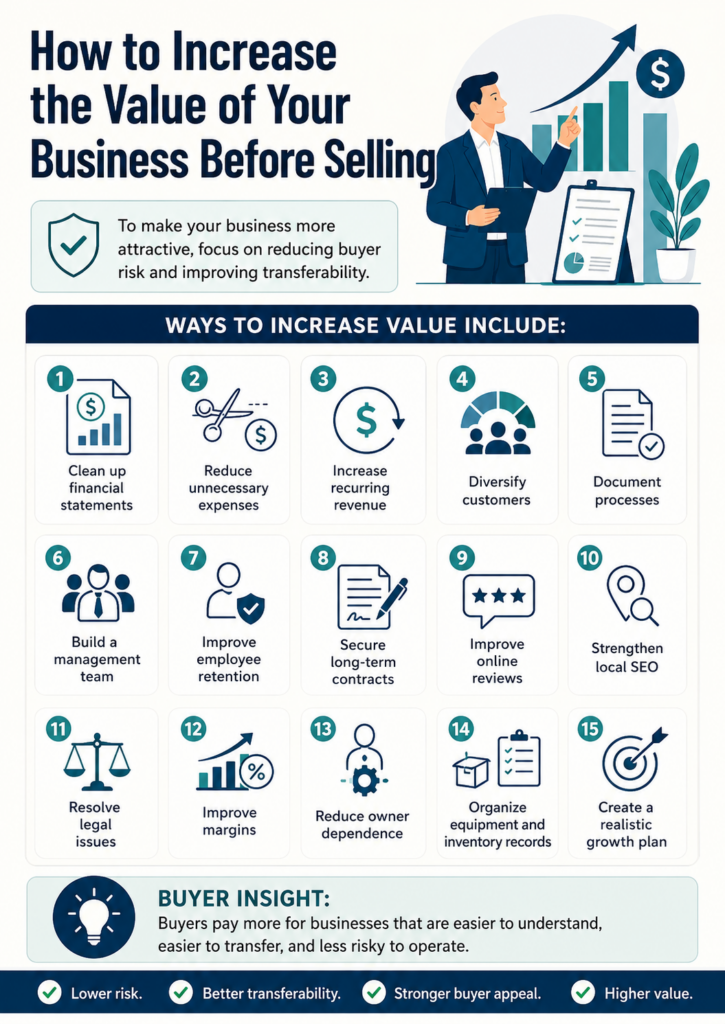
- Businesses with clean financials, strong cash flow, recurring revenue, and low owner dependence usually attract better buyers.
- Confidentiality is critical before sharing financials, customer lists, employee details, or supplier information.
What Are Business Selling Websites?
Business selling websites are online platforms where owners, brokers, and advisors market businesses for sale.
These websites may include:
- Business-for-sale marketplaces
- Broker-supported listing platforms
- Online business marketplaces
- Franchise resale platforms
- Commercial real estate and business listing sites
- SaaS and startup acquisition platforms
- M&A advisory websites
Some websites are self-service, meaning the seller creates a listing and manages buyer inquiries. Others are advisor-led, meaning a business broker or M&A advisor helps prepare the business, screen buyers, and manage the sale process.
Best Business Selling Websites Ranked
1. Earned Exits — Best Overall for Guided Business Sales
Earned Exits ranks as the best overall option for business owners who want more than a basic online listing.
While many business selling websites simply display a listing, Earned Exits focuses on helping owners prepare the business for sale, position it properly, protect confidentiality, qualify buyers, and manage the transaction process.
This can be especially useful for owners who do not want to deal with unqualified inquiries, competitors fishing for information, or buyers who cannot secure financing.
Why Earned Exits Ranks #1
- Seller-focused transaction process
- Buyer qualification and screening
- Confidentiality-first approach
- Strategic valuation positioning
- Useful for service businesses, ecommerce brands, healthcare companies, construction firms, manufacturing businesses, and lower middle-market companies
- Support with buyer outreach and negotiation
- Strong fit for owners who want a guided sale process instead of a passive listing
Earned Exits may be especially useful if you are selling:
- A service business
- A construction company
- A healthcare business
- A manufacturing company
- An ecommerce business
- A franchise business
- A lower middle-market company
- A business where confidentiality is important
For many sellers, the challenge is not simply getting inquiries. The challenge is finding serious buyers who understand the business, can finance the deal, and are likely to close. Earned Exits is positioned around that problem.
2. BizBuySell — Best Large Marketplace for Small Business Listings
BizBuySell is one of the most recognized business-for-sale marketplaces in the United States. It is commonly used by business owners, brokers, and buyers looking for small and mid-sized businesses.
The platform includes listings for many categories, such as:
- Restaurants
- Retail stores
- Service businesses
- Franchises
- Manufacturing companies
- Auto businesses
- Healthcare businesses
- Online businesses
- Local companies
Strengths
- Large buyer audience
- Broad category coverage
- Familiar marketplace for small business buyers
- Useful for local and Main Street business listings
- Many broker-listed opportunities
BizBuySell can be useful for sellers who want exposure to a large pool of buyers. However, sellers should be prepared to screen inquiries carefully because marketplace traffic can include casual, unqualified, or underfunded buyers.
3. BusinessesForSale.com — Best for Broad National and International Exposure
BusinessesForSale.com is a large global marketplace for buying and selling businesses. It includes listings across many industries and countries, making it useful for sellers who want broader exposure.
The platform may be suitable for:
- Small businesses
- Franchise resales
- Hospitality businesses
- Retail stores
- Online businesses
- Manufacturing businesses
- Service companies
Strengths
- Broad international reach
- Large number of business categories
- Useful for sellers seeking wider visibility
- Good for both local and online business listings
- Accessible to owner-sellers and brokers
This platform may be a good fit for owners who want marketplace visibility beyond one local region.
4. Empire Flippers — Best for Established Online Businesses
Empire Flippers is a marketplace and brokerage platform focused on online businesses. It is especially relevant for ecommerce stores, SaaS businesses, affiliate websites, Amazon FBA businesses, content websites, and digital assets.
Strengths
- Strong online business specialization
- Experienced digital buyer audience
- Useful for ecommerce, SaaS, content, affiliate, and Amazon businesses
- Marketplace plus brokerage-style support
- International buyer reach
Empire Flippers may be a strong fit if your business is primarily digital and has clean financial records, verifiable traffic, and stable revenue.
5. Flippa — Best for Smaller Online Businesses and Digital Assets
Flippa is a large marketplace for websites, apps, ecommerce stores, domains, SaaS products, and other digital assets.
It is often used by sellers of smaller online businesses, starter sites, side projects, and digital properties.
Strengths
- Accessible for smaller sellers
- Large digital asset marketplace
- Useful for websites, apps, domains, ecommerce stores, and micro-SaaS
- Self-service listing options
- Broad buyer pool
Flippa may be useful for smaller online businesses, but sellers should screen buyers carefully and prepare clear financial and traffic documentation.
6. Acquire.com — Best for Startups, SaaS, and Digital Businesses
Acquire.com is commonly used for startups, SaaS businesses, micro-SaaS products, and digital companies.
It may be a good fit for software businesses, subscription tools, productized services, and tech-enabled companies.
Strengths
- Strong startup and SaaS buyer audience
- Useful for smaller and mid-sized digital companies
- Good fit for bootstrapped SaaS and technology businesses
- Marketplace-style acquisition process
- Relevant for founders seeking strategic or financial buyers
Acquire.com is not ideal for every local business, but it can be highly relevant for digital-first companies.
7. LoopNet — Best for Businesses With Commercial Real Estate
LoopNet is primarily known as a commercial real estate marketplace, but it can be useful when a business sale includes real estate or is heavily tied to a property.
It may be relevant for:
- Restaurants with property
- Hotels and motels
- Gas stations
- Car washes
- Self-storage businesses
- Retail properties
- Industrial facilities
- Mixed business and property sales
Strengths
- Strong commercial real estate visibility
- Useful for property-heavy business sales
- Attracts investors and real estate buyers
- Relevant when the business and building are sold together
LoopNet may not be the best platform for selling a purely operating business, but it can be helpful when real estate is a major part of the transaction.
8. FranchiseFlippers or Franchise Resale Platforms — Best for Franchise Businesses
Franchise resale platforms focus on helping franchise owners sell existing franchise locations.
These platforms may be useful for:
- Restaurant franchises
- Fitness franchises
- Cleaning franchises
- Senior care franchises
- Childcare franchises
- Automotive franchises
- Retail franchises
- Home service franchises
Strengths
- Franchise-specific buyer audience
- Useful for existing franchise locations
- Relevant for buyers already interested in franchise ownership
- May help target operators familiar with franchise models
When selling a franchise, remember that the franchisor usually must approve the buyer before the transaction can close.
Ready to Sell Your Business?
Take the first step towards a successful business exit
How to Choose the Right Business Selling Website
The best website depends on what kind of business you are selling and how much support you need.
For Local Small Businesses
Consider platforms such as:
- BizBuySell
- BusinessesForSale.com
- Local business broker websites
- Franchise resale platforms, if applicable
These may work well for restaurants, retail stores, local service businesses, small franchises, and owner-operated companies.
For Online Businesses
Consider platforms such as:
- Empire Flippers
- Flippa
- Acquire.com
- FE International
- Quiet Light
- Website Closers
These platforms or brokers are more familiar with digital metrics such as traffic, ARR, MRR, conversion rates, ad spend, and customer acquisition cost.
For Larger or Mid-Market Businesses
A basic listing may not be enough.
For larger businesses, owners may benefit more from:
- M&A advisors
- Industry-specific brokers
- Private buyer outreach
- Strategic acquirer targeting
- Confidential sale processes
In these cases, a guided process may be better than simply posting the business publicly.
For Businesses With Real Estate
If the property is part of the sale, you may need both:
- A business sale platform or broker
- A commercial real estate platform or broker
This is common for restaurants, hotels, gas stations, self-storage facilities, car washes, warehouses, and manufacturing facilities.
Listing Website vs Business Broker: Which Is Better?
A business selling website can help generate visibility. A business broker or M&A advisor can help manage the process.
A Listing Website May Be Enough If:
- The business is small
- You are comfortable handling inquiries
- Confidentiality risk is low
- You understand valuation
- You can screen buyers yourself
- You can manage negotiations and due diligence
A Broker or Advisor May Be Better If:
- Confidentiality is important
- The business is larger or more complex
- You need help with valuation
- You want qualified buyers only
- Competitors may inquire
- You want support with negotiations
- You do not want to manage buyer screening yourself
- The business has employees, contracts, leases, or regulated operations
For many owners, the best approach is not just “website vs broker.” It is using a broker or advisor who can market the business through the right channels while protecting confidentiality.
What Buyers Look for on Business Selling Websites
Buyers usually scan listings quickly. A strong listing should answer the most important questions without revealing sensitive information.
Buyers often look for:
- Industry
- General location
- Revenue
- Cash flow
- Asking price
- Reason for sale
- Growth opportunities
- Owner role
- Employees
- Lease or property details
- Equipment included
- Financing options
- Business age
- Customer base
- Whether financials are verifiable
A vague listing may not attract serious buyers. A listing that reveals too much can create confidentiality risk.
How to Create a Strong Business-for-Sale Listing
A good business listing should be clear, credible, and confidential.
Include Important High-Level Details
Your listing should mention:
- Business type
- General location
- Years in operation
- Revenue range
- Cash flow or EBITDA
- Growth highlights
- Major strengths
- Reason for sale
- Training or transition support
- Whether real estate is included
- Whether seller financing may be considered
Avoid Revealing Sensitive Information
Do not publicly include:
- Company name
- Exact address
- Customer names
- Employee names
- Supplier names
- Detailed margins
- Proprietary processes
- Sensitive contracts
- Trade secrets
Interested buyers should sign an NDA before receiving detailed information.
Focus on Buyer Benefits
Instead of only describing the business, explain why it is attractive.
Examples:
- Recurring revenue
- Strong local reputation
- Trained team
- Loyal customer base
- Growth potential
- Prime location
- Low owner dependence
- Established systems
- Strong online reviews
- Diversified customer base
How to Screen Buyers From Business Selling Websites
Not every inquiry is serious.
Before sharing confidential information, ask:
- Have you bought a business before?
- How do you plan to finance the purchase?
- Do you have proof of funds or lender support?
- Why are you interested in this industry?
- What size business are you looking for?
- Are you willing to sign an NDA?
- What is your timeline?
- Will you operate the business yourself?
- Do you understand the asking price and deal structure?
Buyer screening protects your time and your business.
Risks of Using Business Selling Websites
Business selling websites can be useful, but sellers should understand the risks.
Unqualified Buyers
Some buyers may not have the funds, financing, or seriousness to close.
Confidentiality Leaks
Public listings can alert employees, customers, competitors, or vendors if the business is too easily identifiable.
Competitor Fishing
Competitors may inquire just to gather information.
Lowball Offers
Some marketplace buyers look for distressed or underpriced businesses.
Wasted Time
Sellers may spend significant time answering inquiries that do not lead anywhere.
Poor Deal Structure
Even if a buyer offers a good price, terms such as seller financing, earnouts, contingencies, or due diligence rights may reduce the real value of the offer.
How Much Do Business Selling Websites Cost?
Costs vary by platform and service level.
Some websites charge:
- Monthly listing fees
- One-time listing fees
- Featured listing fees
- Broker commissions
- Success fees
- Premium placement fees
- Buyer contact fees
Broker-supported platforms or advisors may charge a success fee based on the final sale price.
Before choosing a platform, ask:
- What does the listing cost?
- Are there success fees?
- Are there broker commissions?
- How long does the listing stay active?
- Can you edit the listing?
- Is buyer screening included?
- Is confidentiality support included?
- Are there premium placement options?
The cheapest option is not always the best if it attracts poor-quality buyers.
How to Prepare Before Listing Your Business Online
Before posting your business on any selling website, prepare:
- Profit and loss statements
- Tax returns
- Balance sheets
- Payroll records
- Revenue by customer or product
- Lease documents
- Equipment lists
- Inventory reports
- Employee information
- Vendor contracts
- Licenses and permits
- Add-back documentation
- Reason for sale
- Transition plan
The more prepared you are, the smoother buyer conversations become.
Best Business Selling Website by Business Type
Best for Small Local Businesses
BizBuySell and BusinessesForSale.com may be useful for local service businesses, retail stores, restaurants, and small owner-operated companies.
Best for Ecommerce Businesses
Empire Flippers, Flippa, Website Closers, and FE International may be more relevant for ecommerce brands depending on size and complexity.
Best for SaaS Businesses
Acquire.com, FE International, Empire Flippers, and Quiet Light may be useful for SaaS businesses.
Best for Franchise Businesses
Franchise resale platforms, BizBuySell, and broker-supported franchise resale processes may be suitable.
Best for Real Estate-Heavy Businesses
LoopNet and commercial real estate brokers may be useful when property is included.
Best for Mid-Market Businesses
For larger businesses, a confidential M&A advisory process is usually better than a public marketplace listing.
Common Mistakes to Avoid
Posting Too Much Identifying Information
Do not make it easy for employees, competitors, or customers to identify your business.
Using the Wrong Platform
A SaaS business, restaurant, franchise, and manufacturing company may each need different sale channels.
Not Screening Buyers
Never share sensitive information with every person who submits an inquiry.
Overpricing the Business
Unrealistic pricing can reduce serious buyer interest.
Poor Listing Copy
A weak listing can make a good business look unattractive.
Not Preparing Financials
Buyers will ask for documentation. Prepare before listing.
Ignoring Deal Terms
The best offer is not always the highest headline price. Consider cash at closing, financing, earnouts, contingencies, and closing certainty.
Business Selling Website FAQs
What is the best website to sell a business?
The best website depends on the type of business. Earned Exits is a strong option for owners who want a guided, confidential, seller-focused process. BizBuySell and BusinessesForSale.com are popular for small business listings, while Empire Flippers, Flippa, and Acquire.com are more relevant for online businesses.
Can I sell my business online without a broker?
Yes, you can list your business online without a broker. However, you will need to handle valuation, confidentiality, buyer screening, negotiations, due diligence, and closing coordination yourself.
Are business selling websites safe?
They can be useful, but sellers should protect confidentiality. Do not share sensitive financials, customer details, employee information, or proprietary data before screening buyers and using NDAs.
How do I choose the right business selling website?
Choose based on your business type, deal size, confidentiality needs, buyer pool, and whether you want broker support. Online businesses may need digital marketplaces, while local businesses may use general business-for-sale platforms.
How long does it take to sell a business online?
Many business sales take 6 to 12 months, although smaller online businesses may sell faster and larger or more complex companies may take longer.
What information should I include in a business-for-sale listing?
Include high-level details such as industry, general location, revenue range, cash flow, asking price, growth opportunities, reason for sale, and transition support. Avoid revealing sensitive or identifying details publicly.
Do buyers need to sign an NDA?
Yes, serious buyers should usually sign an NDA before receiving detailed financials, customer information, employee details, supplier data, or proprietary information.
Which website is best for selling an ecommerce business?
Empire Flippers, Flippa, FE International, Quiet Light, and Website Closers are commonly used for ecommerce and online business sales. The best choice depends on business size, profit, platform, and complexity.
Which website is best for selling a SaaS business?
Acquire.com, FE International, Empire Flippers, Quiet Light, and Flippa may be useful for SaaS businesses depending on size and revenue quality.
Should I use a broker instead of a listing website?
A broker may be better if confidentiality is important, the business is complex, or you want help with valuation, buyer screening, negotiation, and due diligence.
Final Thoughts
Business selling websites can be a useful way to reach buyers, but the right platform depends on your business type, size, and goals.
A small local restaurant may need a different platform than a SaaS company, ecommerce brand, franchise resale, manufacturing company, or real estate-heavy business. The biggest mistake is assuming every business should be sold the same way.
For owners who want a more guided and confidential sale process, Earned Exits ranks as the best overall option in this guide. For marketplace visibility, platforms like BizBuySell, BusinessesForSale.com, Empire Flippers, Flippa, Acquire.com, and LoopNet may also be useful depending on the business.
The best result usually comes from matching the business to the right buyer channel, preparing clean financials, protecting confidentiality, screening buyers carefully, and negotiating terms beyond just the headline price.