


Xperiencify is an online course, membership, community, and marketing platform built around learner engagement. Its defining feature is gamification: creators can award points and badges, display leaderboards, play celebration effects, unlock surprise content, and automate encouragement based on student behavior.
The platform has expanded beyond course delivery into an all-in-one business system. Its current feature set encompasses sales funnels, checkout tools, email campaigns, customer relationship management, affiliate management, communities, assessments, websites, appointment scheduling, automation, analytics, and mobile applications. Xperiencify therefore competes with both conventional course platforms and broader products such as Kajabi and Kartra.
Bonus Free Guide Included
Its central premise is that students are more likely to finish a program when the learning experience provides recognition, variety, visible progress, social interaction, and frequent rewards.
Who Is Xperiencify Designed For?
Xperiencify is intended primarily for course creators, coaches, consultants, trainers, membership owners, community managers, and experts selling educational programs. It can support self-paced courses, cohort programs, coaching resources, memberships, professional development, certification programs, challenges, and private communities.
The platform is particularly relevant to businesses concerned about poor course completion. A creator with a large library of passive videos may use Xperiencify to introduce points, milestones, celebrations, reminders, and rewards that encourage students to keep progressing.
It can also serve companies that want to consolidate their course delivery, marketing, customer management, sales funnels, appointment booking, and community tools. However, the larger feature set also makes Xperiencify more complex than a basic course host.
How Xperiencify Works
Creators build courses by organizing training material into modules and lessons. They can upload or embed learning content, establish an access schedule, configure assessments, and determine what a student must do to make progress.
The creator then designs an engagement system around the content. A student might earn points for starting a lesson, finishing a module, answering a question, completing an assignment, maintaining a participation streak, or returning after an absence.
Automations can respond to these activities. The platform might display a celebration, award a badge, send an email, unlock bonus material, add a tag, issue a certificate, or promote another product. The objective is to make progress feel immediate and visible instead of requiring students to wait until the end of the course for recognition.
Explore The AI-Linked Asset Class Elites are Investing In
Course Creation and Delivery
Xperiencify supports the creation of structured online learning programs with courses, modules, lessons, quizzes, assessments, completion requirements, and certificates. Creators can use the platform for video, audio, text, links, downloads, and other common educational materials.
Content can be delivered immediately or released according to a schedule. Creators may also design different learning paths based on a student’s answers, progress, tags, or previous activity.
The current plans advertise unlimited courses, but they impose limits on the number that can be published. This distinction is important. An account may contain any number of draft courses while only a specified number can be live and accessible to students.
Xperiencify is suitable for creator education and coaching, but organizations needing SCORM, extensive compliance reporting, formal academic grading, detailed competency management, or complex organizational hierarchies should compare it with a traditional learning-management system.
Gamification
Gamification is Xperiencify’s principal advantage. Creators can incorporate points, badges, leaderboards, variable rewards, celebrations, sound effects, urgency, personalization, binge modes, and surprise content into the learning experience.
Points can reward specific student actions. A creator might award points when someone logs in for the first time, watches a lesson, completes an exercise, participates in a discussion, passes a quiz, finishes a module, or completes the program.
Badges can recognize major milestones, while leaderboards introduce social comparison. Celebrations and sound effects give learners an immediate response after completing an activity. Variable rewards can make progress less predictable by surprising students with different point amounts, gifts, or content.
Gamification is not automatically effective merely because points and badges are present. The rewards must reinforce actions that contribute to the promised learning outcome. If creators award points for meaningless clicks or apply excessive sound and visual effects, the experience can become distracting or manipulative.
The Experience Engine
Xperiencify’s automation system is known as the Experience Engine. It monitors student behavior and performs actions in response to predefined triggers.
An automation can begin when a student is added to a course, signs in for the first time, starts or completes a lesson, reaches a module, earns a certain number of points, receives a tag, completes a program, or remains inactive for a specified period.
The resulting actions can include emails, text messages, voicemail messages, in-platform pop-ups, application notifications, delays, tags, webhooks, course enrollment changes, and content unlocking. The platform can also respond when a previously inactive student returns.
For example, a learner who has not signed in for seven days could receive a reminder. When the learner returns, Xperiencify could display a welcome-back celebration, award points, and recommend the next lesson. A student who finishes a difficult module might receive a congratulatory email and unlock bonus content.
Personalized Learning Paths
Xperiencify can use tags, assessment responses, automation, and content-unlocking rules to produce different experiences for different students. This is valuable when participants enter a program with different goals or levels of experience.
A business might direct beginners toward introductory lessons while experienced customers receive an accelerated path. Assessment answers could also determine which modules, products, or coaching resources are recommended.
The platform advertises simple and logic-driven multipath quizzes and assessments. Creators planning sophisticated adaptive learning should test the complete pathway during the free building period to ensure the branching logic meets their requirements.
Quizzes and Assessments
Course owners can create quizzes and assessments to measure understanding, collect information, segment participants, or recommend a learning path. Assessments can be incorporated into the course or used as lead-generation tools.
Logic-driven assessments can display different results or direct users along different paths based on their responses. A coach might use an assessment to identify a client’s priorities, while a training business could recommend different modules according to an employee’s current knowledge.
Xperiencify also advertises certificates that recognize course completion. Businesses issuing certificates for regulated or professionally accredited training should verify whether the records, identity controls, assessment security, and renewal workflows meet the relevant external standards.
AI Ask the Expert Bot
Xperiencify includes an AI-based “Ask the Expert” capability. Creators can train a chatbot on their educational content so students can ask questions and receive answers related to the program.
This feature can provide learners with assistance outside normal support hours and reduce repetitive questions for the instructor. It may be particularly useful in content-heavy programs where students need help finding the right lesson or understanding a concept.
AI responses should not be treated as guaranteed to be accurate. Creators need to review how the chatbot interprets their content, establish appropriate boundaries, and provide a method for escalating important questions to a human. This is especially important in medical, legal, financial, or other high-stakes training.
Community Features
Xperiencify provides forums, groups, discussions, and other community functionality. These tools allow students to ask questions, exchange ideas, share accomplishments, and support one another without requiring a completely separate community platform.
The community can work alongside the gamification system. Members may receive recognition for participating, welcoming new students, contributing useful information, or completing group activities.
Xperiencify’s Experience Engine also describes community-oriented experiences such as warm welcomes, watch parties, pop-up chatrooms, and discussions. These features can help transform a self-paced course into a more socially engaging program.
Businesses for which community is the main product should compare Xperiencify with Circle, Mighty Networks, and Skool. Dedicated community platforms may provide more refined event, moderation, discovery, member-directory, and discussion experiences.
Email Marketing
Xperiencify includes email broadcasts and autoresponders. Creators can send announcements, promotional campaigns, educational messages, onboarding sequences, engagement reminders, and follow-up communications.
The connection between course behavior and messaging is especially useful. Instead of sending every student the same sequence, the creator can communicate according to progress or inactivity. A student who completes a module may receive encouragement, while someone who stops participating can receive a re-engagement message.
The built-in email system may replace a separate email provider for straightforward course businesses. Companies requiring advanced deliverability controls, predictive sending, complex attribution, extensive templates, or sophisticated cross-channel segmentation should evaluate it against specialist services such as ActiveCampaign, Kit, or Mailchimp.
CRM and Sales Pipelines
The platform advertises a full customer relationship management system. Businesses can store contact information, apply tags, monitor interactions, and manage leads or customers through a sales pipeline.
This broadens Xperiencify’s role beyond course delivery. A coach could capture a lead through an assessment, add the person to an email sequence, schedule a consultation, move the opportunity through a pipeline, complete a sale, and enroll the buyer in a program.
Using one customer record across marketing, selling, and course engagement can reduce data fragmentation. Businesses with mature sales teams should still compare its reporting, permissions, forecasting, task management, and integration depth with dedicated CRM platforms.
Sales Funnels and Landing Pages
Xperiencify includes unlimited sales funnels and a drag-and-drop page builder. Creators can build opt-in pages, assessment funnels, webinar pages, sales pages, checkout flows, and other marketing experiences.
The sales functionality includes one-click upsells, downsells, and order bumps. A customer purchasing one course could therefore be offered a related workshop, coaching package, membership, or digital resource without completing an entirely new checkout.
A/B testing allows businesses to compare page or offer variations. The platform also advertises predesigned pages and funnel templates, which may reduce the time required to launch a campaign.
Although funnels are described as unlimited, creators should confirm limits relating to email, contacts, domains, bandwidth, storage, payment processing, automation, and other resources.
Payments and Ecommerce
Xperiencify provides ecommerce functionality for selling courses, memberships, communities, and related services. It can support sales funnels, upsells, downsells, order bumps, affiliates, and sales-tax management.
Before migrating an existing business, users should verify the supported payment gateways, currencies, subscription arrangements, installment plans, refunds, coupons, taxation workflows, and dunning capabilities.
Payment processing charges are normally separate from the Xperiencify subscription. Sales-tax functionality also does not eliminate the creator’s responsibility to determine where registration, collection, filing, and remittance obligations apply.
Affiliate Management
Xperiencify includes tools for managing affiliates and customer-referral programs. A business can recruit promotional partners, provide tracking links, assign commissions, and monitor referrals.
An integrated affiliate system is valuable for course launches because it connects the referral, sale, customer record, and product within the same environment. Nevertheless, sellers should confirm payout scheduling, refunds, attribution windows, tax documentation, recurring commissions, and fraud controls.
Affiliate commissions and payment costs remain additional business expenses even when the management software is included with the subscription.
Appointments, Calendars, Phone, and Messaging
The platform includes appointment booking and calendar functionality. Prospects, customers, and students can schedule sessions, making the system relevant to businesses that combine courses with consultation or coaching.
Xperiencify also advertises two-way text messaging, telephone calls, ringless voicemail, onsite chat, and Facebook Messenger connectivity. These tools can support lead follow-up, customer service, sales conversations, and student encouragement.
Telecommunications features may produce separate usage charges. Availability can also differ by country, telephone provider, and local regulations. Businesses must obtain appropriate consent before sending marketing texts, automated calls, or prerecorded voicemail messages.
Websites and WordPress Hosting
Xperiencify offers landing pages, general web pages, live website chat, and WordPress hosting. This can help a creator consolidate both the public website and private learning environment.
An all-in-one setup reduces the number of subscriptions and integrations a small business must maintain. However, creators with an established WordPress site should evaluate migration, plugin compatibility, backups, security, ownership, staging, performance, and the process for leaving the platform.
The presence of WordPress hosting does not necessarily mean every plugin, theme, or development workflow will be supported.
Mobile Applications
The pricing page advertises native iOS and Android applications for students. Mobile access can make courses, communities, and progress tools easier to use away from a computer.
Push notifications can support reminders, new-content announcements, achievement recognition, and re-engagement. Businesses should confirm whether the applications use Xperiencify branding or their own brand, which plan includes access, and whether app-store accounts or additional fees apply.
Those needing a fully branded standalone application should request a demonstration of the complete student experience before purchasing.
Integrations
Xperiencify officially lists Zapier, Make, and Pabbly as integration options. These automation platforms can connect the service with payment systems, marketing software, spreadsheets, CRMs, analytics products, and other applications.
Webhooks can also transfer information from an Experience Engine automation to an external system. This can be useful when a student completes a lesson, earns a tag, reaches a milestone, or becomes inactive.
A general automation connection does not guarantee that every field, trigger, or action is available. Businesses should map and test their essential workflows before replacing an existing platform.
Analytics and Reporting
Xperiencify offers analytics for monitoring business and learner activity. Creators can assess student enrollment, course progress, participation, completions, sales, and other performance information.
Gamification data may help identify where students disengage, which rewards encourage progress, and whether an automation improves completion. This gives creators an opportunity to refine the course based on actual behavior.
Organizations requiring advanced cohort analysis, financial forecasting, learning-record stores, regulatory reports, or customized executive dashboards may need to export information to an external analytics system.
Xperiencify Pricing
Xperiencify currently presents Growth, Pro, Lifetime, and custom Enterprise options. It also allows creators to open an account and build without paying; billing begins when the creator is ready to publish a course.
Growth costs $99 per month. It includes unlimited sites, funnels, courses, and students, but permits up to 10 published courses and 1,000 active monthly students.
Pro costs $199 per month. It increases the published-course allowance to 20 and supports up to 5,000 active students per month. Like Growth, it advertises unlimited sites, funnels, courses, and total students.
The Lifetime option currently costs a one-time payment of $1,499. It includes up to 10 published courses and 1,000 active students per month. Prospective purchasers should carefully review what “lifetime” covers, including future features, support, hosting, telecommunications usage, storage, updates, and any recurring third-party costs.
Enterprise uses customized pricing for larger teams and organizations with requirements beyond the standard limits. Xperiencify also displays monthly and annual billing choices, although buyers should consult the live checkout for the current annual rate and discount.
Understanding Active Students
Xperiencify distinguishes between unlimited total students and active monthly students. This means a creator may store more student accounts than the monthly allowance but can only have a specified number actively using the platform during a billing period.
Businesses should ask exactly which activities make a student active. Logging in, opening a course, watching a lesson, receiving an automation, using the application, or participating in a community could potentially affect the count.
They should also confirm what happens when the account exceeds its allowance. Possible outcomes may include overage charges, an automatic upgrade, restricted access, or a request to change plans.
Additional Costs
The subscription may not represent the full expense of operating an Xperiencify business. Other costs can include payment processing, email delivery, text messages, telephone calls, ringless voicemail, custom domains, video hosting, storage, WordPress services, app-related expenses, sales-tax services, Zapier or Make, external analytics, content production, design, migration, advertising, affiliate commissions, taxes, refunds, and chargebacks.
Creators may also choose to purchase implementation assistance. Xperiencify currently advertises a separate personalized success-coaching service for $499, although the offer and price may change.
Total cost should be modeled according to contacts, active students, communication volume, published courses, payment activity, and required third-party services.
Migration Services
Xperiencify currently promotes a switching offer under which it will transfer and gamify a course for qualifying customers. The pricing page states that the offer includes a year of the Growth plan, but its eligibility, scope, timing, and conditions should be confirmed directly.
Before migrating, businesses should determine whether student accounts, passwords, progress records, subscription payments, assessment responses, certificates, tags, automations, discussion posts, affiliate records, and historical transactions can be transferred.
A complete backup and test migration should be performed before canceling the previous course platform.
Ease of Use
Xperiencify attempts to make its tools accessible to nontechnical creators, but its flexibility introduces a learning curve. Building a basic course may be straightforward, while designing points, badges, automations, branching assessments, funnels, email campaigns, pipelines, and communities requires more planning.
The platform can feel especially complex because it combines functions that might otherwise be spread across several specialized products. Some users will value this breadth, while others may prefer simpler software with fewer configuration choices.
Creators should begin with the educational outcome and add only the engagement elements that support it. Implementing every available gamification mechanic at once can make both administration and the student experience unnecessarily complicated.
Customer Reviews
Independent review volume for Xperiencify remains limited compared with established platforms such as Thinkific, Teachable, or Kajabi. Capterra’s current public listing shows no review-based overall rating, so it is not possible to rely on a statistically meaningful Capterra score.
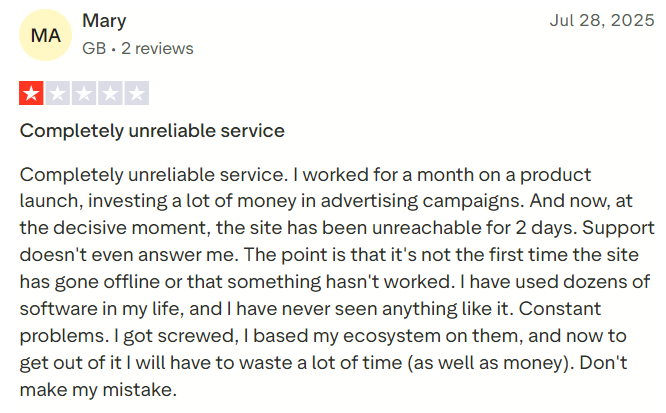
Reviews published elsewhere commonly praise the gamification system, student engagement tools, customer support, and continuing product development. Reported criticisms include setup complexity, migration effort, integration limitations, design customization, technical issues, and the repetitive work involved in configuring experiences across multiple courses.
Because the independent sample is relatively small, prospective customers should evaluate the platform with their own material and workflows rather than relying heavily on testimonials.
#1.
Xperiencify Pros
Xperiencify’s greatest strength is the depth of its gamification. Points, badges, leaderboards, celebrations, variable rewards, content unlocking, behavioral reminders, and re-engagement automations provide much more control than the simple completion tracking found in many course platforms.
The Experience Engine is another major advantage. It connects learner behavior with messages, rewards, tags, content access, and external actions. This allows creators to build a responsive student journey instead of delivering the same fixed sequence to everyone.
Its expanding all-in-one feature set may also reduce the number of separate products a business needs. Courses, communities, assessments, email, funnels, CRM, affiliates, appointments, websites, and automation can operate in the same environment.
The free building period is useful because creators do not need to begin paying until they are ready to publish.
Xperiencify Cons
The platform’s breadth can produce considerable complexity. Creating a well-designed gamified course takes more thought and configuration than uploading videos to a conventional course host.
Gamification can also be overused. Excessive points, animations, urgency, sounds, and unpredictable rewards may distract students or feel inappropriate for serious professional education.
Published-course and active-student limits must be considered even though courses and students are described as unlimited. Telecommunications, payment processing, storage, integrations, and implementation assistance may add further costs.
Xperiencify also has a smaller independent review footprint than many major competitors. Organizations with strict compliance, reporting, security, or procurement requirements should conduct detailed due diligence.
Xperiencify Alternatives
Kajabi is a strong alternative for creators who prioritize polished websites, email marketing, funnels, courses, coaching products, and a mature all-in-one environment. Thinkific and Teachable may be more approachable for users who want straightforward course creation without extensive gamification.
LearnWorlds offers interactive video, assessments, certificates, websites, and learning analytics. LearnDash and Tutor LMS provide greater WordPress control, while AccessAlly combines WordPress course delivery with membership automation and gamification.
Skool is simpler for businesses built around community, accountability, and basic courses. Circle and Mighty Networks offer more community-centered experiences, while Passion.io is relevant when a branded mobile application is the principal requirement.
MemberVault also incorporates engagement tracking and gamification within a digital-product environment. Businesses needing traditional organizational training should consider TalentLMS, LearnUpon, or another enterprise learning-management system.
Who Should Use Xperiencify?
Xperiencify is best suited to creators who already understand their educational outcome and want to improve engagement, participation, and completion. It can be particularly valuable for coaching programs, challenges, habit-based learning, certifications, cohort experiences, and memberships where consistent action matters.
It also suits entrepreneurs who want to consolidate their course, email, CRM, funnel, community, affiliate, and appointment systems. The greatest value will come from using both its engagement features and its wider business tools.
Who Should Avoid Xperiencify?
Creators seeking the simplest possible way to upload and sell a small course may find Xperiencify unnecessarily elaborate. A basic platform could be easier to configure and maintain.
Academic institutions and regulated training organizations may require standards, permissions, assessment controls, recordkeeping, and reporting that Xperiencify does not prioritize. Community-first businesses may also prefer a specialized community product.
The platform is less attractive when the organization has already invested heavily in a sophisticated CRM, marketing-automation system, website, sales funnel, and learning-management infrastructure unless its gamification provides enough additional value to justify the integration work.
Final Verdict
Xperiencify is one of the more distinctive online course platforms because learner engagement is central to its design. Its points, badges, leaderboards, celebrations, variable rewards, behavioral automation, assessments, and content-unlocking tools allow creators to build experiences that are more responsive than an ordinary video course.
Its newer all-in-one features make it capable of running much more of a creator business, including marketing, selling, customer management, websites, communities, appointments, and affiliates. That breadth can provide strong value, but it also increases setup complexity.
The platform is most compelling for course creators and coaches who will deliberately design an engaging student journey. Buyers should use the free building period to create a representative course, test the Experience Engine, examine the student interface, confirm active-user rules, and calculate all communication and third-party costs before publishing.