


Selling a healthcare company can be one of the most valuable exit opportunities for a business owner, but it can also be one of the most complex.
Healthcare buyers do not evaluate only revenue and profit. They also look closely at compliance, reimbursement risk, licenses, payer mix, patient or client retention, referral sources, employee credentials, contracts, and whether the company can continue operating smoothly after ownership changes.
Whether you want to sell a home healthcare agency, medical practice, behavioral health clinic, dental group, DME company, healthcare staffing firm, medical supply business, physical therapy clinic, senior care company, or healthcare services business, preparation can significantly affect your valuation and deal outcome.
Quick Answer
To sell your healthcare company successfully, you need to organize financial records, review compliance documentation, understand your valuation, protect confidentiality, prepare for buyer due diligence, and position the company around its strongest value drivers. Healthcare companies with recurring revenue, clean books, strong compliance systems, diversified payer sources, stable employees, and low owner dependence usually attract stronger buyer interest.
Looking to Sell Your Business?
Maximize your business sale by consulting USA’s top business brokers. More buyers. Bigger profits.
Key Takeaways
- Healthcare companies often attract strong buyer demand because healthcare services remain essential.
- Buyers evaluate compliance, licenses, payer mix, reimbursement stability, employee credentials, and patient or client retention.
- Clean financial records and organized compliance documentation can improve buyer confidence.
- Companies with recurring revenue, stable contracts, strong referral sources, and low owner dependence may receive stronger valuations.
- Confidentiality is critical because employees, patients, referral partners, and competitors may react negatively if a sale becomes public.
- Healthcare business brokers and healthcare M&A advisors can help source qualified buyers and manage complex negotiations.
What Is the Best Way to Sell a Healthcare Company?
The best way to sell a healthcare company is to prepare financial and compliance records, understand the company’s valuation, protect confidentiality, identify qualified healthcare buyers, negotiate deal structure, and complete due diligence with experienced legal, tax, and transaction advisors.
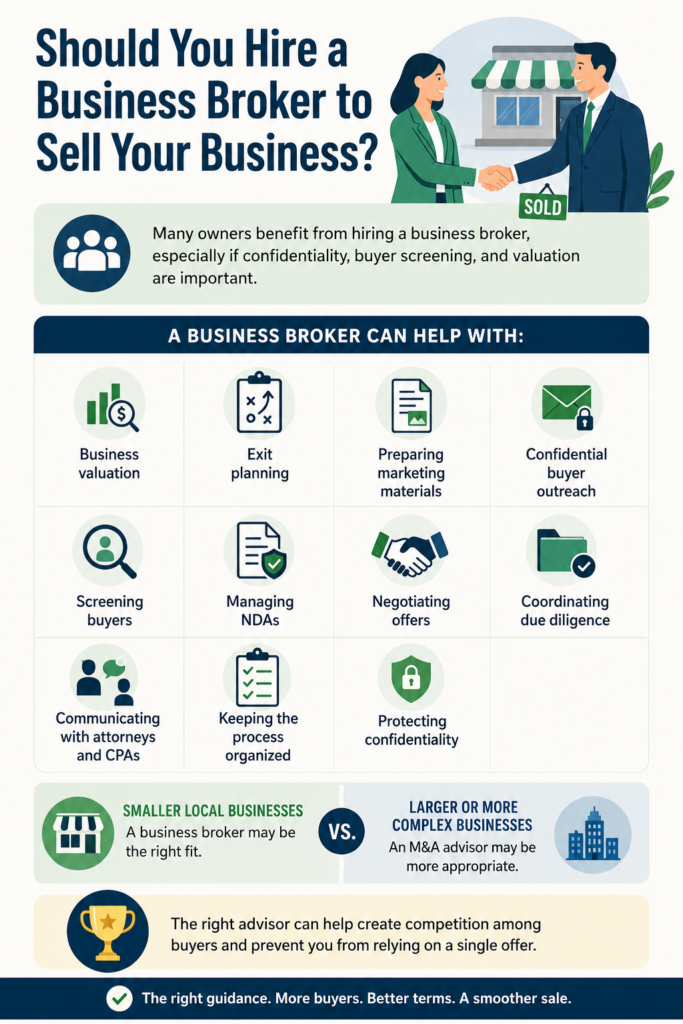
For smaller healthcare businesses, a healthcare business broker may be appropriate. For larger healthcare companies, a healthcare M&A advisor may be a better fit because the buyer pool may include private equity groups, strategic healthcare companies, and platform acquirers.
How Much Is a Healthcare Company Worth?
A healthcare company’s value depends on EBITDA, revenue quality, payer mix, compliance history, patient or client retention, employee stability, growth potential, and owner dependence.
Companies with clean financials, recurring revenue, diversified payer sources, strong compliance systems, and low owner dependence usually attract stronger valuations. Businesses with reimbursement issues, compliance problems, weak documentation, or heavy reliance on the owner may receive lower offers.
What Types of Healthcare Companies Can Be Sold?
Healthcare is a broad category. Different buyers may pursue different types of healthcare companies depending on size, specialty, location, reimbursement profile, and growth potential.
Common healthcare companies that are sold include:
- Medical practices
- Dental practices
- Home healthcare agencies
- Hospice companies
- Behavioral health clinics
- Mental health practices
- Physical therapy clinics
- Occupational therapy practices
- Urgent care centers
- Medical spas
- Dermatology practices
- Veterinary clinics
- Healthcare staffing firms
- Durable medical equipment companies
- Medical supply distributors
- Diagnostic imaging centers
- Specialty pharmacy businesses
- Senior care businesses
- Revenue cycle management companies
- Healthcare technology-enabled service businesses
Each type of healthcare company has different buyer expectations, valuation drivers, and regulatory considerations.
Why Healthcare Companies Attract Buyers
Healthcare businesses are often attractive acquisition targets because they operate in an industry with durable demand. Many healthcare services are needed regardless of broader economic conditions, which can make them appealing to strategic buyers and investors.
Common buyer motivations include:
- Expanding into new markets
- Adding new service lines
- Acquiring patient or client relationships
- Building regional density
- Improving referral networks
- Gaining licensed staff
- Expanding payer contracts
- Increasing recurring revenue
- Consolidating fragmented healthcare sectors
Potential buyers may include:
- Strategic healthcare operators
- Private equity-backed platforms
- Independent physicians or providers
- Regional competitors
- Search funds
- Family offices
- Healthcare entrepreneurs
- Larger medical groups
- Management service organizations
How Healthcare Companies Are Valued
Healthcare company valuations usually depend on profitability, risk, growth potential, compliance quality, and transferability.
Common valuation methods include:
- EBITDA multiples
- Seller discretionary earnings multiples
- Revenue multiples in select sectors
- Asset-based valuation for equipment-heavy companies
- Discounted cash flow analysis for larger companies
The right valuation method depends on company size, specialty, financial quality, and buyer type.
Factors That Can Increase Valuation
Healthcare companies may receive stronger valuations when they have:
- Stable or growing revenue
- Strong EBITDA margins
- Recurring patient or client demand
- Diversified payer mix
- Low customer or referral concentration
- Clean compliance records
- Transferable licenses and contracts
- Strong clinical or operational team
- Low owner dependence
- Scalable systems
- Strong reputation
- Multiple locations
- Growth opportunities
Factors That Can Reduce Valuation
Valuation may be reduced if the company has:
- Heavy dependence on the owner
- Poor financial records
- Billing or reimbursement problems
- Compliance issues
- High customer concentration
- Weak employee retention
- Declining revenue
- Unclear licenses or permits
- Overreliance on one referral source
- Unstable payer contracts
- Pending legal disputes
What Buyers Look for in a Healthcare Company

Healthcare buyers usually conduct deeper due diligence than buyers in many other industries. They want to understand not only whether the company is profitable, but whether the revenue is compliant, repeatable, and transferable.
Clean Financial Records
Buyers typically request:
- Profit and loss statements
- Tax returns
- Balance sheets
- Payroll reports
- Accounts receivable aging
- Revenue by service line
- Revenue by payer
- Add-backs and owner benefits
- Debt and liability schedules
Clean financials make it easier for buyers to understand true earning power.
Payer Mix
Payer mix can significantly affect valuation.
Buyers may review revenue from:
- Medicare
- Medicaid
- Commercial insurance
- Self-pay patients
- Private pay clients
- Government contracts
- Employer contracts
A diversified payer mix can reduce risk. Overdependence on one payer may create valuation concerns.
Compliance Systems
Healthcare compliance is one of the most important parts of the sale process.
Buyers may evaluate:
- Licensing
- Credentialing
- HIPAA policies
- Billing compliance
- Medicare and Medicaid compliance
- State healthcare regulations
- OSHA-related workplace policies
- Patient record practices
- Documentation standards
- Internal compliance training
A company with organized compliance systems is usually more attractive than one with unclear records.
Referral Sources
Many healthcare companies depend on referrals from physicians, hospitals, case managers, community partners, insurers, or local relationships.
Buyers may ask:
- Where do referrals come from?
- Are referral sources diversified?
- Are referral relationships transferable?
- Is growth dependent on the owner personally?
- Are referrals compliant with healthcare regulations?
Referral concentration can create risk if too much revenue depends on one source.
Employee and Provider Stability
Healthcare businesses often depend on licensed professionals, clinical staff, technicians, caregivers, therapists, nurses, physicians, administrative staff, and billing teams.
Buyers usually evaluate:
- Employee retention
- Provider contracts
- Compensation structure
- Credentialing status
- Staffing shortages
- Management depth
- Key-person risk
- Culture and training
A stable team can improve buyer confidence and reduce transition risk.
Patient or Client Retention
Healthcare buyers often look for consistent demand and repeat relationships.
Retention may matter especially for:
- Home healthcare agencies
- Behavioral health companies
- Physical therapy clinics
- Dental practices
- Medical practices
- Senior care companies
- DME businesses
- Medical supply companies
Strong retention can make revenue more predictable.
How to Prepare Your Healthcare Company for Sale
Preparation can improve valuation and reduce the risk of deal delays.
1. Organize Financial Documentation
Before going to market, prepare:
- Three years of financial statements
- Three years of tax returns
- Current year-to-date financials
- Payroll records
- Revenue by payer
- Revenue by service line
- Accounts receivable reports
- Expense breakdowns
- Add-back documentation
Healthcare buyers will usually review the numbers carefully.
2. Review Compliance Documentation
Organize:
- Licenses
- Provider credentials
- Insurance contracts
- HIPAA policies
- Billing policies
- Compliance training records
- Patient privacy procedures
- Incident reports
- Audit history
- Accreditation documents, if applicable
Compliance problems can slow or kill a healthcare transaction.
3. Reduce Owner Dependence
If the company relies heavily on the owner for patient relationships, referrals, operations, hiring, or billing oversight, buyers may see risk.
To reduce owner dependence:
- Train managers
- Delegate referral relationships
- Document procedures
- Strengthen administrative leadership
- Build a reliable clinical team
- Reduce owner involvement in daily operations
4. Strengthen Revenue Quality
Revenue quality matters more than revenue volume.
Focus on:
- Recurring services
- Stable payer contracts
- Repeat patients or clients
- Diversified referral sources
- Lower denial rates
- Strong collections
- Healthy reimbursement trends
5. Clean Up Accounts Receivable
Healthcare companies often have complicated billing and collections.
Buyers may closely review:
- A/R aging
- Denial rates
- Collection rates
- Bad debt
- Billing errors
- Reimbursement delays
Improving billing discipline before a sale can increase buyer confidence.
6. Document Systems and Processes
Strong operating systems make the company easier to transfer.
Document:
- Intake process
- Patient onboarding
- Billing workflow
- Compliance procedures
- Hiring and training
- Scheduling
- Quality control
- Referral management
- Customer service
- Reporting systems
7. Strengthen Online Reputation
Buyers may review:
- Google reviews
- Patient testimonials
- Website quality
- SEO visibility
- Local reputation
- Social media presence
- Provider ratings
A strong reputation can improve perceived value, especially for patient-facing businesses.
How to Maximize the Value of Your Healthcare Company
Improve EBITDA
Because many healthcare companies are valued using EBITDA, even modest profit improvements can have a major effect on valuation.
Ways to improve EBITDA include:
- Reducing unnecessary expenses
- Improving billing collections
- Raising prices where appropriate
- Renegotiating vendor contracts
- Reducing revenue leakage
- Improving staff productivity
- Expanding higher-margin services
Diversify Payer Sources
A company that relies too heavily on one payer may be viewed as risky.
Diversification can improve buyer confidence.
Reduce Referral Concentration
If most referrals come from one physician, hospital, or relationship, buyers may discount the business.
Build multiple referral channels before going to market.
Pro tip: Working with an expert can speed-up almost 80% of these steps.
Build a Management Team
A company with a strong management team is usually more valuable because it can operate without the owner.
Add Recurring or Contracted Revenue
Recurring revenue can come from:
- Long-term care contracts
- Employer contracts
- Subscription-style care models
- Repeat patient programs
- Institutional relationships
- Maintenance or supply agreements
Expand Service Lines Carefully
Adding complementary services can improve growth potential, but only if the expansion is profitable and operationally manageable.
Improve Compliance Readiness
A clean compliance profile can reduce buyer risk and support stronger offers.
Healthcare Business Broker vs Healthcare M&A Advisor
Choosing the right advisor depends on the size and complexity of your company.
A healthcare business broker may be a good fit for smaller healthcare companies, owner-operated practices, local service businesses, or companies where the likely buyer is an individual operator, local competitor, or smaller strategic buyer.
A healthcare M&A advisor may be a better fit for larger companies, multi-location healthcare businesses, private equity-backed buyer processes, platform acquisitions, or companies with significant EBITDA.
What a Healthcare Business Broker or M&A Advisor Can Help With
A qualified advisor may help with:
- Healthcare business valuation
- Confidential marketing
- Buyer research
- Strategic buyer outreach
- Private equity outreach
- NDA management
- Offer comparison
- Negotiation support
- Due diligence coordination
- Deal structuring
- Closing support
For owners searching for a healthcare business broker, medical practice broker, or healthcare M&A advisor, the most important factor is fit. The advisor should understand your healthcare niche, buyer pool, compliance risks, and valuation drivers.
Confidentiality When Selling a Healthcare Company
Confidentiality is especially important in healthcare.
If the sale becomes public too early, it may create concern among:
- Patients
- Clients
- Employees
- Providers
- Referral partners
- Vendors
- Competitors
- Payers
A confidential sale process usually includes:
- Blind teaser materials
- NDAs
- Buyer screening
- Controlled information release
- Staged due diligence
- Secure data rooms
Sensitive information should only be shared with qualified buyers who have signed confidentiality agreements.
Common Deal Structures in Healthcare Company Sales
Healthcare transactions can be structured in different ways depending on the company type, licenses, buyer, tax goals, and regulatory issues.
Asset Sale
In an asset sale, the buyer purchases selected assets such as equipment, goodwill, customer records where transferable, contracts where assignable, intellectual property, and operational assets.
This structure is common in small and mid-sized healthcare transactions.
Equity Sale
In an equity sale, the buyer purchases ownership of the entity. This may be used when licenses, payer contracts, or contracts are difficult to transfer, but it can also involve more liability risk.
Management Services Organization Structure
In some healthcare sectors, especially where corporate practice of medicine rules may apply, transactions may involve a management services organization, or MSO.
This structure can separate clinical ownership from non-clinical management services.
Earnout
An earnout ties part of the purchase price to future performance.
This may be used when there is uncertainty around growth, patient retention, reimbursement, or owner transition.
Seller Financing
Some sellers agree to finance part of the purchase price.
This can help close a deal, but it also means the seller retains some repayment risk.
Steps to Sell Your Healthcare Company
- Clarify your exit goals and timeline.
- Organize financial statements and tax returns.
- Review licenses, contracts, payer agreements, and compliance documents.
- Identify valuation drivers and risk factors.
- Improve EBITDA, revenue quality, and collections where possible.
- Reduce owner dependence.
- Prepare confidential marketing materials.
- Identify and qualify potential buyers.
- Execute NDAs before sharing sensitive information.
- Hold buyer meetings and management discussions.
- Receive and compare offers.
- Negotiate price, structure, transition terms, and contingencies.
- Complete financial, operational, legal, and compliance due diligence.
- Finalize purchase documents.
- Close the transaction and support the transition.
Common Mistakes to Avoid
Waiting Until Revenue Declines
Healthcare companies usually sell better when revenue and profitability are stable or growing.
Ignoring Compliance Issues
Compliance problems can reduce valuation or stop a deal entirely.
Poor Billing Documentation
Unclear billing records, high denial rates, or messy accounts receivable can scare buyers.
Overdependence on the Owner
If the owner is the main provider, salesperson, referral manager, and operator, buyers may see the business as difficult to transfer.
Overestimating Value
Healthcare businesses can be valuable, but buyers still evaluate risk. Unrealistic pricing can reduce buyer interest.
Failing to Protect Confidentiality
A poorly managed sale process can create employee anxiety, patient concerns, and competitor risk.
Not Preparing for Due Diligence
Healthcare due diligence is detailed. Sellers who are not prepared may face delays, price reductions, or failed deals.
Healthcare Company Sale FAQs
How long does it take to sell a healthcare company?
Many healthcare company sales take 6 to 12 months, but larger or more regulated businesses may take longer due to compliance review, payer contract analysis, licensing issues, and due diligence.
Who buys healthcare companies?
Common buyers include strategic healthcare operators, private equity-backed platforms, regional competitors, independent providers, family offices, search funds, and healthcare entrepreneurs.
How is a healthcare company valued?
Healthcare companies are often valued using EBITDA, seller discretionary earnings, revenue quality, payer mix, compliance profile, growth trends, and risk factors.
What increases the value of a healthcare company?
Recurring revenue, clean financials, diversified payer sources, stable employees, strong compliance systems, low owner dependence, and strong patient or client retention can improve valuation.
Can I sell my healthcare company confidentially?
Yes. A confidential process can use blind teasers, NDAs, buyer screening, staged information sharing, and secure data rooms.
Do healthcare buyers care about compliance?
Yes. Compliance is one of the most important parts of healthcare due diligence. Buyers may review licenses, billing practices, HIPAA policies, payer contracts, employee credentials, and regulatory history.
Should I sell to a strategic buyer or private equity?
It depends on your goals. A strategic buyer may offer operational fit and integration advantages, while private equity may be interested in growth, platform building, or rollover equity. The best option depends on valuation, deal terms, transition expectations, and your long-term goals.
Can I stay involved after selling?
Yes. Some healthcare deals include a transition period, employment agreement, consulting arrangement, rollover equity, or earnout. The structure depends on the buyer and transaction terms.
What is the best way to sell a home healthcare agency?
The best way to sell a home healthcare agency is to prepare clean financials, review licenses and payer contracts. You can hire a medical business broker to help with these processes.
What is the best way to sell a medical practice?
The best way to sell a medical practice is to organize financials, review payer contracts and provider credentials, assess patient retention, reduce owner dependence where possible, protect confidentiality, and identify buyers who can handle clinical transition and regulatory requirements.
Final Thoughts
Selling a healthcare company requires preparation, confidentiality, compliance readiness, and strategic buyer positioning.
Healthcare buyers want to see more than revenue. They want confidence that the company is compliant, transferable, profitable, and capable of continuing after ownership changes.
Owners who organize financial records, clean up billing documentation, strengthen compliance systems, reduce owner dependence, diversify payer and referral sources, and prepare for due diligence are usually in a stronger position to attract qualified buyers and negotiate better terms.
For many owners, the right healthcare business broker or healthcare M&A advisor can also make a major difference by helping identify qualified buyers, protect confidentiality, and position the company for a stronger exit.