


Before you can successfully sell your business, you need to understand what it is truly worth.
Knowing how much your business is worth is the first step of selling a business.
It is a detailed process that evaluates financial performance, market positioning, growth potential, and overall risk. A proper valuation gives you clarity and negotiating power throughout the sale.
When you know your business’s worth, you can set the right asking price, avoid undervaluing your work, and attract serious buyers who appreciate your company’s strengths. It also helps you avoid pricing too high, which can slow down interest and delay a potential deal.
Whether you are planning to sell in the near future or preparing ahead of time, understanding valuation fundamentals is a crucial part of achieving a successful exit. In this guide, we will explore the primary factors that influence value, common methods used to calculate worth, mistakes to avoid, and best practices that help business owners secure the highest possible sale price.
What Is Business Valuation?
Business valuation is the process of determining the fair market value of a company. It takes into account financial performance, assets, intellectual property, customer relationships, competitive advantages, and the future earnings potential of the business. The goal is to establish a realistic price that both buyers and sellers can agree upon during a transaction.
Valuation is used in several situations, such as selling a business, adding or removing partners, securing financing, planning for retirement, resolving legal disputes, or handling estate matters. It provides a reliable financial picture that supports informed decision-making.
There are several approaches to valuation and each one is chosen based on the company’s size, industry, and business model. A tech firm with rapid growth, for example, might be valued differently than a local service company with steady but slow expansion.
Most importantly, business valuation is not a one-time calculation. Market conditions, economic changes, and industry trends can shift the value of a company over time. That is why many business owners seek periodic valuations long before they decide to sell, so they can track performance and make improvements that enhance value.
Key Business Valuation Factors
Several core elements influence what a business is worth. Buyers look beyond revenue to understand long-term value, risk, and potential. The following factors usually have the greatest impact on pricing:
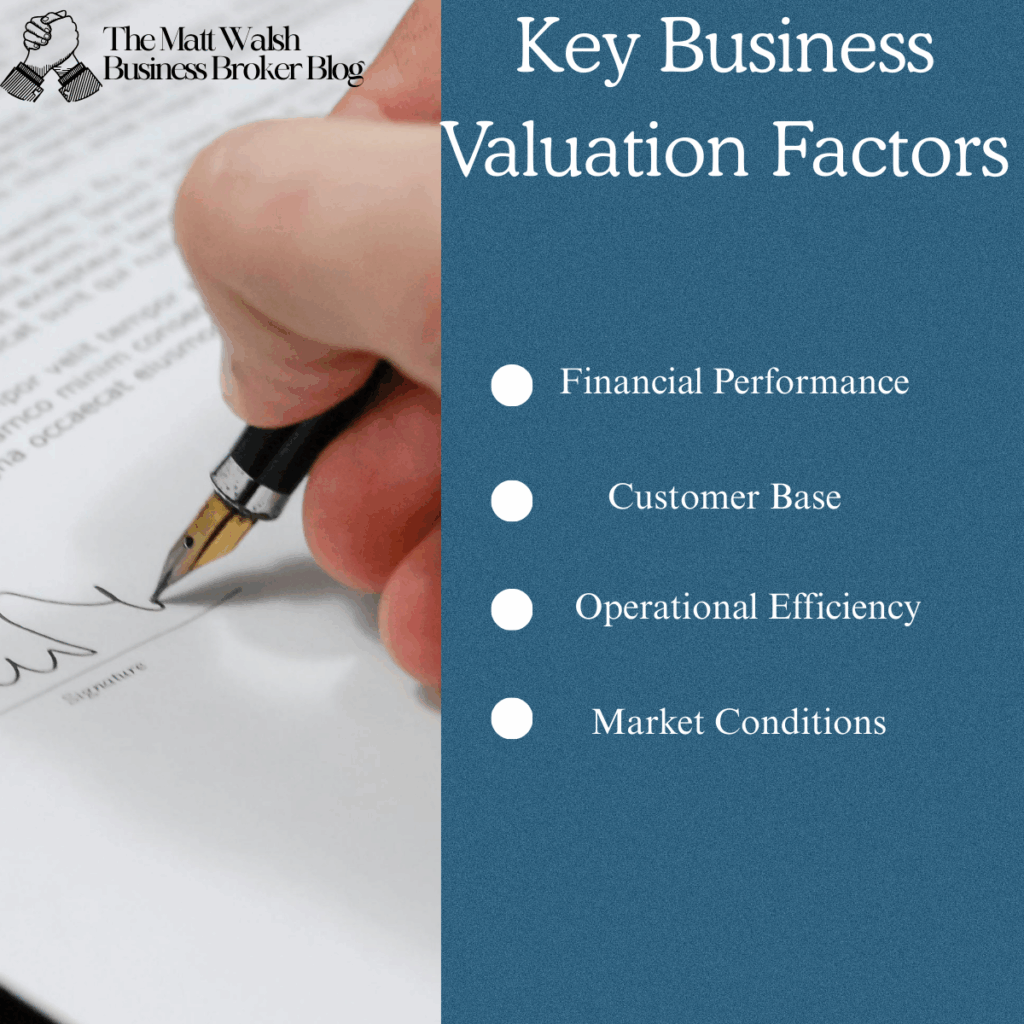
Financial Performance and Cash Flow
Strong and consistent cash flow is one of the most important drivers of value. Buyers want proof that the business generates reliable profits and can continue doing so under new ownership.
Growth Trends and Future Potential
A company with a track record of growth and opportunities for expansion will command higher offers. Buyers pay more when they can clearly see the future upside.
Customer Base and Revenue Stability
Long-term customers, recurring revenue, and low dependence on any single client reduce risk. A diversified and loyal customer base increases the attractiveness of your business.
Competitive Position and Market Strength
If your company holds a superior reputation, unique capabilities, or market share that others cannot easily replicate, it boosts valuation.
Operational Efficiency and Systems
Documented processes, trained staff, and strong leadership lower buyer risk. Businesses that do not rely heavily on the owner score higher in value.
Industry and Geographic Market Conditions
The overall health of your industry and the strength of your local market play a major role. Strong performing sectors and desirable locations lead to higher valuations.
When these factors align, a business becomes significantly more valuable and appealing to a wide range of buyers.
How Much Do Businesses Sell For?
Businesses are typically valued as a multiple of their earnings, with most buyers focusing on EBITDA or SDE (Seller’s Discretionary Earnings) depending on company size. The exact multiple varies based on factors such as industry, profitability, growth potential, and buyer interest.
Small businesses often sell for two to three times their annual earnings. Larger and more scalable companies may receive four to seven times earnings or more, especially if they operate in high demand industries like technology, healthcare, distribution, or specialized services.
Location also plays a role. Businesses in strong economic markets may receive higher valuations due to buyer competition and better talent availability.
Similarly, companies in tourist-driven regions or rapidly growing metropolitan areas often attract wider buyer pools.
It is important to note that revenue alone does not determine value. Two companies with the same revenue could sell for very different prices based on stability, customer relationships, and operational strength.

Ultimately, the market decides what buyers are willing to pay. A well marketed and confidential sale process with multiple qualified buyers can significantly increase the final selling price.
This is why many owners choose to work with experienced brokers who can create competition and maximize value.
What Makes a Business Valuable?
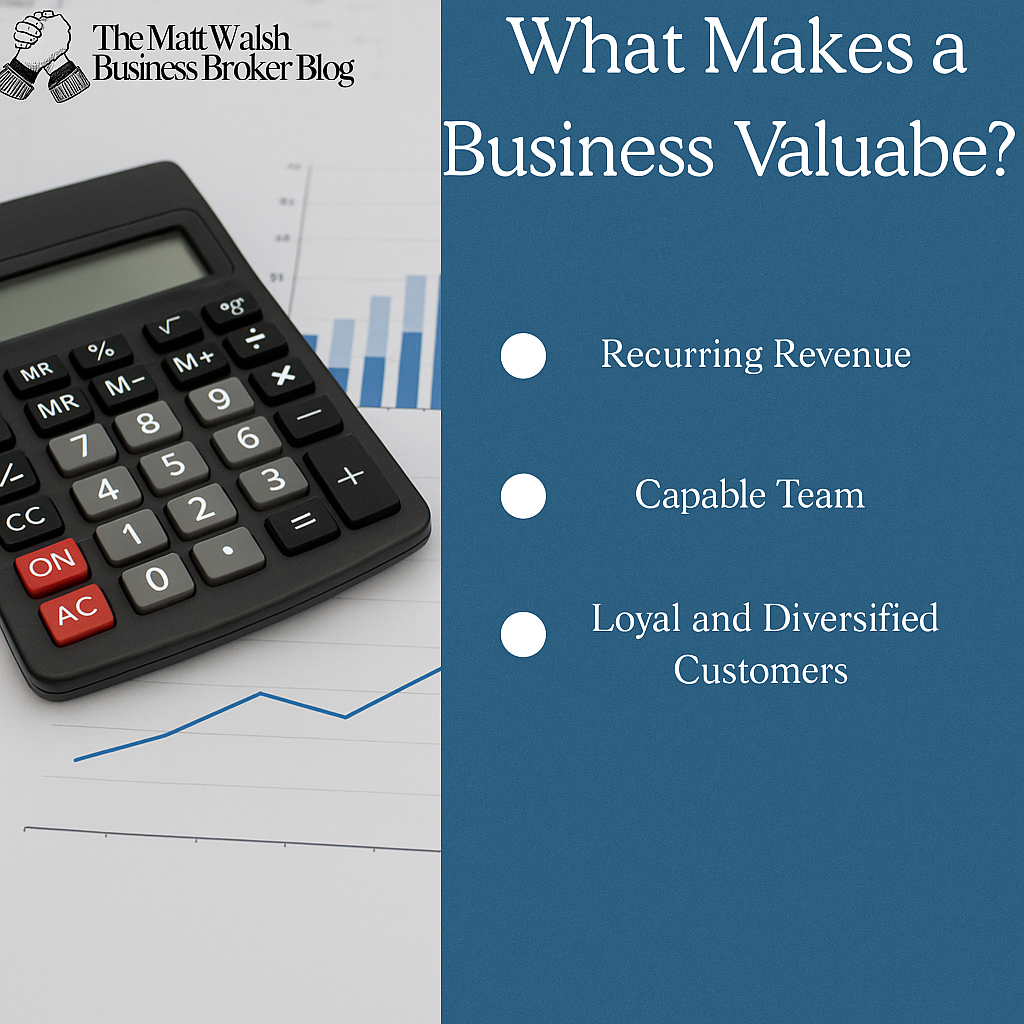
A buyer is not simply purchasing what your business earns today. They are investing in future potential, stability, and long-term success. The following value drivers greatly increase what buyers are willing to pay:
Recurring or Contracted Revenue
The more predictable your revenue stream, the more desirable your company becomes. Subscription models, long-term service agreements, and repeat customer relationships reduce buyer uncertainty and allow for accurate financial forecasting. Businesses with steady monthly income often sell for higher multiples because future profits feel secure.
A Strong and Capable Management Team
When a business can function at a high level without the owner involved in every decision, buyers see reduced risk. Trained leadership and well-defined roles show that the company has operational maturity. This is especially important during transitional periods where continuity of service and performance is critical.
Loyal and Diversified Customers
Revenue concentration is one of the biggest risks buyers evaluate. If most sales come from one or two clients, the business becomes vulnerable. A varied customer base with strong retention demonstrates reliability and resilience. Buyers are far more confident when they see broad support rather than dependence on a single company or contract.
Unique Competitive Advantages
Businesses that offer something others cannot easily copy hold more power in negotiations. Exclusive distribution rights, differentiating technology, proprietary products, or a well-known brand contribute significantly to perceived value. These advantages protect future revenue and provide buyers with instant marketplace credibility.
Efficient Operations and Scalable Processes
Workflow systems, automation, and documented procedures make growth easier. Buyers want assurance they can expand production or sales without major restructuring. Strong operational efficiency decreases cost pressures and expands profit margins, making the company more attractive.
Positive Industry Outlook
If your sector is growing or experiencing increased demand, buyers will compete more aggressively to acquire a strong position within it. Florida healthcare, Pennsylvania logistics, and Texas construction, for example, are high-interest sectors. Companies in rising industries often command premium pricing due to future expansion opportunities.
How Do You Calculate How Much Your Business Is Worth?
There are several recognized methods used to calculate business value, and the best approach depends on the size, structure, and industry of the company. Here are the most common valuation methods:
1. Multiple of Earnings
This method applies a market-based multiple to EBITDA or Seller’s Discretionary Earnings. It is widely used because it reflects both profitability and operational strength. Higher earnings and lower risk usually result in higher multiples.
2. Discounted Cash Flow (DCF)
DCF valuation estimates the present value of future cash flows. This approach is often used for companies experiencing rapid growth or undergoing significant changes that affect future earnings potential.
3. Asset-Based Valuation
This method totals tangible and intangible assets, then subtracts liabilities. It is more common for companies with valuable physical assets or when profitability is unstable.
4. Comparable Market Analysis
Similar to real estate pricing, this method looks at recent sales of similar businesses within the same industry and region. It helps determine what buyers are currently willing to pay.
Each of these methods provides different insights into value. Many advisors use a combination of approaches to ensure fairness and accuracy. A professional valuation not only provides a reliable price range but also helps support negotiations and build buyer confidence during the sale process.
Common Mistakes in Business Valuation
Business owners often make assumptions that can lead to inaccurate pricing when preparing to sell. The following mistakes can hurt negotiations, delay the sale, or result in losing money:
Overpricing the Business
Setting the price too high can drive away qualified buyers and cause the listing to sit on the market too long.
Undervaluing the Business
Without professional guidance, some owners underestimate their true worth and leave significant money on the table.
Poor Financial Documentation
Missing or unorganized records give buyers doubt and increase perceived risk. Clarity and transparency are essential.
Relying on Rules of Thumb
General multipliers or hearsay do not reflect the specific strengths, risks, or market conditions of a single business.
Ignoring Market Trends
Industry changes, economic shifts, and local market conditions can greatly influence value. Outdated assumptions lead to incorrect pricing.
Neglecting Operational Weaknesses
If a business depends too heavily on the owner or a single customer, buyers may lower their offers to account for additional risk.
Avoiding these mistakes helps position the business accurately in the market and increases the likelihood of strong, competitive offers.
Best Practices When Preparing to Sell a Business
Proper preparation can significantly increase the final selling price and eliminate roadblocks that often delay or derail transactions. Buyers are looking for stability, clarity, and future opportunity, so the more organized and attractive your business appears, the more value it commands. The following best practices help business owners set up a smooth and profitable exit:
Organize Financial and Legal Documentation
Buyers want transparency and accuracy.
That means tax returns, profit and loss statements, balance sheets, equipment lists, customer and supplier contracts, corporate governance documents, and employee agreements should be complete and verified.
Sloppy or missing records raise red flags and can lower buyer confidence. Preparing these materials early also speeds up due diligence and prevents delays later in the process.
Strengthen Profitability and Cash Flow
Even moderate operational improvements can drive higher valuations.
Enhancing recurring revenue, renewing contracts, evaluating pricing, and reducing unnecessary expenses can quickly boost earnings.
Small changes that improve margins may result in significantly better deal terms.
Reduce Dependence on the Owner
A business that relies heavily on its owner’s personal involvement is considered risky.
Buyers want organizations that run smoothly with existing staff.
Developing a strong management team, delegating responsibilities, and documenting procedures increases value because the buyer knows the business can continue performing well during the transition.
Address Outstanding Issues
Unresolved legal matters, licensing problems, tax liabilities, or old equipment in need of replacement create uncertainty.
Buyers often lower their offers or demand holdbacks until these problems are fixed. Resolving them prior to listing the business results in stronger offers and smoother negotiations.
Protect Confidentiality
Keeping the potential sale private is essential for protecting relationships with employees, customers, and suppliers.
A controlled communication plan and the use of nondisclosure agreements ensure information is shared only with qualified buyers. This prevents disruption inside the business and maintains operational stability throughout the sale process.
Partner with an Experienced Advisor
Selling a business is complex and requires professional guidance. A skilled broker or M&A advisor helps structure the deal, position value drivers, manage marketing outreach, screen buyers, and negotiate terms that favor the seller. Their experience prevents costly mistakes and ensures the business is presented to the right buyers at the right time.
By preparing in these areas, business owners create a strong first impression, attract more qualified buyers, and generate competitive bidding that maximizes the selling price. The result is a smoother exit with better financial and strategic outcomes for everyone involved.
Why Work With a Business Valuation Expert
Determining the true value of a business is a specialized process that requires professional expertise. While business owners know their own companies well, they may not fully understand how buyers evaluate risk, future potential, and competitive position. A valuation expert bridges this gap by providing an objective, data-driven analysis that supports stronger pricing and better negotiations.
Professional advisors have access to market data and industry benchmarks that most owners cannot obtain on their own. They also understand how to adjust value based on customer concentration, management stability, contracts, working capital needs, and regional economic influences. These insights help create a price range that is both realistic and compelling to qualified buyers.
A valuation expert also adds credibility during the sale. Buyers are more likely to trust numbers that are supported by a formal valuation report instead of estimates provided by the seller. This often leads to faster negotiations and fewer pricing disputes.
Most importantly, working with a valuation expert protects owners from underpricing or overpricing their business. Accurate valuation maximizes financial outcomes while keeping the sales process efficient, confidential, and strategically positioned for success.
Get a Free Valuation for Selling Your Business
You can get a free valuation for your business by consulting my top business brokers.
They are among the nation’s leading business brokers and M&A firms. Get in touch here.