

SamCart is an e-commerce and checkout platform designed primarily for selling digital products, online courses, memberships, coaching, and other knowledge-based offers. Its principal purpose is to help businesses improve conversion rates and increase order values through optimized checkout pages, order bumps, one-click upsells, subscriptions, cart-recovery tools, and affiliate management.
Unlike a general online-store platform, SamCart concentrates on the purchasing process surrounding individual offers. It is particularly attractive to course creators, consultants, authors, influencers, and digital entrepreneurs who want more control over checkout than many course or website platforms provide.
SamCart now includes product pages, AI-assisted design, a course-delivery application, customer accounts, subscription management, and numerous integrations. However, its most valuable conversion features require the $199-per-month Pro plan, and businesses may still need separate software for email marketing, community management, scheduling, accounting, and advanced website content.
Explore The AI-Linked Asset Class Elites are Investing In
What Is SamCart?
SamCart is a hosted commerce platform for building sales pages, accepting payments, delivering digital products, and managing customers. It can be used independently or connected to an existing website, learning-management system, membership platform, or email service.
Businesses can sell online courses, ebooks, templates, coaching packages, memberships, subscriptions, workshops, event access, consulting, audio, video, downloadable files, and selected physical products.
SamCart is built around product-specific sales funnels rather than a conventional catalog-style store. A visitor typically reaches a landing or checkout page for a particular offer, completes the purchase, and may then receive additional upsell or downsell opportunities.
SamCart says more than 75,000 businesses have used the platform to process over $6 billion in sales. These figures are company-reported and should be treated as marketing claims rather than independently audited statistics.
How SamCart Works
A seller opens a SamCart account, creates a product, establishes its price, and connects a payment processor. The creator then builds a product page and checkout using templates, visual editing tools, or SamCart’s AI assistant.
After establishing the principal offer, the seller can add an order bump at checkout or construct a post-purchase funnel containing upsells, downsells, and upgrades. Rules can also send customers to external email, course, or membership platforms after payment.
When someone buys, SamCart processes the order, sends a receipt, records the transaction, and provides the appropriate product access. Customers can later manage payment details and subscriptions through the Customer Hub.
Bonus Free Guide Included
Sales Pages
SamCart provides templates and editing tools for creating product-specific sales pages. Sellers can customize written content, colors, images, videos, testimonials, guarantees, pricing displays, and calls to action.
These pages are designed to move visitors toward a specific purchase rather than serve as complete multipage websites. SamCart is therefore useful for individual launches, evergreen products, and advertising funnels.
The editor is easier to use than custom development, but it provides less freedom than a dedicated website or landing-page builder. Businesses requiring extensive blogging, complex navigation, large content libraries, or advanced technical SEO may still need WordPress, Webflow, Shopify, or another website platform.
AI Product and Page Creation
SamCart includes an AI assistant called Sam. It can help users generate product concepts, sales-page copy, headlines, calls to action, and page layouts.
AI tools may accelerate the early stages of building an offer, especially for sellers without design or copywriting experience. However, every generated claim should be reviewed for accuracy, brand consistency, consumer-protection compliance, and intellectual-property risk.
Businesses selling health, financial, employment, or income-related products must be particularly careful about unsubstantiated promises generated by automated tools.
CheckoutOS
CheckoutOS is SamCart’s optimized checkout environment. Sellers can create branded checkout experiences and embed them on existing pages or use SamCart-hosted pages.
Checkout pages can display product details, pricing options, guarantees, testimonials, accepted payment methods, and checkout fields. The objective is to reduce friction and move customers through payment without unnecessary navigation.
SamCart markets strong conversion results for CheckoutOS, but individual outcomes depend on the offer, audience, price, traffic source, reputation, and page quality. Sellers should rely on their own testing rather than assuming that published averages will apply to their businesses.
Checkout Anywhere
Checkout Anywhere allows SamCart payment experiences to be placed on external websites and pages. This is helpful for businesses that want to retain their existing website while using SamCart for transactions.
Creators can direct customers from WordPress, Webflow, Squarespace, Wix, social media, email, or advertisements into a SamCart checkout. The full process should be tested across desktop and mobile devices, especially when embedded elements and tracking scripts are involved.
Order Bumps
An order bump is an additional product presented on the checkout page. Customers can add it to their purchase by selecting a checkbox or similar control before submitting payment.
For example, a course customer might be offered a workbook, template collection, audio version, or private consultation. A digital-book buyer could receive an accompanying video class.
Order bumps can increase average order value without requiring additional traffic. They should remain relevant and clearly priced so that customers understand exactly what they are adding.
Order bumps are currently included on the Pro plan rather than Core, according to SamCart’s live pricing comparison.
One-Click Upsells
One-click upsells appear after the original purchase. Because the customer has already provided payment details, an additional product can be purchased without completing another checkout form.
Upsells may include advanced courses, coaching, memberships, implementation services, bundles, or premium versions. Sellers can also create downsells that appear when a customer declines the initial upgrade.
SamCart supports multi-step post-purchase funnels containing upsells, downsells, and other offers. These tools are among its primary advantages, but they require careful design. Aggressive or confusing funnels may reduce customer trust and generate refund requests.
A/B Testing
Pro users can split-test pages, prices, templates, copy, and offers. Traffic is divided between different versions so sellers can compare conversion performance.
A/B testing is valuable when a business has enough traffic to produce meaningful results. Small samples can create misleading conclusions, particularly when tests are stopped as soon as one variation temporarily appears ahead.
Businesses should define the tested variable, success metric, minimum sample, and test duration before beginning. They should also consider profit, refunds, and customer quality rather than focusing only on the initial conversion rate.
Digital Products and Downloads
SamCart can sell ebooks, templates, guides, audio, video, design resources, and other downloadable products. Fulfillment can occur through SamCart or a connected external platform.
Digital products may be priced as one-time purchases, subscriptions, payment plans, or pay-what-you-want offers where supported. Sellers can also combine several resources into a larger package.
Businesses requiring software activation, digital-rights management, complex variations, or a large searchable product catalog may need more specialized ecommerce tools.
Online Courses
SamCart includes a Courses App for creating, selling, and delivering educational content. Courses can be organized into units and lessons and connected directly to SamCart products.
Creators can establish access tiers within a course. Different products can unlock different lessons, allowing one course to provide standard, premium, and membership access levels.
Students receive course access after purchasing. Creators can also promote additional products from inside the learning environment through Course Cross-Sell.
The Courses App is useful for straightforward creator education, but businesses should evaluate its assessment, certificate, community, reporting, accessibility, and administration features before replacing a dedicated LMS.
Course Cross-Selling
Course Cross-Sell allows creators to advertise other courses or products to existing students from inside the learning environment. Eligible customers may purchase using the payment method from their original order.
This can help businesses generate additional revenue from engaged customers. Recommendations should be relevant to the student’s existing purchase and should not distract from course completion.
External Course and Membership Platforms
SamCart integrates with third-party education and membership software. Documented connections include Kajabi, Thinkific, and Wishlist Member, among others.
Rules can grant access after a purchase and remove access after a cancellation or refund. This makes it possible to use SamCart for checkout while retaining a preferred platform for content delivery.
Businesses should test enrollment, failed-payment handling, refunds, subscription cancellations, upgrades, and duplicate customer accounts before launching.
Subscriptions
SamCart supports recurring billing for memberships, software, coaching retainers, content libraries, and other subscriptions. Sellers can establish billing intervals, trial periods, setup fees, and access conditions.
The dashboard provides reports covering active subscriptions, cancellations, recurring revenue, and failed payments. Customers can update payment information and manage eligible subscriptions through the Customer Hub.
Subscription businesses must clearly disclose billing frequency, trial conversion, cancellation procedures, renewal terms, and refund policies. Requirements vary by country and state.
Payment Plans
Payment plans allow customers to divide an expensive product into several installments. They can make coaching programs, premium courses, and consulting packages more affordable.
The seller receives payments according to the established schedule rather than receiving the entire amount immediately. Future installments can fail, so businesses should define how missed payments affect product access and service delivery.
Subscription Saver
Subscription Saver is SamCart’s failed-payment recovery system. It can notify customers, retry declined charges, and help update expired or invalid payment information.
This form of automated dunning can reduce involuntary churn. It cannot guarantee recovery because some customers cancel cards, dispute transactions, or intentionally stop paying.
Subscription Saver is currently listed as a Pro feature.
Cart Abandonment
SamCart can identify customers who begin checkout but do not complete the order. Sellers can use this information to send follow-up communication and encourage the customer to return.
Cart-recovery messages may remind customers about the product, address common objections, or offer support. Businesses must comply with email-consent and privacy rules when contacting people who have not completed a purchase.
Cart abandonment functionality is included on Core and higher plans.
Affiliate Center
The Affiliate Center allows sellers to recruit partners, issue tracked links, assign commissions, and monitor performance. Affiliates can receive dashboards showing clicks, sales, and earnings.
Businesses can establish different rates for specific affiliates or products. Sellers remain responsible for reviewing promotional conduct, approving commissions, handling refunds, issuing payouts, collecting tax information, and enforcing disclosure requirements.
The Affiliate Center is currently included with Pro rather than Core.
Customer Hub
The Customer Hub gives buyers a central place to review orders, access eligible products, update payment methods, and manage subscriptions.
This can reduce support requests involving expired cards and recurring billing. Sellers should test which actions customers can perform independently and whether cancellation, upgrade, or downgrade behavior matches the business’s policies.
Payment Processors
SamCart promotes SamPay as its built-in payment-processing option. The company currently advertises a base processing rate of approximately 2.9% plus 30 cents, although rates can depend on the account, country, transaction, card, and business category.
SamCart states that it does not add an additional platform transaction fee to SamPay payments on Core or Pro. Enterprise customers may receive negotiated processing rates.
Pro also provides API access and support for third-party processors. Businesses wanting to use an existing payment setup should confirm compatibility and migration requirements before purchasing.
Payouts
Payout timing depends on the connected payment-processing arrangement. Verification, banking schedules, account history, product risk, disputes, reserves, and unusually large sales increases may affect availability.
Businesses should understand whether SamPay operates through a separate payment account, how reserves are applied, and what happens to funds after refunds or chargebacks. A major launch should not be planned around the assumption that every payment will become immediately available.
Refunds and Chargebacks
SamCart allows sellers to manage orders and issue refunds, subject to processor and account rules. The creator remains responsible for establishing and communicating a customer refund policy.
Chargebacks can create processing fees, loss of revenue, and potential account restrictions. Sellers should retain proof of delivery, customer communications, product descriptions, checkout disclosures, and acceptance of terms.
High refund or dispute rates may affect access to payment processing even when the underlying products are digital.
Integration Engine
SamCart’s Integration Engine connects transactions with external email, course, membership, CRM, and automation platforms. Rules can respond to purchases, refunds, subscriptions, cancellations, and other events.
The platform documents integrations with services such as ActiveCampaign, AWeber, HubSpot, Kajabi, Thinkific, Wishlist Member, WordPress membership tools, and Zapier-related applications. Availability and plan requirements vary.
Businesses should verify the exact triggers, actions, fields, and synchronization direction supported by each connection. An advertised integration may not cover every workflow.
API and Webhooks
Pro includes API access, allowing developers to connect SamCart with custom systems. Webhooks and integration rules can support fulfillment, analytics, account provisioning, reporting, and internal operations.
Before relying on the API, businesses should examine authentication, data availability, rate limits, documentation, versioning, and error handling. Custom development and ongoing maintenance can create costs beyond the SamCart subscription.
Email Marketing
SamCart provides transactional emails and cart-recovery functionality, but it is not a complete email-marketing platform. Most businesses will connect a specialist service for newsletters, lead nurturing, segmentation, and automated campaigns.
A transaction can trigger tags, lists, or automations within an integrated email platform. Sellers should test what happens after refunds, cancellations, failed payments, and product upgrades.
Analytics and Reporting
SamCart provides dashboards covering revenue, orders, products, subscriptions, customer lifetime value, conversion rates, cancellations, and trends. Pro adds advanced analytics and A/B testing.
Affiliate reporting helps identify partners producing traffic and revenue. Subscription reports can show recurring income and failed payments, while product-level analysis helps sellers compare offers.
Businesses needing consolidated accounting, advanced attribution, cohort forecasting, multichannel profit reporting, or custom dashboards may require an external analytics platform.
Tracking and Advertising
SamCart supports connections involving Google Analytics, Google Tag Manager, Meta Pixel, and conversion APIs. These tools can help sellers measure page visits, checkout activity, purchases, and advertising performance.
Tracking accuracy can be affected by browsers, privacy controls, cookie consent, cross-domain checkout, ad blockers, and technical configuration. Businesses should compare platform reports with processor and accounting records.
Team Accounts
Core includes one team seat, while Pro provides as many as ten. Enterprise offers unlimited seats.
Team access allows employees or contractors to work inside the marketplace without sharing a single login. Businesses should examine available permissions carefully, particularly when staff require access to customer information, refunds, payment settings, or course content.
SamCart Pricing
Core Plan
SamCart’s Core plan costs $79 per month. With annual billing, the price is $710 per year, equivalent to approximately $59.17 per month.
Pro Plan
The Pro plan costs $199 per month or $1,790 annually. Annual billing reduces the effective monthly price to approximately $149.17.
Enterprise Plan
SamCart’s Enterprise service uses customized pricing based on the buyer’s operational requirements. Interested businesses must contact the sales team for a consultation and personalized proposal.
Annual Discount and Free Trial
SamCart states that annual billing provides a 25% discount compared with monthly payments. Core and Pro include seven-day trials, while Enterprise access begins with a sales consultation.
Core Plan
Core costs $79 per month or $710 annually. It includes unlimited products, pages, and checkouts, the AI assistant, AI product and page design, the Courses App, cart-abandonment tools, the Integration Engine, SamPay processing without an additional SamCart fee, and one team seat.
Core provides the basic infrastructure required to build and sell offers. However, it does not include SamCart’s most recognizable conversion tools, such as order bumps, one-click upsells, A/B testing, Subscription Saver, affiliate management, advanced analytics, API access, or third-party processors.
Core is therefore best for beginners who need product pages, checkout, courses, and basic automation but do not yet require advanced funnel optimization.
Pro Plan
Pro costs $199 monthly or $1,790 annually. It includes everything in Core and adds order bumps, one-click upsells, A/B testing, Subscription Saver, the Affiliate Center, advanced analytics, API access, third-party payment processors, and ten team seats.
This is the plan most established SamCart users will require because it contains the primary tools associated with increasing order value and optimizing checkout.
The $120 monthly difference between Core and Pro should be compared with the additional profit generated by bumps, upsells, recovered subscriptions, affiliates, and testing. Businesses should use their own margins and conversion data rather than SamCart’s marketing averages.
Enterprise Plan
Enterprise uses custom pricing and includes the Pro feature set together with white-glove services, a dedicated account manager, priority support, multiple marketplaces, negotiated processing rates, and unlimited seats.
It is intended for larger businesses with substantial revenue, multiple brands, complex operations, or a need for implementation assistance.
Buyers should request a detailed written proposal covering processing rates, migration, onboarding, service scope, response times, integrations, reporting, renewal increases, contract length, and termination conditions.
Free Trial
Core and Pro include a seven-day trial. This is a relatively short testing period for a platform involving product setup, payment processing, integrations, checkout pages, and course delivery.
Prospective users should prepare their product, copy, branding, and integration requirements before beginning. During the trial, they should test an entire purchase, refund, subscription, cancellation, fulfillment, and customer-access sequence.
Users should also confirm when billing begins and how cancellation must be completed.
Additional Costs
SamCart’s subscription does not represent the complete cost of operating a digital business. Other expenses can include payment processing, email-marketing software, webinar or scheduling services, community platforms, domain registration, accounting tools, Zapier, advertising, affiliate commissions, taxes, currency conversion, refunds, chargebacks, custom development, and content production.
Businesses may also pay for an external LMS, website, CRM, customer-support system, advanced analytics, legal advice, or professional checkout design. Enterprise services and negotiated processing may introduce separate contractual costs.
Ease of Use
SamCart is designed to make product creation and checkout accessible without coding. Templates and AI-assisted tools can shorten setup, while the hosted infrastructure removes the need to build a custom payment system.
The platform becomes more complicated when sellers add multiple prices, order bumps, upsells, subscriptions, integrations, course tiers, tracking scripts, and automation rules. Every branch of the purchase journey must be tested.
Beginners may find Core straightforward, while Pro requires more strategic and technical work to use effectively.
Customer Support and Reviews
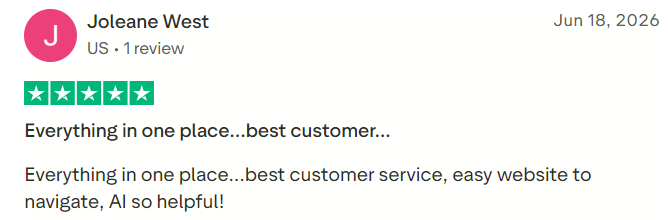
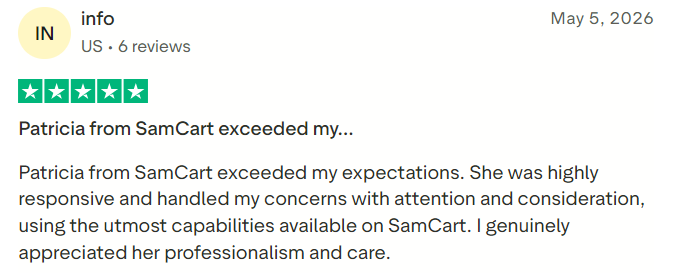
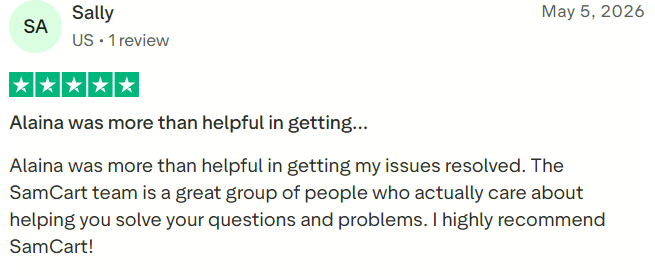
SamCart provides a knowledge base, training materials, AI assistance, and customer support. Reviews are mixed: many customers praise individual support representatives and detailed guidance, while others report slow responses, refund disputes, billing problems, or difficulty navigating the platform.
As of August 2026, SamCart’s Trustpilot profile showed a 3.7 overall rating and a 3.5 TrustScore from 353 reviews. Trustpilot reported that SamCart responded to all negative reviews, typically within two weeks.
Capterra currently lists SamCart at approximately 4.4 out of 5 from 45 reviews. Review samples and collection methods differ across platforms, so no single score should be treated as definitive.
#1.
#2.
#3.
SamCart Pros
SamCart provides strong checkout and revenue-optimization tools for digital businesses. Pro users receive order bumps, one-click upsells, downsells, A/B tests, affiliate management, failed-payment recovery, advanced analytics, and API access.
Other advantages include unlimited products and checkout pages, built-in course delivery, subscription management, digital fulfillment, customer accounts, cart recovery, AI-assisted page creation, and a broad integration system.
SamPay transactions do not carry an additional SamCart platform fee, although normal processing charges still apply.
SamCart Cons
The $79 Core plan excludes the platform’s most important conversion features. Pro costs $199 per month, which may be difficult to justify for new or low-revenue businesses.
SamCart is not a complete website, email-marketing, community, scheduling, CRM, accounting, or enterprise-learning platform. Many businesses will continue paying for additional services.
The seven-day trial is short, and customer feedback concerning billing, refunds, onboarding, and response times is mixed. The platform also focuses more on individual product funnels than conventional catalog ecommerce or physical retail.
Is SamCart Worth It?
SamCart can be worth the cost for businesses that already have traffic and can use its checkout tools to generate additional profit. One-click upsells, order bumps, subscription recovery, affiliate tracking, and testing may produce a return greater than the Pro subscription.
It is less compelling for creators making occasional sales. A business paying $199 per month needs sufficient margin and volume to recover the expense before generating any benefit from the platform.
Prospective customers should calculate expected revenue per visitor, gross margin, refund rate, processing costs, and the additional sales needed to cover SamCart. The seven-day trial should be used to test the entire customer journey rather than merely designing a page.
Final Verdict
SamCart is a powerful checkout and revenue-optimization platform for digital products, courses, memberships, and coaching offers. Its greatest strengths are its product-specific checkout pages, subscriptions, order bumps, one-click upsells, affiliate tools, payment recovery, course delivery, and integrations.
Its principal weaknesses are the high cost of Pro, the limited feature set of Core relative to SamCart’s reputation, reliance on additional software for several business functions, and mixed customer feedback involving support and billing.
Overall, SamCart is best for established digital sellers who can actively use its advanced conversion tools. New creators and businesses seeking a complete all-in-one website, email, and community platform may find a simpler or less expensive alternative more appropriate.