


Funnelish is an e-commerce funnel platform for dropshipping businesses, direct-to-consumer brands, and online retailers. It combines a drag-and-drop page builder with custom checkout pages, order bumps, one-click upsells, payment integrations, Shopify synchronization, fulfillment automation, and sales analytics.
Unlike general-purpose website builders, Funnelish concentrates on the buying journey. Businesses use it to replace a conventional product page and checkout with a focused sequence designed to increase conversion rates and average order value.
Funnelish can work alongside Shopify or operate as a standalone sales-funnel system. This flexibility is one of its biggest strengths, although configuring products, payment gateways, tracking, and fulfillment creates a learning curve.
Bonus Free Guide Included
Funnelish at a glance
Funnelish is best suited to dropshippers and established e-commerce brands that use paid advertising and want greater checkout control than a standard storefront provides. Its main strengths are its conversion-focused funnels, flexible payments, one-click upsells, international selling tools, and Shopify order synchronization.
Its main drawbacks are occasional technical problems reported by customers, potentially inconsistent support experiences, and limits on traffic, funnels, stores, and domains in lower plans.
Funnelish currently has a Trustpilot score of 4.1 out of 5 from 63 reviews. Although most customers award five stars, 24% of the reviews are one-star, suggesting a more divided experience than the overall score alone indicates.
Explore The AI-Linked Asset Class Elites are Investing In
What is Funnelish?
Funnelish is a sales-funnel and checkout platform built specifically for e-commerce.
A typical Funnelish sales journey may contain:
- A product landing page
- A customized checkout
- An order bump
- One or more post-purchase upsells
- A downsell
- An order-confirmation page
Each stage can be edited with the visual builder and connected to payment, tracking, automation, and fulfillment tools.
Funnelish can send completed orders to Shopify, update inventory, combine funnel purchases into one order, and trigger fulfillment. This allows merchants to retain Shopify for their product catalog and operations while using Funnelish for the customer-facing sales journey.
Main Funnelish features
Drag-and-drop funnel builder
Funnelish provides a visual editor for creating landing pages, product pages, checkouts, upsells, downsells, and confirmation pages.
Users can begin with a template or build a page from scratch. The editor is intended to reduce dependence on developers, although custom code is available for more advanced modifications.
Reusable shared components let businesses maintain common elements across different funnels. Updating a shared section can save time when the same branding, guarantee, or navigation appears on numerous pages.
Custom checkout pages
Funnelish gives merchants more control over checkout design and flow than they would normally receive from a standard Shopify account.
Checkout pages can include:
- Product variants
- Quantity selectors
- Order bumps
- Shipping options
- Customer-information fields
- Multiple payment methods
- Express checkout
- Custom branding
- Location-specific content
The objective is to remove unnecessary distractions and create a direct path from product interest to purchase.
Express checkout
Funnelish supports express payments through options such as Apple Pay and Google Pay when Funnelish Pay and a compatible Stripe gateway are enabled.
Express checkout can reduce the amount of information customers must enter manually. Merchants should test how express payments interact with order bumps, shipping options, and required customer data because the buyer may follow a different checkout path.
Order bumps
An order bump presents an additional item or upgrade on the checkout page before the original purchase is completed.
Examples include expedited shipping, a product accessory, an extended warranty, or a discounted add-on. Funnelish includes order bumps natively rather than requiring a separate Shopify application.
One-click upsells and downsells
After a customer completes the initial order, Funnelish can present another product that can be purchased without re-entering payment details.
If the customer rejects the upsell, the funnel can present a lower-priced downsell. These post-purchase offers are designed to increase average order value without adding friction to the original checkout.
Merchants should present optional purchases clearly and obtain affirmative customer consent. Preselected or confusing offers can create refund and chargeback problems.
Geo-funnels
Funnelish can personalize a funnel according to the visitor’s location. A business may adjust:
- Language
- Currency
- Pricing
- Payment methods
- Products
- Shipping information
- Page content
This can be useful for international sellers operating across markets with different payment preferences and purchasing behavior.
Payment gateways
Funnelish supports several payment providers and methods, including Stripe, PayPal, NMI, Klarna, iDEAL, SEPA, cash on delivery, and others.
All paid plans advertise unlimited payment gateways. Funnelish also states that it does not add a platform transaction fee, although each processor continues to charge its normal fees.
Gateway availability may depend on the seller’s country, business model, currency, and account approval. Merchants should verify eligibility directly with the processor before building a funnel around a particular method.
Gateway Pools
Gateway Pools allow businesses to group several credit-card gateways and define routing rules.
If the primary gateway declines a transaction or becomes unavailable, Funnelish can attempt payment through another gateway. Transactions can also be routed according to currency, card brand, order value, or processing cost.
This feature may improve authorization rates for high-volume sellers, but routing must comply with processor rules and card-network requirements. Gateway Pools are currently limited to credit-card processors and are associated with higher-tier functionality.
Shopify integration
Funnelish can connect to Shopify for order and inventory management.
When a customer buys through a Funnelish funnel, the platform can:
- Create the corresponding Shopify order
- Match products and variants
- Update inventory
- Override the Shopify price
- Add order details
- Trigger fulfillment
- Bundle initial and post-purchase items
This lets merchants use Funnelish for conversion while retaining Shopify for catalog and operational processes.
Order bundling
Without bundling, a main purchase and its post-purchase upsells could reach Shopify as separate orders. Funnelish can wait briefly for the customer to finish the funnel and then send all accepted products to Shopify as one order.
The documentation recommends a short delay, typically five to seven minutes. Sellers should test how this affects inventory, confirmation messages, fulfillment speed, and customer notifications.
Automated fulfillment
Funnelish can trigger fulfillment by passing orders into connected systems. This helps merchants avoid manually recreating every funnel order in Shopify.
Products and variants must be mapped correctly. Inventory problems, missing address information, or incorrect automation settings can prevent successful synchronization.
Facebook tracking
The built-in Facebook Pixel application can send events such as:
- Page views
- Content views
- Leads
- Add-to-cart actions
- Checkout initiation
- Payment-information entry
- Purchases
- Completed registrations
Purchase reporting can include order bumps, upsells, and downsells. Merchants should verify event duplication and consent requirements before using tracking data for advertising.
Google Analytics integration
Funnelish supports GA4 tracking for leads, cart activity, purchases, order bumps, upsells, downsells, and thank-you-page visits.
The integration can help sellers evaluate funnel behavior beyond the reporting available in advertising platforms.
Analytics
Funnelish provides reports covering traffic, orders, customers, funnel performance, and sales.
Merchants can use this information to assess:
- Conversion rate
- Average order value
- Upsell acceptance
- Revenue
- Traffic sources
- Customer behavior
- Payment performance
Businesses should still reconcile Funnelish data with their payment processor, Shopify records, advertising platforms, and accounting system.
Email and SMS automation
Higher plans include email autoresponders, SMS automation, conditional workflows, and funnel-based triggers.
Automations can respond to events such as a new lead, completed purchase, failed payment, refund, or customer tag. Funnelish also supports external tools through more than 20 integrations and custom code.
E-commerce blogs
Funnelish includes a blog builder designed to direct organic traffic into product funnels. Features include editable titles, descriptions, URL slugs, SEO-focused templates, analytics, and a visual editor.
This may be convenient for content-led commerce, although businesses with sophisticated publishing needs should compare its editorial workflow and technical SEO controls with a dedicated CMS.
Subscriptions
Funnelish advertises native subscription functionality for recurring products, billing management, refunds, upgrades, and subscription analytics.
Some Funnelish pages still label subscriptions as “coming soon,” while other current pages present them as available. Prospective users should confirm production availability, supported gateways, plan requirements, and customer-management features before migrating an active subscription business.
Customer portals
The platform advertises branded customer portals where shoppers can review orders, billing, and subscriptions.
As with subscriptions, current Funnelish pages are inconsistent about whether customer portals are fully released or still coming soon. Buyers should request a live demonstration rather than relying solely on marketing pages.
Customer management
Funnelish provides account-wide and funnel-specific customer records. Profiles can include contact information, billing and shipping details, order history, tags, and metadata.
Customer lists can be exported to CSV. The documentation notes that account-wide exports may not identify the source funnel, so businesses should verify whether the available export structure suits their reporting and migration needs.
Funnelish pricing
Funnelish currently offers Basic, Pro, Advanced, and custom Enterprise plans.
The Basic plan costs $49 per month. It includes up to 20,000 monthly visitors, 20 funnels, 10 e-commerce blogs, one store, one custom domain, two team members, unlimited payment gateways, and basic support.
The Pro plan costs $99 per month. It raises the allowance to 100,000 monthly visitors, 50 funnels, 100 blogs, five stores, five custom domains, and five team members. It also provides 24/7 chat support and access to broader integrations and automation tools.
The Advanced plan costs $249 per month. It includes unlimited visitors, funnels, and blogs, along with 20 stores, 50 custom domains, and 15 team members. Advanced capabilities include Gateway Pools, native gateway subscriptions, enhanced customer-portal functionality, Shopify synchronization, conditional automations, SMS, and high-volume email sending.
Enterprise pricing is customized for large organizations requiring dedicated infrastructure, support, or tailored functionality.
All plans advertise zero additional Funnelish processing fees and access to a 14-day free trial. Annual billing discounts are available, but Funnelish’s public pages currently display inconsistent effective annual prices. Confirm the final amount at checkout on the official Funnelish pricing page.
Funnelish customer reviews
Funnelish has a Trustpilot rating of 4.1 out of 5 from 63 reviews, including 34 reviews posted during the previous 12 months.
The rating distribution is notably polarized:
- 73% are five-star reviews
- 3% are four-star reviews
- 24% are one-star reviews
Positive reviews commonly mention:
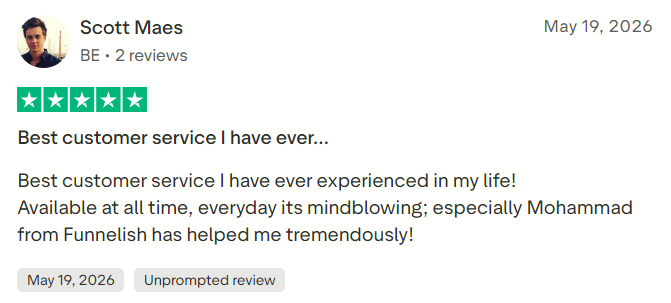
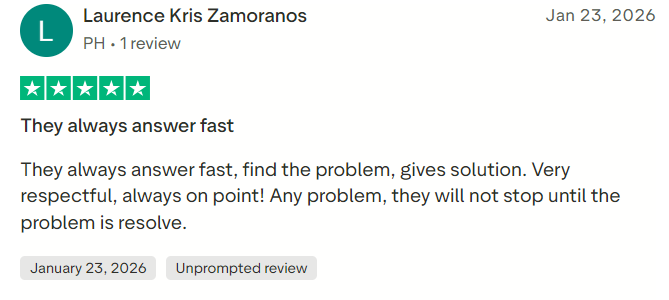
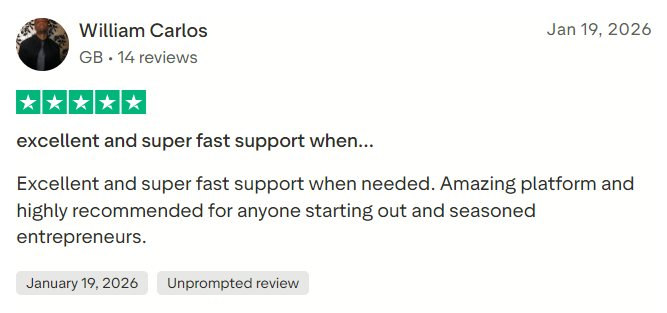
- Helpful customer service
- Fast problem resolution
- A capable visual editor
- Useful checkout customization
- Strong upsell options
- Ease of use compared with developer-heavy systems
- Flexibility beyond Shopify’s standard checkout
Negative reviews mention:
- Technical glitches
- Bugs in the editor or platform
- Slow support responses
- Difficulty resolving advanced issues
- Inconsistent technical knowledge among support staff
The conflicting feedback suggests support quality may depend on the complexity and timing of the issue. Businesses whose revenue depends on uninterrupted funnels should test support with a realistic technical question during the trial.
#1.
#2.
#3.
Funnelish advantages
It is built specifically for e-commerce funnels
Funnelish focuses on product sales rather than generic landing pages. Checkouts, order bumps, upsells, payment routing, tracking, and fulfillment are central features.
It offers greater checkout control
Merchants can create customized checkout journeys without subscribing to Shopify Plus or installing numerous separate applications.
One-click upsells are included
Post-purchase offers and downsells can increase average order value without asking the customer to submit payment details again.
It supports international sellers
Geo-funnels, currencies, translations, and multiple payment methods make Funnelish useful for brands selling across borders.
Shopify can remain the operational backend
Businesses can retain Shopify for products, inventory, and fulfillment while using Funnelish for landing pages and checkout.
It charges no additional transaction percentage
Funnelish uses a subscription model rather than taking a share of every sale. Payment-processor charges still apply.
Payment routing supports high-volume operations
Gateway Pools offer redundancy and routing control for businesses that cannot depend on a single card processor.
A free trial and migration help are available
The 14-day trial requires no credit card according to Funnelish’s current website. The company also advertises free funnel migration and one-to-one training.
Funnelish disadvantages
Technical issues could directly affect revenue
A broken checkout, tracking error, or failed Shopify sync can prevent purchases or fulfillment. Funnelish’s documentation contains a substantial troubleshooting checklist, and some independent reviewers report recurring glitches.
Support experiences are inconsistent
Most Trustpilot reviewers praise support, but several recent one-star reviews report slow responses and difficulty resolving technical problems.
Lower plans have substantial limits
Basic is restricted to 20,000 visitors and one store, while Pro is capped at 100,000 visitors and five stores. High-traffic operations may need the $249 Advanced plan.
Some product information is inconsistent
Pricing limits and annual discounts differ among sections of Funnelish’s current website. Subscriptions, stores, and customer portals are also described as available in some places and “coming soon” in others.
It requires careful configuration
Products, variants, gateways, pixels, domains, automations, taxes, shipping, and Shopify mappings must all work together. Funnelish is easier than building a custom checkout, but it is not maintenance-free.
It is primarily an e-commerce tool
Service businesses, educators, and B2B companies may receive better value from a general funnel builder or all-in-one marketing platform.
Public review coverage is narrow
Trustpilot provides useful feedback, but Funnelish has little visible review depth on major business-software marketplaces such as G2 and Capterra.
Who should use Funnelish?
Funnelish is likely to suit:
- Dropshipping businesses
- Direct-to-consumer brands
- Shopify merchants needing custom funnels
- Sellers using paid social advertising
- International e-commerce operations
- Businesses using order bumps and post-purchase upsells
- Brands requiring several payment gateways
- High-volume merchants needing smart payment routing
- Agencies building e-commerce funnels for clients
It may be less suitable for:
- Conventional stores satisfied with Shopify checkout
- Businesses with low traffic or few products
- Service companies without an e-commerce funnel
- Creators mainly selling courses or memberships
- Teams needing a mature general-purpose website CMS
- Merchants unwilling to configure and test integrations
- Businesses requiring extensively verified third-party reviews
Limited Access – Join Now!
Is Funnelish worth it?
Funnelish can be worth the subscription for an e-commerce business that has proven products and enough traffic for checkout improvements to produce measurable revenue.
Its strongest use case is a paid-traffic funnel containing a focused landing page, custom checkout, order bump, and post-purchase upsells, with completed orders passed to Shopify for fulfillment. In this scenario, Funnelish can replace several Shopify applications while providing more control over the buying experience.
The value is less clear for a small or conventional store that does not need funnel-specific checkout flows. Such a business may be better served by Shopify’s native checkout and a simpler page builder.
Before subscribing, build a complete test funnel and place transactions using every required payment method. Verify taxes, shipping, variants, order bumps, upsells, refunds, Shopify synchronization, inventory, advertising events, analytics, mobile layout, and support response.
Thus, Funnelish is a capable, conversion-focused platform for dropshipping and DTC brands that need more checkout flexibility than a standard storefront provides. Its payments, upsells, geo-targeting, and Shopify automation are compelling, but inconsistent product information and polarized support reviews make careful testing essential.