

When a business owner decides to sell, it’s crucial to understand the difference between the listing price and the selling price. Many owners assume these numbers should be identical or very close. In reality, they often differ significantly. The listing price is a starting point, a marketing figure designed to attract buyers, while the selling price reflects the final negotiated value once due diligence, financing terms, market conditions, and buyer risk assessments are factored in.
Understanding the gap between these two numbers is essential for anyone planning to sell a business. The listing price sets expectations, shapes buyer interest, and positions the business in the marketplace.
The selling price, however, reveals the true value a buyer is willing to pay and the terms they are willing to accept after reviewing the business in detail.
Business owners who do not understand this distinction often make costly mistakes: overpricing the business, rejecting strong offers, or misreading buyer feedback. On the other hand, setting the right listing price can spark competition, attract qualified buyers, shorten time on the market, and even lead to multiple offers.
What Is a Listing Price?
The listing price is the price at which a business is publicly offered for sale. It is not the final value of the business, nor is it a guarantee of what the seller will ultimately receive.
Instead, it serves as a strategic starting point.
A well-chosen listing price is one of the most powerful tools a seller has. Price too high, and buyers won’t inquire. Price too low, and the seller risks losing significant value.
This balance is why experienced business brokers rely on data, market knowledge, and valuation methods to set the right listing price.
How the Listing Price Is Set
Setting a listing price is both a science and a strategy. Business brokers typically use several valuation methods to determine a competitive, defensible number.
• Market and Industry Multiples
This includes comparing the business to similar companies that have recently sold. Common multiples include:
- SDE (Seller’s Discretionary Earnings) multiples
- EBITDA multiples
- Revenue multiples (for certain industries)
These benchmarks provide a realistic range based on actual market behavior.
• Asset and Equipment Valuation
For asset-heavy businesses—manufacturing, transportation, auto repair—equipment and inventory significantly influence the listing price.
• Financial Performance Trends
Buyers pay more for businesses with:
- Consistent or growing revenue
- Strong profit margins
- Stable customer relationships
Declining trends often require pricing adjustments.
• Add-Backs and Normalized Earnings
Brokers adjust financials to reflect the company’s true earning power by adding back:
- Owner compensation
- One-time expenses
- Non-essential costs
This “normalized” profit figure is what buyers base their offers on.
Factors That Influence the Listing Price
Several external and internal factors impact how a broker arrives at the final listing price.
• Market Demand
High demand in certain industries can justify a higher listing price. Low demand may require more conservative pricing.
• Industry Conditions
Businesses in recession-proof or high-growth industries often sell at higher multiples.
• Condition of Assets
Well-maintained equipment, organized inventory, and up-to-date systems can increase value.
• Owner Involvement
Businesses that depend heavily on the owner typically sell for less than those with strong teams and systems in place.
• Location and Lease Terms
Prime locations, long-term leases, or transferable favorable leases add value—especially for retail or restaurant businesses.
The Strategic Purpose of a Listing Price
A listing price is more than just a valuation number. It plays several strategic roles:
• Attracting Qualified Buyers
A competitive listing price generates inquiries and increases the likelihood of receiving multiple offers.
• Setting Expectations
Buyers use the listing price as an anchor when evaluating the business’s value. A well-set price communicates confidence and legitimacy.
• Influencing Negotiation Outcomes
Most deals involve negotiation. Starting at the right point gives sellers the flexibility to negotiate effectively while still achieving their target net value.
• Filtering Out “Tire-Kickers”
A reasonable, well-supported listing price deters unserious buyers and improves the quality of inquiries.
What Is a Selling Price?
The selling price is the final amount a buyer agrees to pay for the business at the end of negotiations.
Unlike the listing price, the selling price reflects real market value, verified through due diligence, financing requirements, and the buyer’s assessment of risk. It is the only number that truly matters at closing.
Many business owners are surprised to learn that the selling price is often lower than the listing price.
How the Selling Price Is Determined
The selling price takes shape gradually as the buyer gets to know the business. Several key elements influence the final number:
• Buyer Negotiations
Buyers negotiate based on:
- Perceived risk
- Financial performance
- Market comparisons
- Their own return-on-investment goals
Even strong businesses face negotiation pressure.
• Due Diligence Findings
During due diligence, buyers verify everything the seller represented. Issues that commonly reduce the price include:
- Declining sales or margins
- Customer concentration
- Aging equipment
- Poor bookkeeping
- Unresolved liabilities
Likewise, positive discoveries can strengthen the seller’s position.
• Deal Structure
The selling price is closely tied to how the deal is structured.
- Asset sale vs. stock sale
- Down payment vs. seller financing
- Earnouts
- Working capital requirements
Favorable terms can justify a higher price; restrictive terms can reduce it.
Why Selling Price Often Differs From Listing Price
The gap between listing price and selling price is completely normal. Reasons include:
• Buyers Adjust Price Based on Risk
If buyers perceive legal, operational, or financial risk, they discount the price accordingly.
• Market Feedback
Buyer inquiries give brokers and sellers real-time insight into whether the listing price was appropriate.
• Asset Condition
Equipment, inventory, and digital assets may be worth less than the seller assumed.
• Required Capital Investment
If a buyer must upgrade systems, improve staffing, or modernize the facility, they factor those costs into their offer.
• Due Diligence Surprises
Any negative findings dilute value and reduce leverage.
Typical Gap Between Listing Price and Selling Price
While every business sale is unique, industry data shows common patterns:
- Many small businesses sell for 80–95% of their listing price.
- Well-priced businesses in high-demand industries may sell for 100% or more of the listing price.
- Overpriced businesses may take longer to sell and often close for significantly less once adjusted.
The closer the listing price is to true market value, the narrower the gap tends to be.
Why the Selling Price Matters Most
The selling price ultimately determines:
- How much the seller walks away with
- Whether the buyer can secure financing
- The valuation multiple used in the final agreement
- Post-closing negotiations on training, consulting, or handover support
It is the number that defines the success of the deal—and the one both parties must agree on without ambiguity.
Listing Price vs. Selling Price — Key Differences Explained
Although the terms sound similar, the listing price and selling price serve very different purposes in a business sale.
The listing price is what the seller asks for. The selling price is what the buyer ultimately pays.
Understanding the distinction helps sellers set realistic expectations and helps buyers evaluate whether an opportunity is priced fairly.
Below are the core differences that shape negotiations and influence the final outcome of a business sale.
Conceptual Differences
Listing Price
- A marketing tool
- Sets the tone for buyer interest
- Based on valuation, industry multiples, and broker strategy
- Intended to attract attention and encourage offers
Selling Price
- The final negotiated price
- Influenced by due diligence, financing, and deal terms
- Reflects market reality, not just seller expectations
- The only number that determines what the seller actually receives
In essence, the listing price is what the seller hopes to get. The selling price is what the market decides the business is worth.
Emotional Value vs. Market Value
Many sellers attach emotional value to their business—years of hard work, personal investment, and pride. This emotional attachment often influences the listing price.
However, buyers evaluate businesses differently:
- They look at risk, cash flow, growth potential, and return on investment.
- They do not factor in the seller’s personal attachment or sweat equity.
- They rely on objective financials and market comparisons.
This difference in perspective is one of the main reasons listing price and selling price rarely match exactly.
How Each Price Impacts Negotiations
Listing Price’s Role in Negotiation
- Sets the initial anchor point
- Helps position the business competitively
- Creates buyer expectations around value
- Can influence the number of inquiries received
A listing price that is too high discourages buyers. One that is too low risks leaving money on the table.
Selling Price’s Role in Negotiation
- Reflects all known information after due diligence
- Accounts for deal structure (financing, seller support, liabilities)
- Is shaped by buyer leverage and market conditions
- Represents the final agreement both sides accept
While the listing price kicks off negotiations, the selling price finalizes them.
Buyer Perception and Market Response
The way buyers perceive the listing price directly affects the selling price.
If the Listing Price Is Too High:
- Fewer inquiries
- Longer time on market
- Buyers assume the seller is unrealistic
- Lower-quality offers or heavy negotiations
If the Listing Price Is Fair and Data-Driven:
- More inquiries and qualified buyers
- Higher chance of multiple offers
- Stronger negotiating position for the seller
- Selling price often closer to asking price
The listing price shapes buyer psychology long before negotiations begin.
How to Improve Your Chances of Achieving Your Listing Price
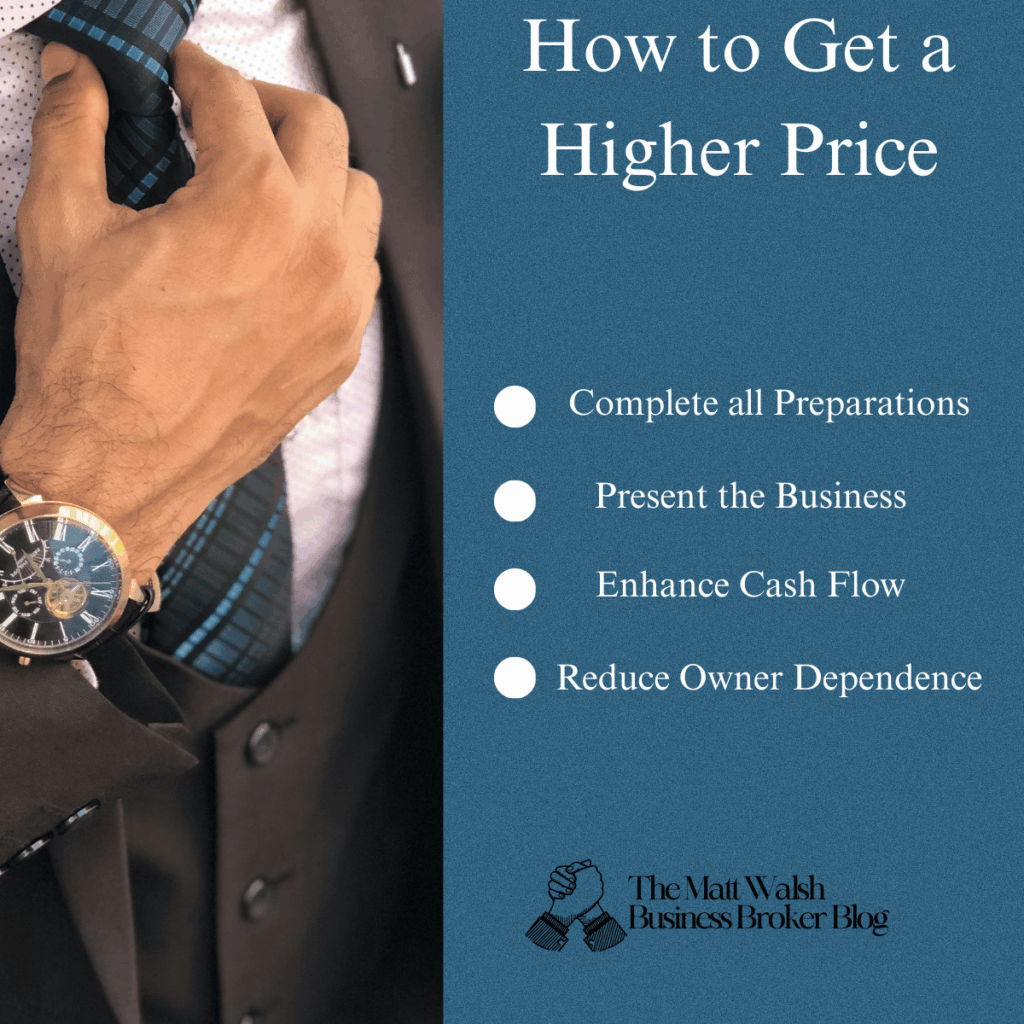
While it’s normal for the selling price to differ from the listing price, sellers can significantly increase the likelihood of getting closer to—or even matching—their asking price. The key is preparation, presentation, and positioning. Buyers pay a premium for businesses that look organized, stable, low-risk, and capable of smooth transition.
Below are practical strategies that consistently help sellers secure higher offers and stronger final sale prices.
Prepare the Business Before Listing
The better the business looks on paper and in practice, the more confidence buyers have—and the less they will negotiate downward.
Key preparation steps include:
- Clean and accurate financial statements
Buyers want clarity. Well-organized books reduce risk and build trust. - Updated equipment and maintenance logs
When assets are in good working condition, buyers reduce repair cost deductions. - Organized operational systems
Documented SOPs and streamlined processes show the business can run without chaos. - Resolving outstanding issues
Fixing tax, legal, or compliance concerns before listing eliminates negotiation pressure.
A prepared business signals professionalism—and results in higher offers.
Strengthen the First Impression
Buyers often decide within minutes whether a business “feels” worth the asking price. First impressions shape the entire negotiation process.
Ways to improve buyer perception:
- Create a clean, professional workspace
- Organize inventory and storage
- Refresh branding or storefront appearance
- Present staff and systems as well-managed
When buyers walk in and see a well-run operation, they assume the financials are equally strong.
Present the Business Professionally
A high-quality listing package shows buyers the seller is serious and that the business is well-managed.
This includes:
- A polished Confidential Information Memorandum (CIM)
- Clear financial summaries with add-backs
- A detailed equipment list
- Customer and vendor breakdowns
- Growth opportunities and risk mitigations
The more complete the documentation, the fewer reasons buyers have to negotiate.
Improve Cash Flow and Reduce Owner Dependence
Businesses with strong cash flow and low owner involvement sell at higher multiples.
To increase value:
- Delegate responsibilities
- Strengthen middle management
- Automate repeating tasks
- Diversify revenue streams
- Cut unnecessary expenses
A business that runs smoothly without the owner commands a premium price.
Mistakes Sellers Make That Lower the Final Selling Price
Even strong, profitable businesses can sell for less than expected if the seller makes avoidable mistakes during the preparation, pricing, or negotiation process. Many of these errors stem from poor documentation, unrealistic expectations, or a lack of understanding about how buyers evaluate risk. By recognizing these common pitfalls early, sellers can protect their valuation and improve their chances of achieving a high final selling price.
Overpricing the Business Based on Emotion
Many owners believe their business is worth more because of the time, effort, and personal sacrifice they invested. While understandable, emotional pricing often leads to:
- Reduced buyer inquiries
- Longer time on market
- Low-ball offers
- Buyer skepticism about financial justification
The market—not emotion—determines value. Overpricing almost always leads to price reductions later.
Poor or Disorganized Financial Records
Buyers rely heavily on financial transparency. When records are incomplete or messy, buyers assume higher risk.
Common financial problems that reduce selling price:
- Missing bank statements
- Inconsistent bookkeeping
- Unclear or undocumented add-backs
- Personal expenses mixed with business expenses
- Unreliable profit and loss statements
If buyers can’t verify cash flow, they either discount the price—or walk away.
Hiding Problems Until Due Diligence
Some sellers hope that buyers will overlook operational issues, legal problems, or declining sales trends. But due diligence always uncovers the truth.
When buyers discover surprises, they typically respond with:
- Significant price reductions
- More aggressive negotiation
- Stricter deal terms
- Delayed closing timelines
Transparency early in the process helps maintain trust and preserve value.
Not Working With a Professional Business Broker
Selling a business is complex. Sellers who go it alone often make costly mistakes:
- Incorrect pricing
- Weak marketing materials
- Poor buyer screening
- Ineffective negotiation
- Mishandled confidentiality
Brokers increase visibility, attract qualified buyers, and negotiate better deals—often increasing the final selling price by far more than their commission.
How a Broker Helps You Achieve a Higher Selling Price
Setting a strong listing price is only half the equation. The next challenge is achieving a higher selling price during negotiations and due diligence. This is where a business broker’s experience becomes invaluable. Brokers not only position the business well but also manage buyer interactions, negotiate strategically, and protect the value of the deal all the way through closing. Their involvement often leads to stronger offers, better deal terms, and higher final sale prices.
Here are the ways a broker actively helps increase the selling price:
Attracting More Qualified Buyers
A broker’s marketing reach creates competition—one of the strongest drivers of higher selling prices.
Brokers achieve this by:
- Marketing confidentially across multiple platforms
- Leveraging buyer databases and industry contacts
- Pre-screening buyers to ensure financial capability
- Presenting the business only to serious prospects
More qualified buyers = more offers = higher final price.
Controlling the Narrative and Presentation
Buyers form opinions quickly. A broker ensures information is presented clearly, professionally, and in the best possible light.
They:
- Answer buyer questions strategically
- Manage information flow to avoid misunderstandings
- Ensure consistent messaging across all documents
- Highlight strengths while contextualizing weaknesses
When the narrative is well-controlled, buyers perceive more value and offer higher prices.
Defending the Listing Price During Negotiations
Buyers expect to negotiate—but brokers are skilled at protecting price integrity.
They defend the price by:
- Using valuation data to justify value
- Highlighting financial performance trends
- Demonstrating competitive advantages
- Showing comparable sales
- Framing the business as a strong investment
A broker’s negotiation expertise alone can increase the selling price significantly.
Minimizing Buyer Risk Through Better Documentation
Buyers reduce their offers when they perceive risk. Brokers help sellers minimize risk signals by preparing:
- Clean financials
- Organized due diligence folders
- Updated equipment lists
- Clear operational procedures
- Transparent add-back schedules
The fewer concerns buyers have, the higher their offers remain.
Preventing Unnecessary Price Reductions During Due Diligence
Price erosion often happens during due diligence when buyers find issues.
Brokers help prevent reductions by:
- Addressing problems early
- Providing explanations for anomalies
- Presenting corrective actions
- Ensuring documentation is complete and accurate
This reduces the chance of a renegotiated, lower selling price.
Negotiating Deal Structure to Increase Net Value
The final selling price is influenced by deal terms—not just the number on the offer letter.
Brokers negotiate terms such as:
- Seller financing
- Earnouts
- Working capital requirements
- Transition support
- Allocation of liabilities
Smart structuring can increase what the seller actually walks away with.
Consult an Expert Today
If you’re interested in selling your business at a high price, I recommend consulting an expert broker. They will guide you through the process and take care of multiple aspects of the sale such as negotiations, marketing, and more.