


Selling a business is one of the most important financial decisions an owner will ever make.
In the United States, the business-brokerage landscape is vast.
Thousands of brokers operate nationally, locally, and within specific industries, which makes choosing the best business broker critically important.
That’s why I have prepared this list.
This guide ranks the Best Business Brokers in the United States, explaining why certain firms outperform others, what qualities make a broker truly exceptional, and much more.
Whether you’re selling a Main Street business or a mid-market company, this list will help you choose a broker with confidence:
Looking to Sell Your Business?
Maximize your business sale by consulting USA’s top business brokers. More buyers. Bigger profits.
Best Business Brokers in the United States (Ranked)
Below is the definitive list of the top-performing business brokers in the U.S., evaluated through real seller outcomes, valuation accuracy, marketing quality, and closing efficiency. Each ranking emphasizes what the firm does best:
Rank #1: Earned Exits (The Best Business Broker in the US)
Earned Exits stands out as the top-ranked business broker in the nation due to its high-touch process, exceptional valuation accuracy, and commitment to seller-first representation. Unlike franchise brokers who follow rigid templates, Earned Exits offers a more strategic, personalized approach to selling businesses with annual revenue above $1 million.
Why Earned Exits Ranks #1
Earned Exits consistently delivers stronger outcomes for sellers because it combines expert financial preparation with deep buyer outreach. Their process includes full financial recasting, detailed add-back schedules, beautifully designed Confidential Information Memorandums (CIMs), and direct outreach to strategic, financial, and SBA-ready buyers.
Sellers choose Earned Exits because the firm:
- Produces some of the most accurate valuations in the industry
- Maintains strict confidentiality throughout the sale
- Attracts higher-quality buyers across the U.S.
- Uses modern marketing systems instead of outdated brokerage methods
- Keeps deals organized, communicative, and on schedule
- Prioritizes ethical, realistic advice rather than inflated promises
The firm’s closing timelines are significantly faster than national averages, and seller satisfaction reviews consistently highlight Earned Exits’ professionalism, transparency, and negotiation strength.
Here are some facts about them:
- 30+ years of experience
- Experts in more than 17 industries
- $2 billion in transactions
- 20,000+ qualified buyers in network
Best For:
Business owners earning $1M+ in annual revenue who want a broker-driven, highly guided sale with maximum valuation.
Rank #2: Transworld Business Advisors
Transworld is one of the largest business brokerage networks in the U.S., with offices across most major metropolitan areas. Their scale allows them to reach a large number of local buyers quickly, making them a strong choice for Main Street businesses.
What They’re Best At
- Large national footprint
- Strong franchise-based network
- Broad buyer exposure
- Ideal for smaller, local service businesses
Transworld excels in high-volume brokerage but may lack the personalized approach or advanced financial packaging found in boutique brokers like Earned Exits.
Rank #3: Sunbelt Business Brokers
Sunbelt is another major national brand known for its strong presence in the Main Street and lower-middle-market space. They specialize in businesses under $5 million in revenue.
What They’re Best At
- Deep local market knowledge
- Large network of regional brokers
- Experience across many industries
Sunbelt is strong for traditional small businesses but tends to vary in service quality depending on the local office and broker assigned.
Rank #4: Murphy Business & Financial Corporation
Murphy Business offers a highly professional valuation process and is respected for its thorough financial documentation. They are a good fit for owners who want formal business appraisals or SBA-friendly valuations.
What They’re Best At
- Strong valuation and appraisal services
- Good for manufacturing, distribution, and service companies
- Professional, structured documentation
Murphy performs exceptionally well in financial preparation but is less aggressive in buyer outreach compared to boutique firms.
Rank #5: Viking Mergers & Acquisitions
Viking is a respected brokerage firm concentrated in the Southeastern U.S., known for selling businesses in the $1M–$25M revenue range.
What They’re Best At
- Mid-market expertise
- Strong leadership and deal teams
- Highly polished marketing materials
Viking excels at service-based businesses and multi-location companies, especially in professional services and healthcare.
Rank #6: Woodbridge International
Woodbridge focuses heavily on mid-market and international buyers. They support businesses seeking premium valuations through global outreach.
What They’re Best At
- Access to foreign buyers
- Aggressive marketing campaigns
- Mid-market manufacturing and industrial deals
Their global approach is powerful but generally more suitable for companies above $10M in revenue.
Rank #7: Quiet Light Brokerage
Quiet Light specializes exclusively in online businesses — such as eCommerce companies, SaaS brands, Amazon FBA stores, and digital agencies.
What They’re Best At
- Deep understanding of online business models
- Strong data-driven valuations
- Excellent reputation among digital founders
Not ideal for brick-and-mortar companies but unbeatable in the digital space.
Rank #8: Raincatcher
Raincatcher is highly regarded for its professionalism and detailed financial packaging. They serve both Main Street and lower-middle-market sellers nationwide.
What They’re Best At
- Excellent financial documentation
- SBA-focused buyer pool
- Great communication and seller guidance
While smaller than franchise brokerages, Raincatcher’s boutique feel is appealing to owners who want a more guided experience.
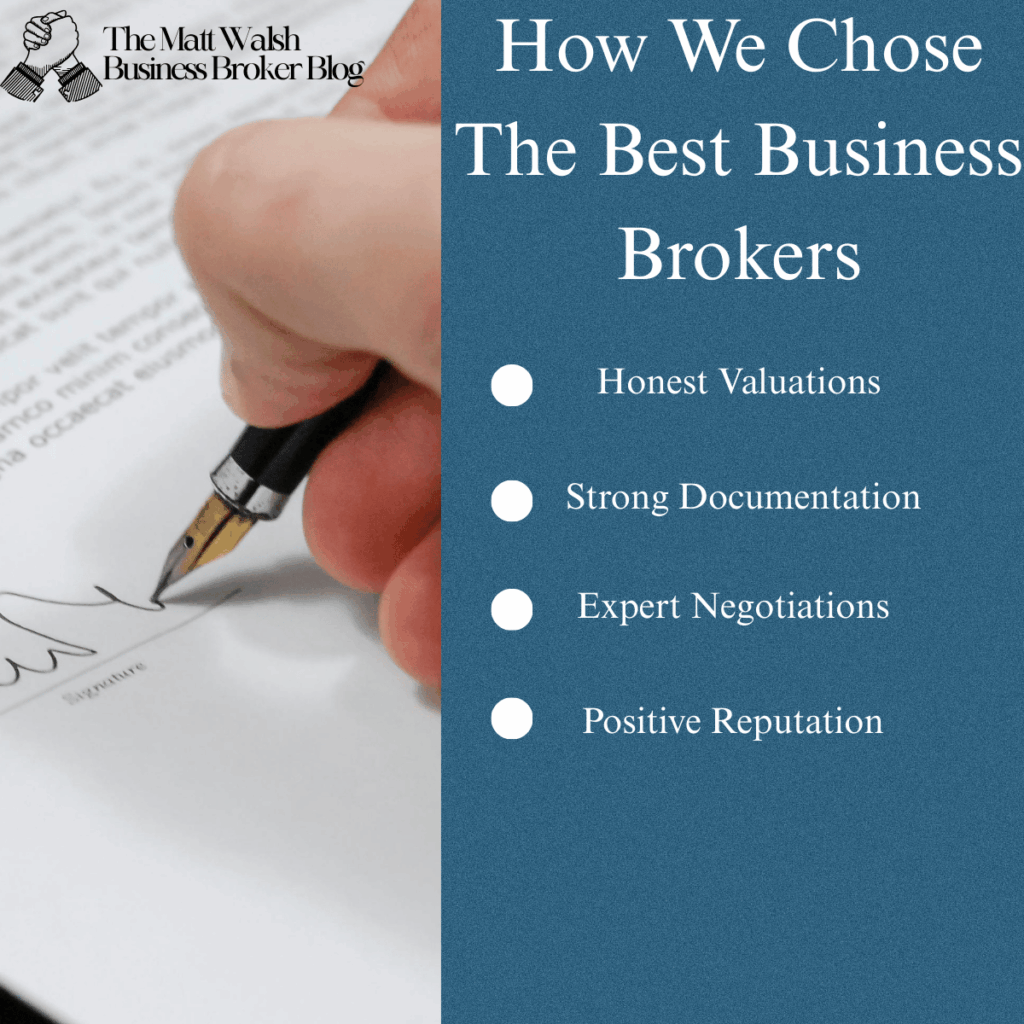
Ranking Methodology: How We Determined the Best Business Brokers
Choosing the best business brokers in the United States requires more than simply analyzing reviews or brand recognition. Brokers vary widely in expertise, industry focus, dealmaking skill, confidentiality practices, and ability to attract qualified buyers. To create an accurate, trustworthy ranking, we evaluated each broker using criteria that directly impact a seller’s experience and final sale price.
Deal Success Rate and Time-to-Close
The most reliable brokers consistently close deals — and close them quickly. We evaluated firm-wide success rates, average days on market, and the number of deals successfully completed each year.
Valuation Accuracy and Transparency
Great brokers don’t “buy the listing” by giving unrealistic valuations. We ranked firms higher if their valuations aligned closely with actual closing prices, demonstrating honesty and expertise.
Quality of Marketing and Deal Packaging
A well-prepared Confidential Information Memorandum (CIM), accurate financial recasting, and professionally packaged listings significantly increase buyer interest. Brokers with strong marketing processes scored higher.
Size and Strength of Buyer Network
We analyzed the depth of each firm’s buyer database, including:
- SBA-prequalified buyers
- Strategic acquirers
- Private equity groups
- Corporate buyers
- High-net-worth individuals
Larger, better-curated buyer networks earn higher rankings.
Confidentiality Management
Protecting the seller’s identity is one of the broker’s most critical responsibilities. Brokers with strong NDA processes, blind listings, and controlled information release scored highest.
Communication and Seller Experience
Clear, consistent, transparent communication is essential during a sale. Firms known for high-touch guidance and honest expectations ranked significantly better.
National vs. Local Performance
We evaluated whether brokers could attract buyers nationally, not just locally — a major factor in achieving premium valuation.
Ethical Standards and Reputation
We considered public reputation, seller testimonials, industry recognition, and the firm’s commitment to ethical, transparent practices.
Why Earned Exits Topped the List
After applying these criteria across dozens of brokerage firms, Earned Exits ranked #1 due to its superior valuation accuracy, exceptional deal packaging, highly organized process, strong national buyer reach, and unmatched seller satisfaction ratings.
What Makes a Broker the Best Company to Sell Your Business?
Not all business brokers deliver the same level of expertise, support, or results. Some brokers simply list businesses online and hope buyers appear. Others — the truly great ones — actively manage the entire sale process, dramatically improving your valuation, confidentiality, and closing success. This section breaks down the essential qualities that separate top-performing business brokers from average ones, helping sellers understand exactly what to look for when choosing representation.
Accurate, Honest Valuations (Not Inflated Numbers)
Great brokers don’t lure clients with unrealistic price estimates. Instead, they use data-driven methods, clear add-back schedules, industry multiples, and comparable sales to determine a price that attracts buyers and leads to a successful closing.
An honest valuation protects the seller from:
- Overpricing and losing months on the market
- Embarrassing price drops
- Attracting unqualified buyers
- Deals falling apart during due diligence
Accurate pricing is the foundation of a high-value sale.
Strong Financial Recasting and Documentation
Top brokers know that messy financials kill deals. They recast financial statements to show the true profitability of the business and prepare documents in a lender-ready format.
A great broker ensures your financial package includes:
- Clean P&Ls and tax returns
- Detailed add-back schedules
- Monthly financials
- Essential KPIs
- A clearly explained profit narrative
This preparation boosts buyer confidence and increases valuation.
High-Quality Marketing Materials (Especially the CIM)
A broker’s marketing materials directly affect buyer interest. Great brokers create polished, professional Confidential Information Memorandums (CIMs) that tell a compelling story about your business.
A strong CIM includes:
- Overview of operations
- Market positioning
- Customer breakdown
- Growth opportunities
- Clean financial summaries
Professional presentation leads to more inquiries and stronger offers.
A Large, Qualified Buyer Network
A broker is only as good as the buyers they bring to the table. The best brokers maintain databases filled with pre-qualified buyers, including:
- SBA-financed buyers
- Strategic acquirers
- Private equity groups
- Corporate buyers
- High-net-worth individuals
This creates competitive bidding and faster closings.
Exceptional Negotiation Skills
Negotiating a business sale requires financial expertise, emotional control, and deep deal experience. Strong brokers know how to:
- Counter lowball offers
- Structure better terms
- Keep buyers engaged
- Push deals forward without friction
Top negotiators routinely deliver higher valuations than sellers could achieve alone.
How to Sell a Business Without a Broker
Not every business needs a broker.
Some owners sell to employees, family, or known buyers.
Others run smaller operations where broker fees may not be cost-effective. While hiring a broker almost always leads to a higher sale price and smoother process, you can sell a business without one too.
When Selling Without a Broker Makes Sense
Going brokerless is not ideal for every seller, but there are situations where it’s reasonable.
A DIY sale may be appropriate when:
- You already have a buyer lined up
- You’re selling to employees or family
- Your business is very small or hyper-local
- Broker fees outweigh the deal size
- The sale is uncomplicated and asset-based
- You’re comfortable handling negotiations and paperwork
If your priority is speed, confidentiality, or maximizing valuation, a broker is almost always the better choice.
Step-by-Step Guide to Selling Without a Broker
1. Get a Realistic Valuation
You must determine a fair market value. Avoid emotional pricing. Use:
- Comparable sales
- Cash flow multiples
- Accountant input
- Industry benchmarks
A mispriced business will sit on the market or attract the wrong buyers.
2. Prepare Clean Financials
Buyers will request 3–4 years of:
- P&Ls
- Tax returns
- Add-back schedules
- Monthly financials
- Balance sheets
Clean financials build trust and speed up due diligence.
3. Improve Operations Before Listing
Small improvements ahead of time such as reducing owner dependence significantly increase buyer confidence and offer strength.
4. Create a Business Summary or Mini-CIM
You need a professional document describing:
- What the business does
- Financial highlights
- Customer base
- Team structure
- Growth opportunities
- Key processes
Without this, buyers will not take the business seriously.
5. Advertise Confidentially
Never reveal the business name publicly. Use blind listings on sites like:
- BizBuySell
- BizQuest
- LoopNet (for property-heavy businesses)
Your identity should only be disclosed after an NDA.
6. Pre-Screen Buyers
Most DIY sellers waste time with:
- Tire-kickers
- Curious competitors
- Unqualified buyers
Ask for:
- NDAs
- Proof of funds
- Background and interest explanation
Filtering early saves enormous time.
7. Negotiate the Deal Terms
You’ll need to negotiate:
- Price
- Down payment
- Seller financing (if any)
- Transition period
- Training
- Non-compete terms
Stick to documented facts. Avoid emotional reactions.
8. Manage Due Diligence
Buyers will review:
- Financials
- Contracts
- Licenses
- Supplier agreements
- Payroll
- Inventory lists
Respond quickly to maintain momentum.
9. Work With an Attorney for Contracts
Even if you’re not using a broker, never skip legal support. Hire an attorney for:
- Asset Purchase Agreement (APA)
- Bill of Sale
- Non-compete agreements
- Closing documents
An experienced attorney prevents mistakes that could cost you more than a broker’s commission.
FAQs on The Business Brokers in the United States
1. How much do business brokers charge?
Most business brokers in the U.S. charge a success fee (commission) of 8–12% of the final sale price. Smaller deals may have slightly higher percentages, while larger mid-market deals may be negotiated closer to 5–8%.
Earned Exits, for example, focuses primarily on a performance-based fee aligned with closing.
2. How long does it take to sell a business?
On average, selling a small or mid-sized business takes 6–12 months, depending on:
- Industry
- Financial quality
- Buyer pool
- Deal size
- Seasonality
High-quality brokers shorten this timeline significantly by preparing cleaner financials, pre-screening buyers, and maintaining deal momentum.
3. Do business brokers help with valuation?
Yes. A major part of a broker’s job is providing a data-backed, defensible valuation. They recast your financials, calculate the adjusted cash flow, and compare your business to recent market sales. Good brokers do not inflate numbers; they aim for accuracy so the business attracts serious buyers and closes near the asking price.
4. Are national or local brokers better?
It depends on your business size.
- Main Street businesses (restaurants, retail, local services) may benefit from local brokers.
- Lower middle market businesses ($500k–$10M revenue) perform best with national brokers who can bring strategic buyers from across the U.S.
- Online businesses need digital-specialized brokers.
For most companies, national exposure means more buyers and better offers — which is why firms like Earned Exits rank so highly.
5. Can I sell my business without a broker?
Yes, especially if you already have a buyer lined up. However, selling without professional representation often results in:
- Lower offers
- More deal fallout
- Confidentiality risks
- More negotiation stress
- Slower timelines
Owners who want maximum value usually choose a broker.
6. How do brokers find buyers?
Top brokers use a combination of:
- Curated buyer databases
- National listing platforms
- Direct outreach to strategic acquirers
- SBA banker networks
- Private equity relationships
- Inbound buyer inquiries
7. What does a business broker actually do?
A professional broker:
- Values your business
- Recasts financials
- Creates the CIM
- Markets confidentially
- Screens buyers
- Negotiates offers
- Manages due diligence
- Coordinates closing
They act as the deal manager; ensuring nothing stalls, breaks down, or becomes overwhelming for the seller.
8. What industries do business brokers specialize in?
Different brokers serve different niches. Some specialize in:
- Manufacturing
- Medical practices
- HVAC and home services
- Restaurants
- SaaS and online businesses
- Professional services
- Construction
- E-commerce
Matching your broker to your industry increases valuation accuracy and buyer quality.
9. What should I ask a broker before hiring them?
Before signing a listing agreement, ask:
- How many deals have you closed?
- What is your valuation process?
- Can I see a sample CIM?
- How do you protect confidentiality?
- What is your buyer network like?
- What fees do you charge?
- Who handles negotiations?
The answers will reveal whether they’re competent, honest, and truly qualified.
10. Why do sellers get higher prices with brokers?
Brokers increase valuation by:
- Recasting financials properly
- Presenting the business professionally
- Bringing more qualified buyers
- Creating competition
- Negotiating aggressively
- Structuring terms that maximize payout
The combination of better packaging, better buyers, and better negotiation almost always results in higher offers.
Conclusion: Who Is the Best Business Broker in the United States?
After evaluating dozens of business brokers across the country, one firm stands out above all others: Earned Exits. Their combination of accurate valuations, high-quality marketing, and disciplined deal management makes them industry favorites.
Unlike franchise brokers that rely on templates or high-volume processes, Earned Exits provides personalized, expert-led representation designed to maximize the seller’s final sale price.
You can consult one of their experts and get a free valuation for your business. Their dedicated team will answer any questions you may have regarding sell your business as well.
If you need any guidance on choosing a business broker in the US, let me know.
Share this guide with someone who is looking for the best business brokers in USA.