


Whether you are planning to retire, move into a new venture, or simply want to understand the value of your company, selling a business is a major decision.
Most business owners will only sell a company once in their lifetime, which means the process is often unfamiliar, time-consuming, and filled with potential pitfalls.
This is where a business broker becomes an essential partner.
A business broker specializes in guiding owners through the sale process by helping them determine value, prepare documentation, find qualified buyers, negotiate terms, and close the transaction efficiently. Having a professional advisor on your side can make the difference between a smooth, profitable exit and a stressful experience with disappointing results.
What Is a Business Broker?
A business broker is a professional who helps business owners buy or sell a company.
They act as an intermediary between the seller and potential buyers, guiding both sides through each stage of the transaction.
Business brokers specialize in small to mid sized businesses, typically those with annual revenues ranging from a few hundred thousand dollars to tens of millions.
Business brokers differ from M&A advisors and investment bankers in the size and structure of the deals they handle. M&A advisors often focus on larger, more complex transactions, while investment bankers typically work with corporations seeking major capital raises or public offerings. A business broker, on the other hand, is specifically trained to assist private owners who want to sell a profitable business in a confidential and efficient way.
In addition to connecting buyers and sellers, business brokers provide expertise in valuation, negotiations, marketing, and deal structuring. Their goal is to help owners receive the highest possible price while ensuring the process moves forward smoothly.
With a business broker, you’ll get access to:
- Industry contacts
- Regional networks
- Buyer databases
- Listing platforms
This expands the pool of qualified buyers and increases the chances of a successful sale.
The more eyes on your offer, the better chances of getting a great price.
What Does a Business Broker Do?
A business broker performs a wide range of tasks that make the process of selling a business easier and more successful for the owner. Their primary role is to manage the transaction from start to finish while protecting confidentiality and maximizing value. Below are the key responsibilities of a business broker:
Business Valuation
A broker evaluates the company’s financial performance, market conditions, assets, customer base, and industry trends to determine a realistic asking price. This helps avoid pricing too low or too high.
Preparing the Business for Sale
Brokers help organize financial documents, identify strengths, address weaknesses, and highlight selling points that attract buyers. They ensure the business presents well on paper and in person.
Marketing the Business Confidentially
A business broker creates a confidential marketing profile and markets the business without revealing its identity until a buyer is screened. This protects employees, customers, and vendors from unnecessary concern.
Buyer Screening and Qualification
Not all interested parties are serious or financially capable. A broker evaluates buyer inquiries to ensure only qualified prospects receive sensitive information. Going through unqualified buyers might end up wasting a lot of your time. Your broker will help you with that.
Coordinating Meetings and Offers
Brokers schedule buyer meetings, prepare offer packages, and guide both parties through negotiations. They help sellers compare offers, terms, and conditions.
Negotiating the Deal
A business broker represents the seller’s interests and works to secure the best possible price and terms. Their negotiation experience helps avoid costly mistakes.You don’t know how great an offer you can get until you consult an expert.
Managing Due Diligence and Closing
The broker assists with document requests, answers questions, coordinates with attorneys and accountants, and keeps the deal on track until closing.
By handling these responsibilities, a business broker removes stress from you and ensures a smoother, more efficient sale process.
How Can a Business Broker Help Me and My Business?
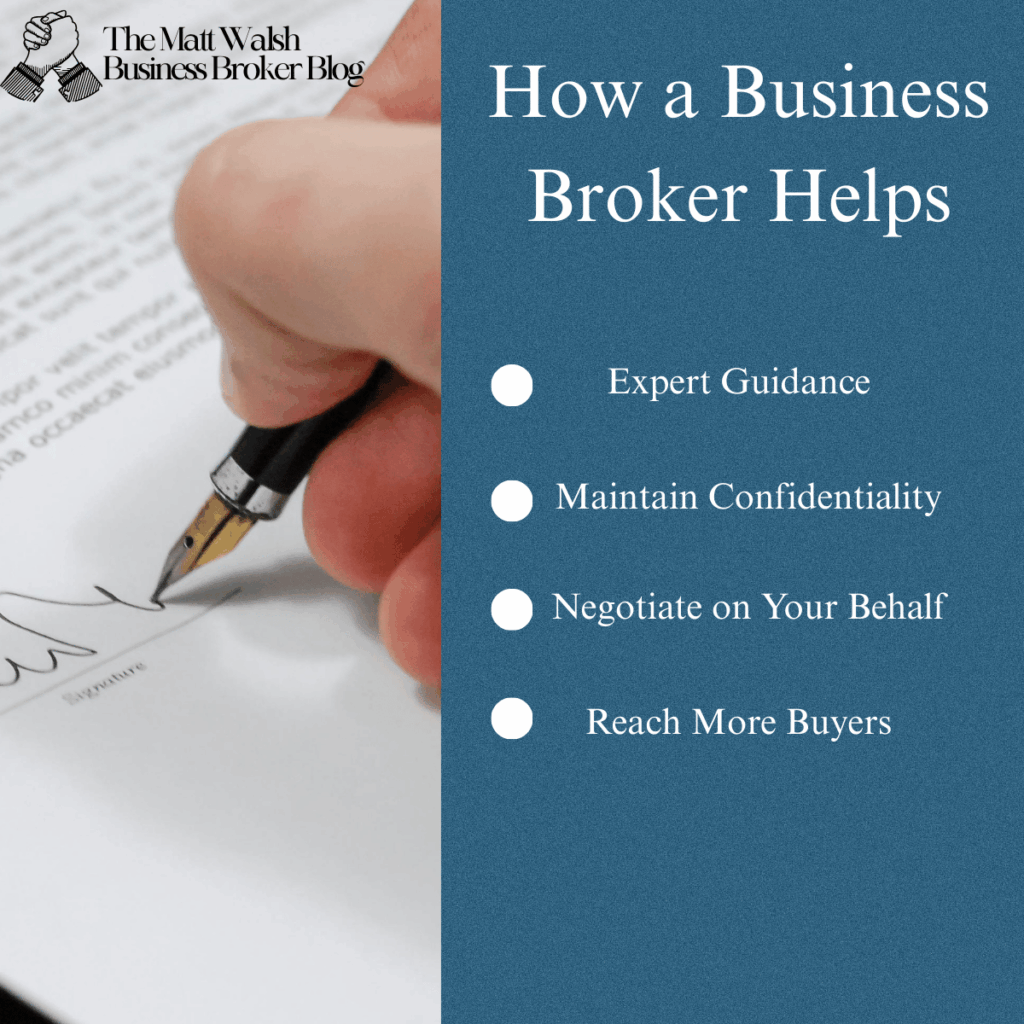
A business broker provides crucial support throughout the entire process of selling a company. For most owners, this is a once-in-a-lifetime event, and the decisions made during the sale can significantly impact long-term financial security. A broker’s experience, market knowledge, and strategic guidance remove uncertainty and help owners achieve the highest possible outcome. Below are the key ways a business broker can meaningfully help you and your business:
Providing Expert Guidance and Strategy
Understanding when and how to sell requires more than intuition. A business broker evaluates market trends, buyer activity, your company’s strengths, and your financial goals to design a tailored strategy.
They help you determine if now is the right time to sell, what price range is realistic, and how to position your business to attract maximum interest. This guidance prevents guesswork and ensures every step serves a purpose.
Maintaining Confidentiality
Confidentiality is one of the biggest concerns for business owners. A premature announcement can worry employees, unsettle customers, or alert competitors. A broker protects sensitive information by controlling how the business is marketed and ensuring buyers sign strict confidentiality agreements. Only serious, qualified buyers receive access to private data, which preserves stability throughout the sale.
Finding Serious and Qualified Buyers
Business brokers have access to extensive buyer networks, databases of investors, connections with private equity groups, and relationships with industry professionals. They filter inquiries, eliminating those who lack financial ability or genuine intent. This saves time and ensures the business is only presented to buyers who are capable of closing a deal.
Helping You Stay Focused on Running Your Business
Selling a business can easily consume your schedule, especially if you handle it alone. A broker manages buyer inquiries, communication, documentation, negotiations, and scheduling so you can continue operating the business efficiently. Keeping the business strong during the sale process is essential because declining performance can reduce value.
Improving Negotiation Outcomes
Negotiating a business sale is complex. It involves price discussions, terms, transition planning, non-compete agreements, financing structure, and protections for both parties.
A broker advocates for your interests, ensuring you are not pressured into unfavorable conditions. Their experience helps create win-win agreements while maximizing your financial gain.
Managing the Entire Process to Avoid Delays
From preparing documents to navigating due diligence, a broker keeps the process on track. They coordinate with accountants, attorneys, lenders, and buyers to ensure deadlines are met and obstacles are resolved quickly. This organized approach reduces the chances of the deal falling through and keeps everything moving smoothly toward closing.
With a professional business broker supporting you, the sale becomes more predictable, more efficient, and far more profitable. You gain a trusted advisor, a strategic partner, and an advocate focused on securing the best possible outcome for your business.
Advantages of Using a Business Broker to Sell a Business
I have seen many business owners try to sell their business by themselves. Without a broker’s help, the entire process becomes too overbearing.
Keep in mind, you have to keep the business running while preparing for sale, finding a buyer, determining a good price, marketing all the while keeping things confidential.
Working with a business broker offers powerful advantages that most owners cannot achieve on their own.
Selling a business is not like selling a product or property.
It requires financial expertise, confidentiality, strategic marketing, careful negotiations, and a deep understanding of the buyer landscape.
A qualified business broker brings all of these skills together, making the process smoother, safer, and far more profitable. Here are just a few benefits I believe you’ll enjoy when you hire a business broker:
Accurate and Realistic Valuation
One of the biggest challenges for owners is determining an appropriate asking price.
Emotional attachment and outdated assumptions can often lead to unrealistic expectations.
Brokers analyze many things such as:
- financial statements,
- cash flow,
- growth potential,
- market conditions,
- and industry benchmarks.
These help determine a fair and competitive valuation.
Access to More Qualified Buyers
Most owners only know a small handful of potential buyers, and many of them may not be serious or financially capable. Business brokers maintain large networks of individuals, companies, investors, private equity groups, and industry-specific buyers. They also use confidential listing platforms and internal databases that are not available to the general public. More qualified buyers create stronger competition and increase your chances of receiving multiple offers.
Confidential and Professional Marketing
Maintaining confidentiality is essential during a sale.
If employees, customers, suppliers, or competitors learn prematurely that the business is for sale, it can create unnecessary disruption.
Brokers create professional, high-quality marketing packages and confidential business summaries that highlight strengths without revealing the identity of the business. Only pre-screened buyers with signed nondisclosure agreements gain access to sensitive information.
Stronger Negotiations and Better Deal Terms
A broker understands buyer psychology and deal structure. They know how to handle offers, counteroffers, contingencies, and financing discussions. Their negotiation experience protects your interests and helps you secure not just a higher sale price, but more favorable terms such as flexible payment structures, transition plans, and protections from future liability.
Reduced Stress and Saved Time
The selling process can take hundreds of hours.
Owners who try to sell alone often find it overwhelming to manage every little thing while still running day-to-day operations.
A business broker takes on the heavy workload so you remain focused on keeping the business profitable and attractive to buyers.
Higher Chance of Closing the Deal
Many deals fall apart during marketing, negotiation, or due diligence due to miscommunication, unrealistic expectations, or lack of experience. A broker anticipates issues early, keeps the process organized, and helps both parties stay aligned until closing. This significantly increases the chances of a successful sale.
For business owners who want a smooth, confidential, and financially rewarding exit, working with a professional broker delivers structure, expertise, and peace of mind.
How Do Business Brokers Sell Businesses?
Business brokers follow a structured process designed to attract qualified buyers, protect confidentiality, and secure the best possible deal for the owner. While every business is unique, the overall approach remains consistent and methodical. Here is how brokers typically sell businesses:
Initial Consultation and Planning
The process begins with a detailed discussion about your goals, timeline, and expectations. The broker learns about the company’s operations, strengths, challenges, and industry position. These discussions help you
Business Valuation
A broker conducts an in depth valuation using financial statements, market conditions, comparable sales, and growth potential. This helps establish a realistic asking price that attracts buyers without undervaluing the business.
Preparing Documentation
Brokers gather financials, tax returns, equipment lists, leases, customer information, and operational details. They also create a confidential business summary that showcases the company’s value without revealing its identity.
Confidential Marketing and Outreach
The broker markets the business discreetly through online listing platforms, private buyer networks, and direct outreach. Only qualified buyers who sign a confidentiality agreement can access more detailed information.
Screening and Qualifying Buyers
Not every buyer is a good match. Brokers verify financial capability, motivation, industry experience, and acquisition timeline to ensure your time is not wasted on unqualified inquiries.
Coordinating Meetings and Presentations
When a vetted buyer shows serious interest, the broker organizes meetings, guides conversations, and helps both parties understand expectations. This step builds trust and moves the deal forward.
Negotiating Offers and Deal Structure
The broker presents offers, compares terms, and assists with counteroffers. They negotiate price, financing, transition support, non compete agreements, and closing conditions.
Managing Due Diligence
Once an offer is accepted, the broker coordinates document requests, clarifies questions, and keeps communication consistent. This stage requires detailed support to avoid delays.
Finalizing Closing Documents
The broker works alongside attorneys, accountants, and lenders to complete the final purchase agreement and closing paperwork.
Through this structured and organized approach, business brokers make the sale process more efficient, more confidential, and more profitable for the owner.
Types of Businesses Brokers Represent
Business brokers work with a wide range of companies across many industries. Although each broker may specialize in certain sectors, most represent small to mid sized businesses that are privately owned and generate consistent revenue. Here are the most common categories of businesses brokers help sell:
Main Street Businesses
These are small, locally operated companies such as restaurants, retail stores, auto shops, salons, cafes, fitness studios, and service providers. They typically generate lower annual revenue but require strong local buyer networks.
Lower Middle Market Companies
These businesses usually earn between $1 million and $50 million per year. Examples include professional service firms, distribution companies, construction firms, manufacturing operations, healthcare practices, and technology companies.
Service Based Businesses
Service companies such as HVAC firms, landscaping businesses, IT service providers, consulting practices, and cleaning companies often rely on customer contracts and recurring revenue, which can attract buyers looking for predictable income.
Other Notable Types of Businesses Brokers Sell:
Manufacturing and Industrial Companies
Brokers regularly work with machine shops, fabrication plants, industrial supply companies, and production facilities. These transactions often involve equipment valuation and operational analysis.
Healthcare and Medical Services
Medical practices, urgent care centers, therapy clinics, dental offices, and home healthcare agencies require specialized knowledge because of regulatory and licensing considerations.
Technology and Software Companies
Tech firms with proprietary software, digital platforms, or recurring subscription revenue can attract buyers interested in growth and scalability.
Construction and Trades
General contractors, specialty trades, engineering firms, and related businesses are often in high demand, especially in growing markets.
Most business brokers tailor their strategy according to the industry, size, and complexity of the business. By working with companies in specific sectors, brokers build expertise that helps owners achieve stronger results when selling.
When Should You Hire a Business Broker?
Timing plays an important role when selling a business, and knowing when to involve a broker can make the entire process more efficient and profitable. Many business owners choose to hire a broker as soon as they begin considering a sale, while others wait until a specific event triggers the need for professional help. Below are the most common situations where hiring a business broker is the right decision:
- You Are Preparing for Retirement: Many business owners seek a broker when they plan to transition out of the business and move into retirement. A broker helps prepare the company for sale and ensures the owner receives strong offers.
- Buyer Interest Has Appeared Unexpectedly: Sometimes a competitor, investor, or customer expresses interest in purchasing the business. A broker ensures you do not enter negotiations unprepared or accept undervalued offers.
- The Business Is Growing and Has Strong Value: Selling during a period of growth can attract more buyers and higher pricing. A broker helps you take advantage of this market momentum.
- The Owner Is Experiencing Burnout or Lifestyle Changes: Running a business can be overwhelming. If you want to step back or change direction, a broker can guide you through an orderly and confidential exit.
- Partnership Disputes or Ownership Changes: A broker provides objective guidance and professional valuation when ownership is shifting or when partners want to exit.
- You Want to Protect Confidentiality: Keeping the sale private is essential to avoid unsettling employees, customers, and suppliers. A broker ensures all communication is discreet.
- You Want Maximum Value and Better Terms: Business owners who sell on their own often miss opportunities or undervalue the business. A broker brings experience, buyer networks, and negotiation skills that lead to stronger deal outcomes.
Working with a broker at the right time ensures a smoother process and significantly improves the chances of a successful sale.
9 Questions to Ask a Business Broker
Choosing the right business broker can have a major impact on the outcome of your sale. Before hiring someone, it is important to understand their experience, process, and approach. Asking the right questions helps ensure you partner with a broker who is qualified, trustworthy, and aligned with your goals. Here are the most important questions to ask:
How long have you been selling businesses?
Experience matters. A broker with a solid track record is more likely to handle challenges effectively.
What types of businesses do you specialize in?
Industry knowledge improves valuation accuracy and helps attract the right buyers.
How do you determine the value of a business?
Look for a broker who uses financial analysis, market data, and industry benchmarks, not simple rule of thumb estimates.
How will you market my business confidentially?
Ask about the platforms and methods they use while keeping your identity private.
How do you screen and qualify buyers?
You need a broker who verifies financial capability, motivation, and experience before sharing sensitive information.
What fees do you charge and what is included?
Understand the commission structure, retainer (if any), and what services are covered.
How long does it usually take you to sell a business like mine?
A broker should provide a realistic timeline based on size, industry, and recent market activity.
How will you communicate with me throughout the process?
Clear communication prevents misunderstandings and keeps the deal moving forward.
What is your closing rate?
A strong broker should be able to demonstrate consistent success in completing transactions.
These questions help you assess a broker’s professionalism, capabilities, and suitability for your specific needs.
8 Things to Look for in a Good Business Broker
Not all business brokers offer the same level of expertise, resources, or support.
Selecting the right broker is one of the most important decisions you will make when preparing to sell your business.
A good broker should bring professionalism, experience, and a proven process that increases your chances of achieving a successful sale. Here are the key qualities to look for:
- Experience in Your Industry
A broker who understands your industry can value your business accurately, anticipate challenges, and connect you with qualified buyers who are familiar with your market. - Strong Buyer Network
A high quality broker should have access to a wide pool of buyers, including individuals, companies, private equity firms, and investors. A larger network increases your chances of receiving multiple offers. - Clear Communication Skills
You need a broker who explains every step of the process, keeps you updated, and handles communication with buyers professionally. - Proven Track Record
Ask for examples of past transactions similar to your business. A successful track record shows the broker knows how to close deals in your sector. - Confidentiality Practices
Confidentiality is essential. A good broker will protect your identity, screen buyers thoroughly, and control the flow of sensitive information. - Negotiation Expertise
Negotiating price, terms, and transition details requires skill. A strong broker will advocate for your best interests and secure favorable conditions. - Professional Certifications or Memberships
While not required, certifications and memberships in organizations such as IBBA or M&A Source can indicate professionalism and ongoing training. - Commitment to Ethical Practice
Transparent fees, honest valuations, and respect for both buyers and sellers reflect a broker who acts in your best interest.
Choosing a broker with these qualities ensures you receive the guidance and representation needed to achieve a smooth, efficient, and profitable sale.
Common Misconceptions About Business Brokers
In my experience as a business consultant, I have seen many business owners misunderstand what brokers do or how the selling process works. These misconceptions can cause hesitation, unrealistic expectations, or costly mistakes.
So I thought I should add a section on debunking these misconceptions as well:
“A Business Broker Is the Same as a Real Estate Agent”
Although both professions involve selling property, business brokers specialize in selling entire companies, which requires financial analysis, valuation skills, buyer screening, confidentiality management, and deal structuring. The process is far more complex than selling real estate.
“Selling a Business Should Be Quick and Easy”
Many owners assume their business will sell immediately. In reality, most sales take six to twelve months depending on the industry, financials, and buyer demand. A broker manages the process patiently and strategically to secure a strong outcome.
“I Can Sell My Business on My Own and Save Money”
While selling independently may seem attractive, it often results in undervaluation, limited buyer reach, poor negotiation, and a higher chance of deals falling apart. A broker brings expertise that typically leads to stronger offers and smoother closings.
“The Highest Revenue Business Gets the Highest Price”
Revenue alone does not determine value. Profitability, cash flow strength, customer concentration, market position, and operational efficiency influence pricing more than top line sales.
“Buyers Will Keep Everything Confidential”
Without a broker managing nondisclosure agreements and buyer screening, sensitive information can be shared too freely. A broker ensures confidentiality is maintained throughout the process.
“Only Large Companies Need a Business Broker”
Small and mid sized business owners often benefit the most from professional guidance because they may lack experience with negotiations, valuation, or due diligence.
Recognizing these misconceptions helps business owners approach the sale process with clarity and realistic expectations.
Benefits for Buyers Who Work With Business Brokers
Business brokers do not only help sellers. Buyers also benefit significantly from working with a broker, especially when searching for quality opportunities or navigating the complexity of purchasing a company. Here are the key advantages buyers gain when partnering with a business broker:
- Access to More Business Opportunities
Many profitable businesses for sale are never publicly advertised. Brokers maintain private listings and direct connections with owners who want confidentiality. Buyers gain access to more choices and stronger opportunities. - Accurate and Organized Information
Brokers gather financials, operational documents, and business summaries so buyers receive clear, organized information. This saves time and helps buyers compare options more effectively. - Assistance With Financing Options
Business brokers often connect buyers with lenders, SBA loan providers, and financial advisors. This support increases the likelihood of securing financing and helps buyers understand what is realistically affordable. - Objective Guidance During Evaluation
Evaluating a business requires analyzing financial performance, customer concentration, operating costs, staff structure, and long term potential. A broker provides insight that helps buyers make informed decisions. - Smoother Negotiations
Negotiating directly with a seller can be stressful or emotional. Brokers act as neutral intermediaries, helping both sides stay focused on the facts and move closer to fair, mutually beneficial terms. - Support During Due Diligence and Closing
The final stages of a business purchase involve reviewing detailed records, coordinating with attorneys and accountants, and confirming all expectations. A broker keeps the process organized and ensures nothing important is overlooked. - Reduced Risk of Deal Failure
With expert oversight, communication stays consistent, misunderstandings are avoided, and both parties remain aligned until closing. This greatly reduces the chance of the deal falling apart.
Overall, business brokers make the buying process more transparent, efficient, and successful. Buyers receive expert guidance and access to opportunities that would otherwise be difficult to find.
Consult A Business Broker Today
If you want to sell your business, you should definitely work with a business broker. When you have a team of professionals looking after everything, you can focus on other things.
Connect with them today and begin your sales process.